⚠️ This page connects you to Atovia’s partners and affiliate markets. We may receive a commission from affiliate partners for activities made through these links. Discount offers may change at any time according to policy! Rest assured, there are no additional costs to you! We hope this saves you time in finding the right items!
You have a stick horse and a flat patch of floor, and you want to know how dressage on one actually works. In short, it means riding through set gaits, turns, and a marked course with control and smooth form.
This guide walks you from your first practice circle to what happens at a formal test. One thing to keep in mind from the start: competition rules differ by organizer, so we label every tip as either a practice tip or a rule from one specific association.
- What Is Hobby Horse Dressage?
- Start With the Gaits: Walk, Trot, and Canter
- Which Canter Lead Goes With Which Turn?
- Set Up Your Practice Space
- Build a Simple Practice Routine
- Posture and Smooth Movement
- Shoes and Tack: What You Actually Need
- How a Dressage Test Works
- Safety Checklist Before You Ride
- Common Beginner Questions
- There are three basic gaits to learn: walk, trot, and canter.
- A left turn expects a left-lead canter and a right turn expects a right lead, unless a test says otherwise.
- In SKHH events, the first mistake costs 2 points, the second costs 4, and the third disqualifies.
- Rules vary by organizer, so always check your event’s program.
What Is Hobby Horse Dressage?
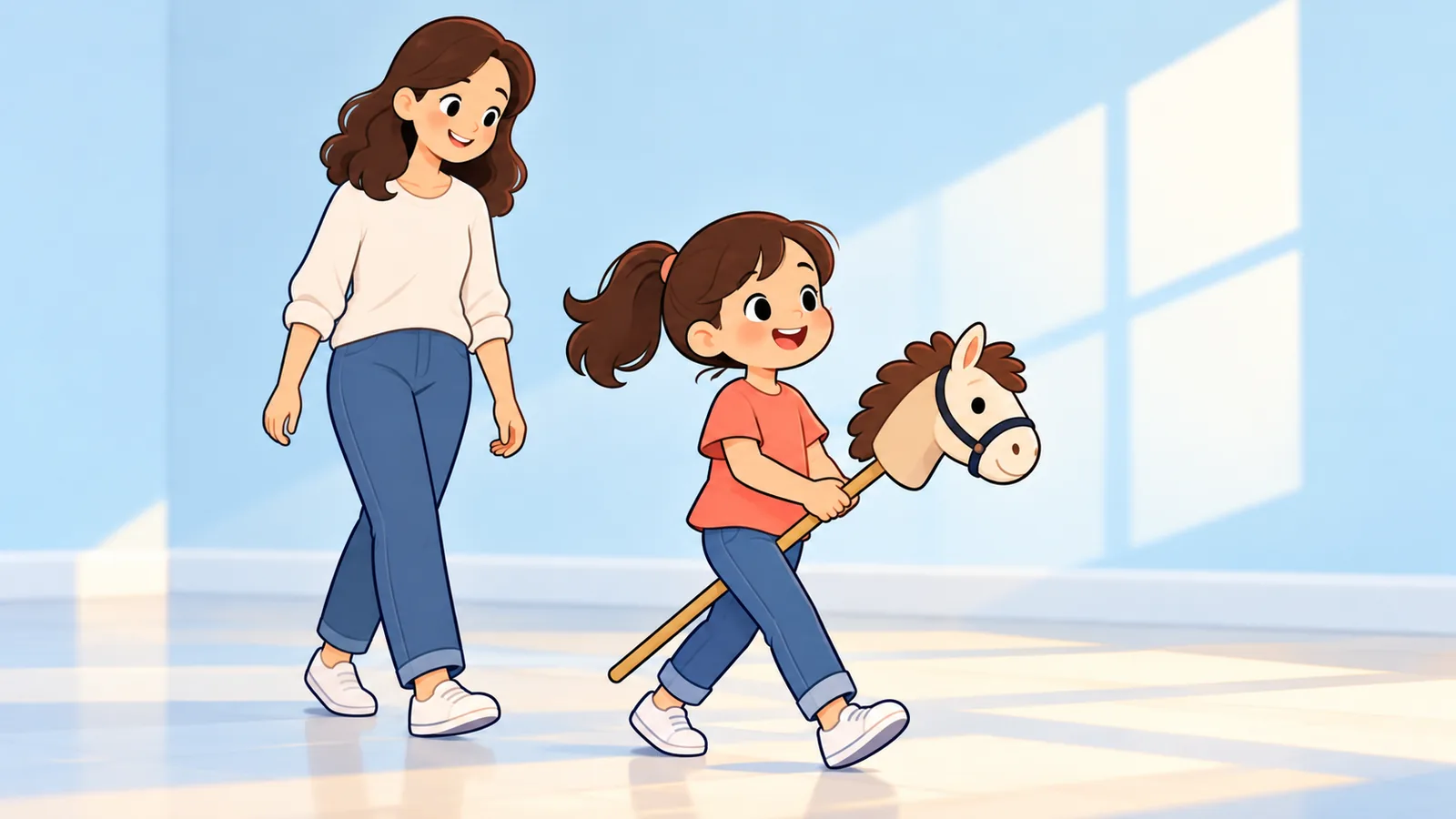
Hobby horse dressage is riding a stick horse through set gaits, turns, and a patterned course. The focus is on how cleanly and smoothly you move, not on speed.
Practice usually bundles a few simple building blocks: halts, circles, changes of direction, and changes of gait. These train your sense of path and rhythm, and they are the same pieces you will see again in a formal test.
If you want more background, further reading exists. Hobby Horse Hub UK has an explainer on tests, movements, and scoring, and Dressage Anywhere has an online dressage guide. Both are listed in the references below as further reading.
Start With the Gaits: Walk, Trot, and Canter
Begin with the three basic gaits, because every pattern you ride is built from them. The SKHH dressage rules describe each one in plain terms.
How do you show a walk, a trot, and a canter?
- Walk: one foot is always on the ground.
- Trot: a running gait, with both feet off the ground between steps.
- Canter: the fastest basic gait, with a clear rhythm and a moment in the air.
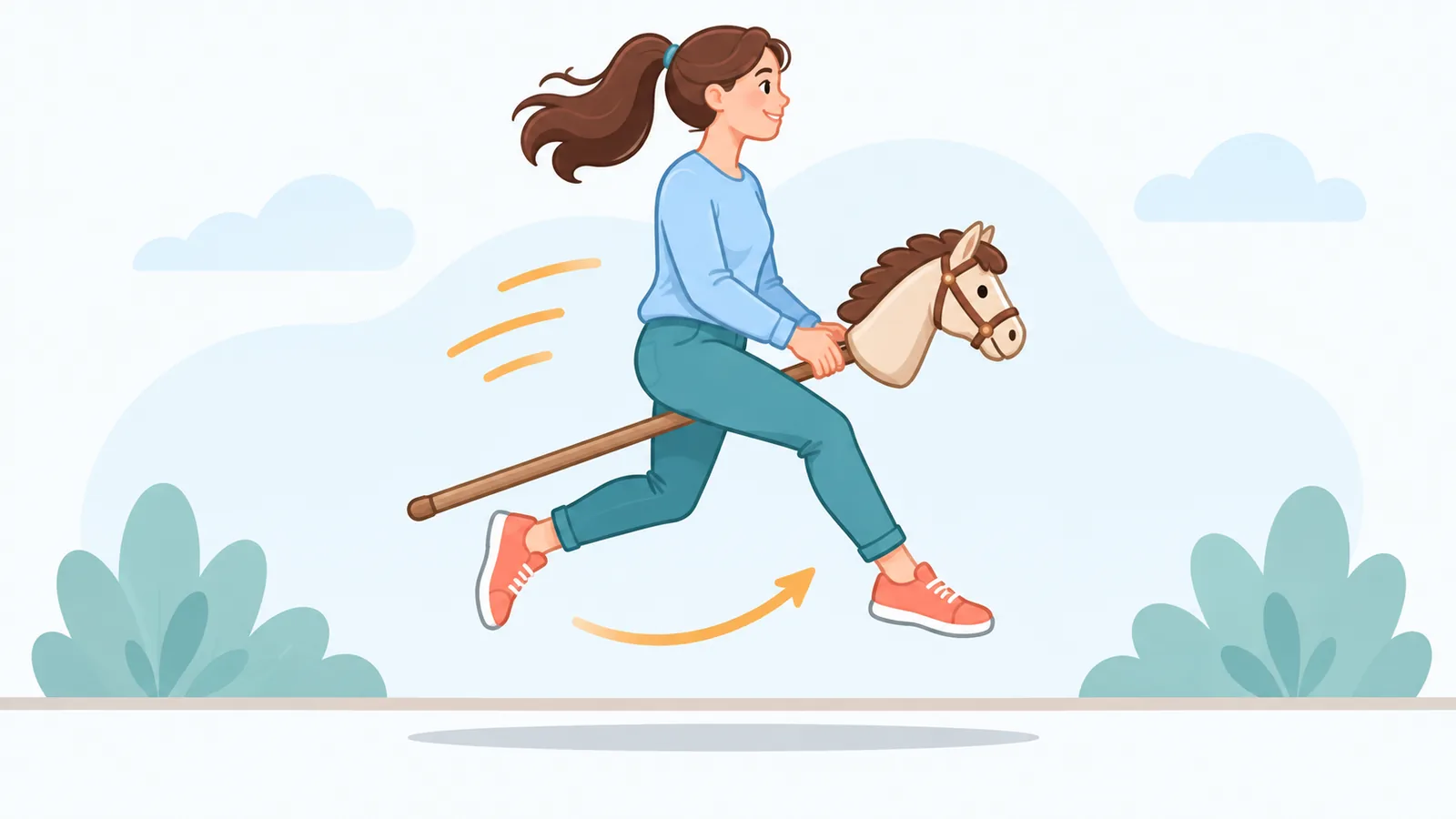
So if you are just starting out, spend your first sessions telling these three apart. Can someone watching tell which gait you are in without being told? That is a good first goal.
Which Canter Lead Goes With Which Turn?
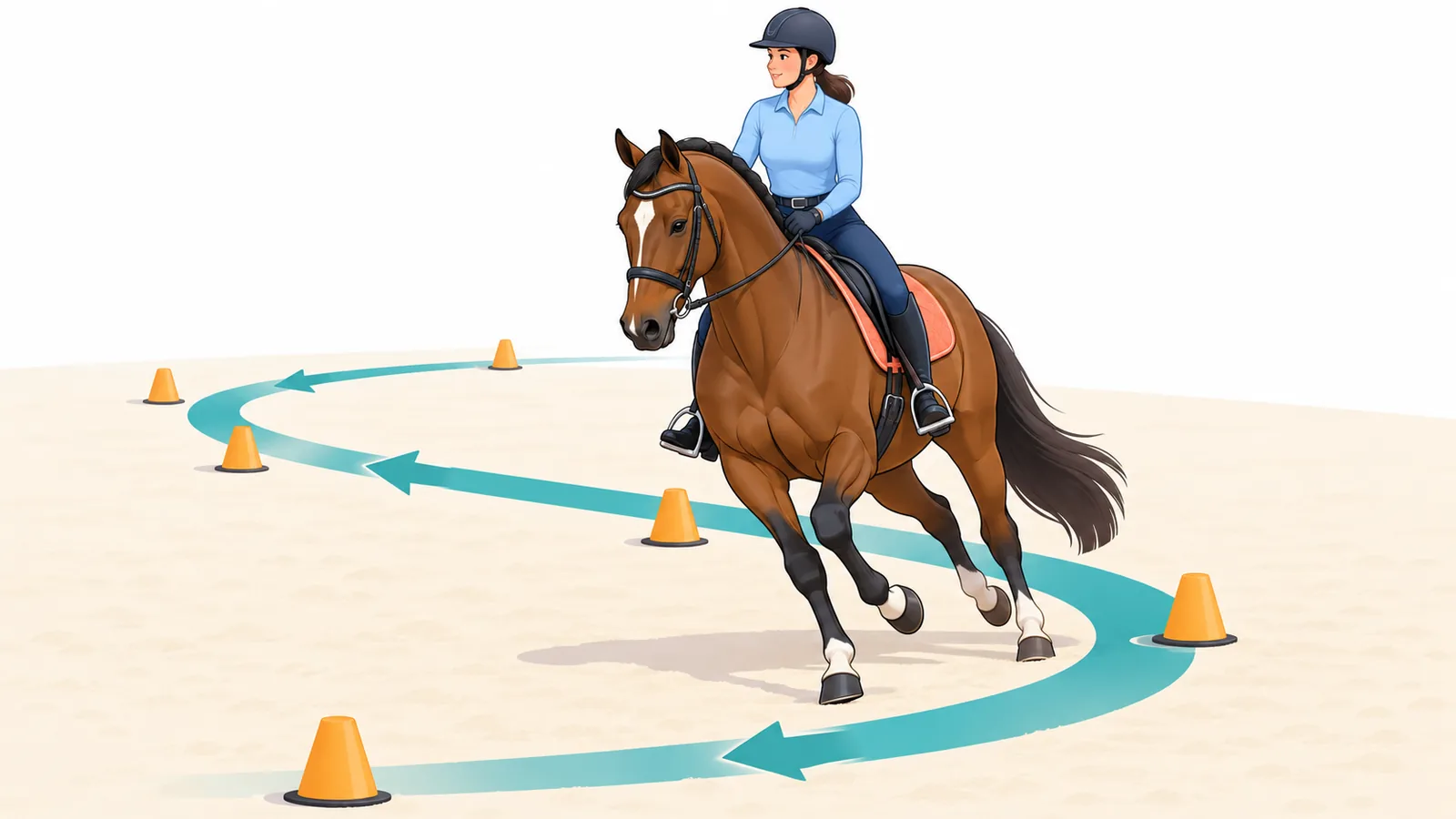
In a left turn, the rules expect a left-lead canter, and in a right turn, a right-lead canter. The exception is when a test gives different instructions.
Here’s a simple way to practice. Pick one direction first and get comfortable, then switch and do the same on the other side. Neither side is more important, so give both equal time.
Set Up Your Practice Space
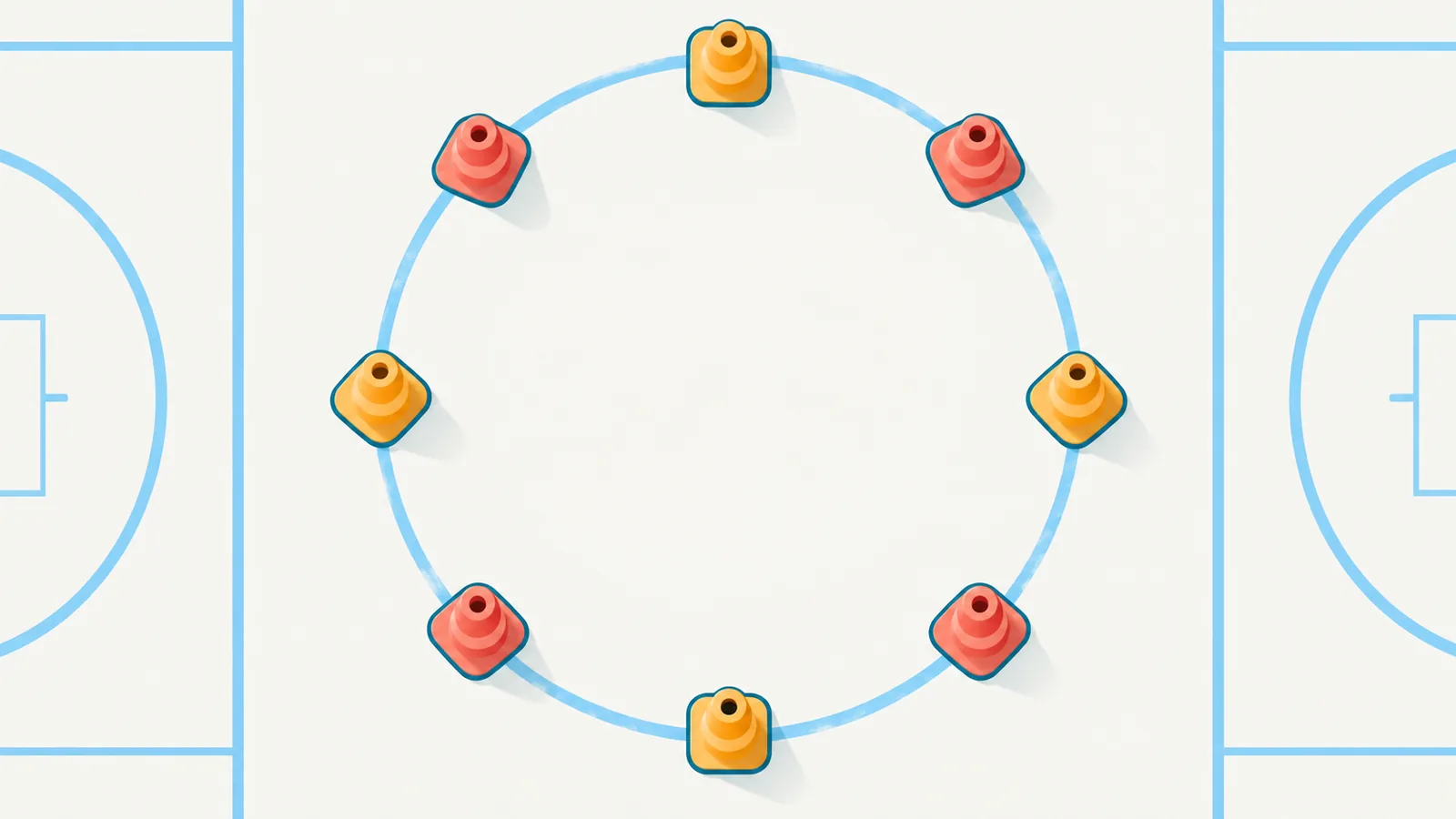
You need a flat, dry floor with enough clear room to move. These are practice tips from a hobby horse training guide, not competition rules.
- Clear the area of furniture, toys, and anything you could trip on.
- Mark your course with cones, cups, or chalk.
- Leave extra space around turns and circles.
- Wear non-slip shoes.
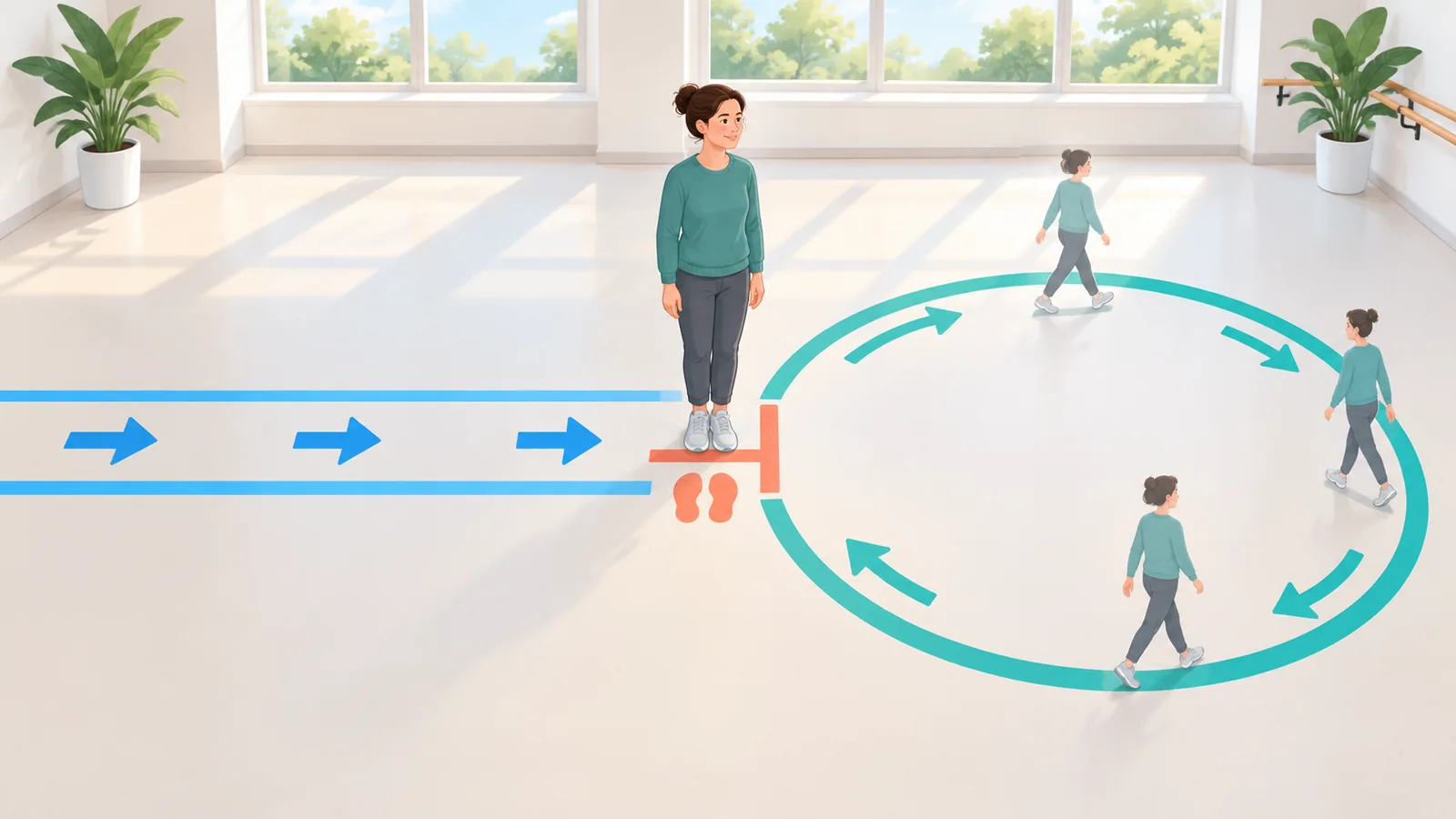
A simple circle and a straight line are plenty to start. You can add more markers later once the basics feel steady.
Build a Simple Practice Routine
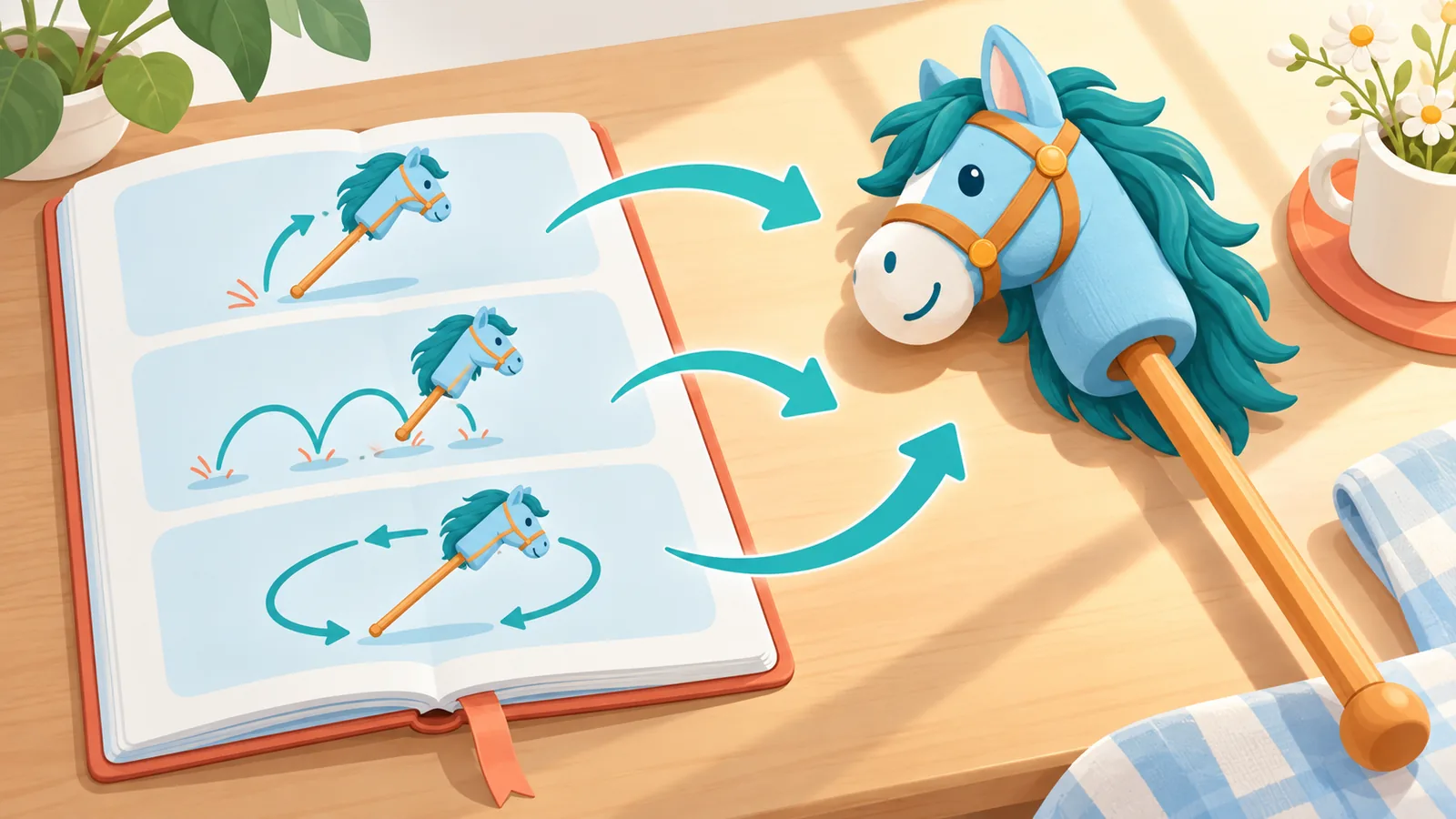
A good beginner session moves from easy to a bit harder and then back down. The halt, circle, direction change, and gait change come from a hobby horse training guide, while the warm-up and cool-down are just common sense.
- Warm up with an easy walk.
- Practice a halt, then walk on again.
- Ride a circle at a steady rhythm.
- Change direction and ride the circle the other way.
- Change gait, for example from walk to trot and back.
- Finish with a slow walk.
Each step trains path and rhythm. Notice which one feels wobbly, and give that one extra time next session.
How long should a session last?
There is no universal rule for session length, and the sources behind this guide give no official number. Stop while it still feels good, and stop right away if you slip or feel pain.
Posture and Smooth Movement
Aim for a straight, steady posture with as little extra movement as possible. The SKHH rules ask riders to avoid unnecessary motion, such as swinging the shoulders.
🛒 Recommended Product
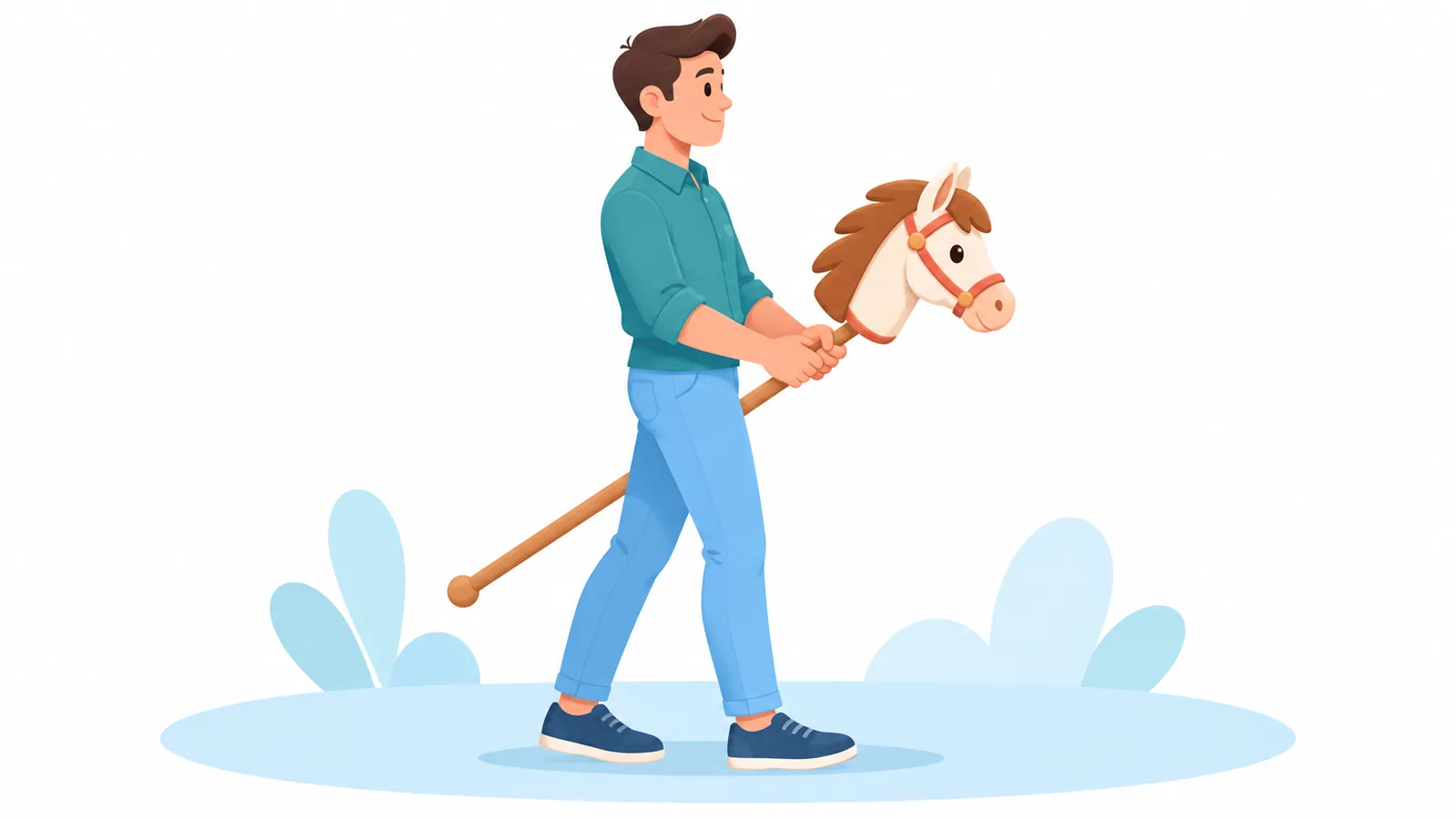
The same rules describe the goal as varied, smooth use of the leg muscles and joints. In practice, that means your legs do the work of the gaits while your upper body stays calm.
Shoes and Tack: What You Actually Need
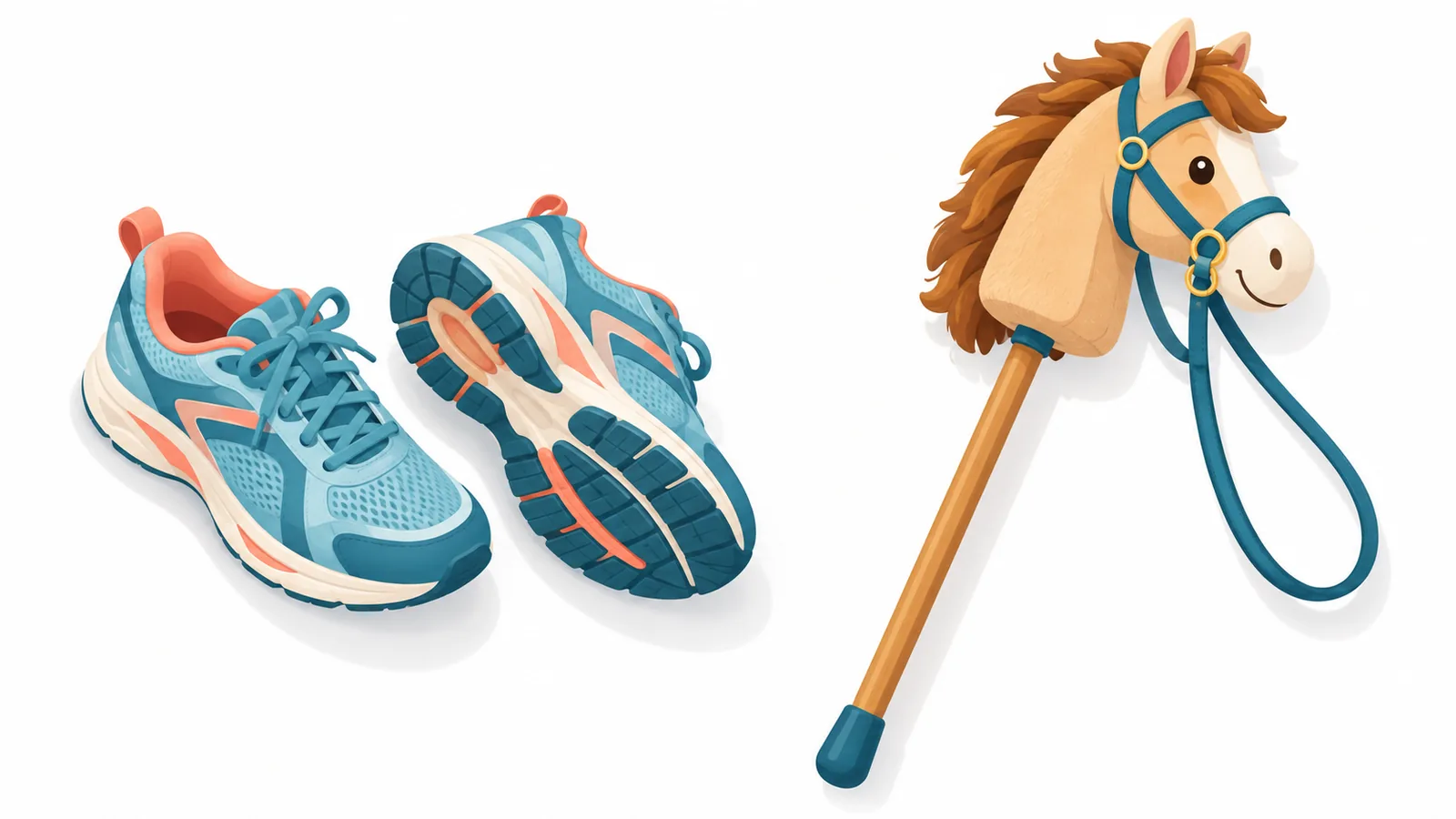
For practice, flat non-slip shoes are the main thing to get right. For SKHH competition, shoes are required, heeled shoes are not allowed, and a bridle is required.
The SKHH rules recommend non-slip sport, running, or dance shoes. For bridles, Advanced B and below allow any bridle form, while Advanced A and above need two reins attached at different points.
| Item | Practice at home | Official competition (SKHH rules) |
|---|---|---|
| Shoes | Non-slip shoes recommended | Required; no heels |
| Bridle | Not covered by competition rules; use your own setup | Required |
| Floor | Flat, dry floor advised | Check the event program |
| Rule source | General practice tips | SKHH rules, for SKHH events |
How a Dressage Test Works
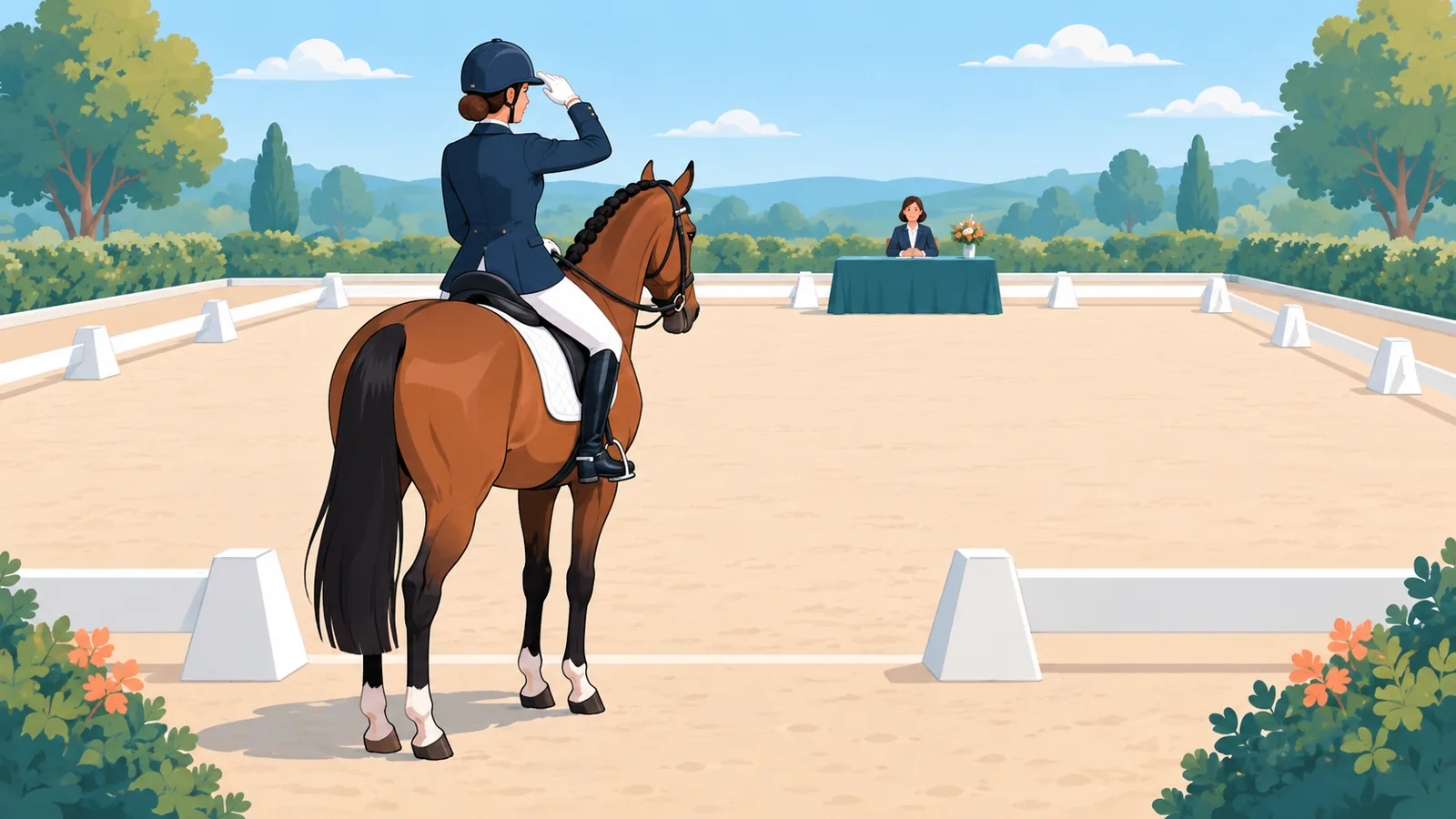
A test is a set performance in front of a judge, and in regular programs it has a clear opening and closing routine. The details below come from the SKHH dressage rules, which apply to SKHH events. Other organizers may differ.
- Enter and leave the arena through the gate.
- Greet the judge, and start after the judge answers.
- In SKHH events, the first mistake costs 2 points and the second costs 4.
- A third mistake disqualifies.
- A fall where a knee or hand touches the ground can disqualify, and so can a visible injury that hinders the performance.
Freestyle programs have a time limit, and in SKHH events going 15 seconds or more over can disqualify. The actual limit is listed in the event program.
The SKHH rules document was updated on November 26, 2024, so check for a newer version before you enter. The association’s Materials page is the place to look.
Safety Checklist Before You Ride
Before every session, take thirty seconds to check your space, your floor, and your shoes. Slips and falls are the main risk, and most are easy to prevent.
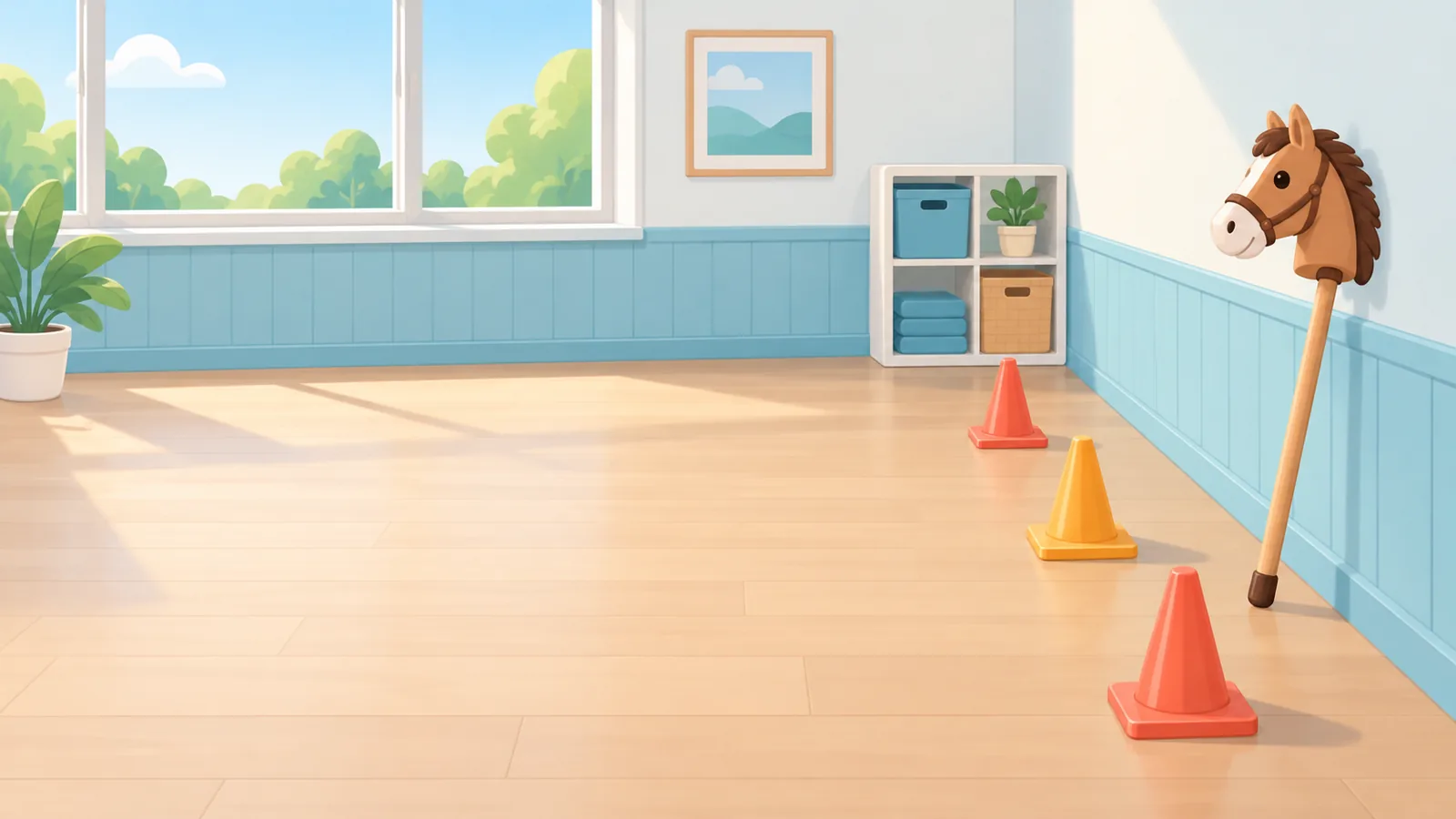
- The area is clear and there is enough room for turns.
- The floor is flat and dry.
- Your shoes are non-slip.
- Your stick horse is in good condition.
- You know to stop if you slip or feel pain.
Common Beginner Questions
Do I need to compete?
No. Home practice follows general tips, and official rules only apply at events.
What should I practice first?
Start with walk, trot, and canter, along with halts, circles, and direction changes.
Where do I check current rules?
Look at the organizer’s event program. For SKHH events, the association’s Materials page has the rules document.
Are the penalty numbers universal?
No. The 2-point and 4-point penalties come from SKHH rules for its own events, so other organizers may score differently.
Ready to try it today? Mark a simple circle on a flat, dry floor, walk it both ways, then try a trot.
- Hobby Horse Hub UK, Hobby Horse Dressage Explained: Tests, Movements and Scoring (further reading)
- Dressage Anywhere, Hobby Horse Online Dressage: How To (further reading)
- Hobby Horse Hub UK, Hobby Horse Training Ideas: Exercises, Skills and Practice for Beginners
- Suomen Keppihevosharrastajat ry (SKHH ry), SKHH ry Dressage Rules 2024
- Suomen Keppihevosharrastajat ry (SKHH ry), Materials
Try Atovia’s free tool for this topic →
Want more comparisons and buying guides?
Citing this article
Source: Atovia (Atovia). https://atovia.kr