⚠️ This page connects you to Atovia’s partners and affiliate markets. We may receive a commission from affiliate partners for activities made through these links. Discount offers may change at any time according to policy! Rest assured, there are no additional costs to you! We hope this saves you time in finding the right items!
Sometimes you need to cut power to one circuit on purpose. You might be finding out which breaker controls a particular outlet, confirming that a circuit really goes dead, or checking that a protective device still does its job. “Tripping” a breaker can mean three different things: switching it off by hand, pressing its TEST button, or forcing a fault. The first two are routine home tasks, and the third is dangerous and should never be attempted. This guide covers what is safe, what counts as a real test, and what to leave alone.
- What “Tripping” a Breaker Means and How It Works
- When You Might Need to Trip a Breaker on Purpose
- How to Switch a Breaker Off to Check a Circuit
- Why Switching Off Is Not the Same as Testing Protection
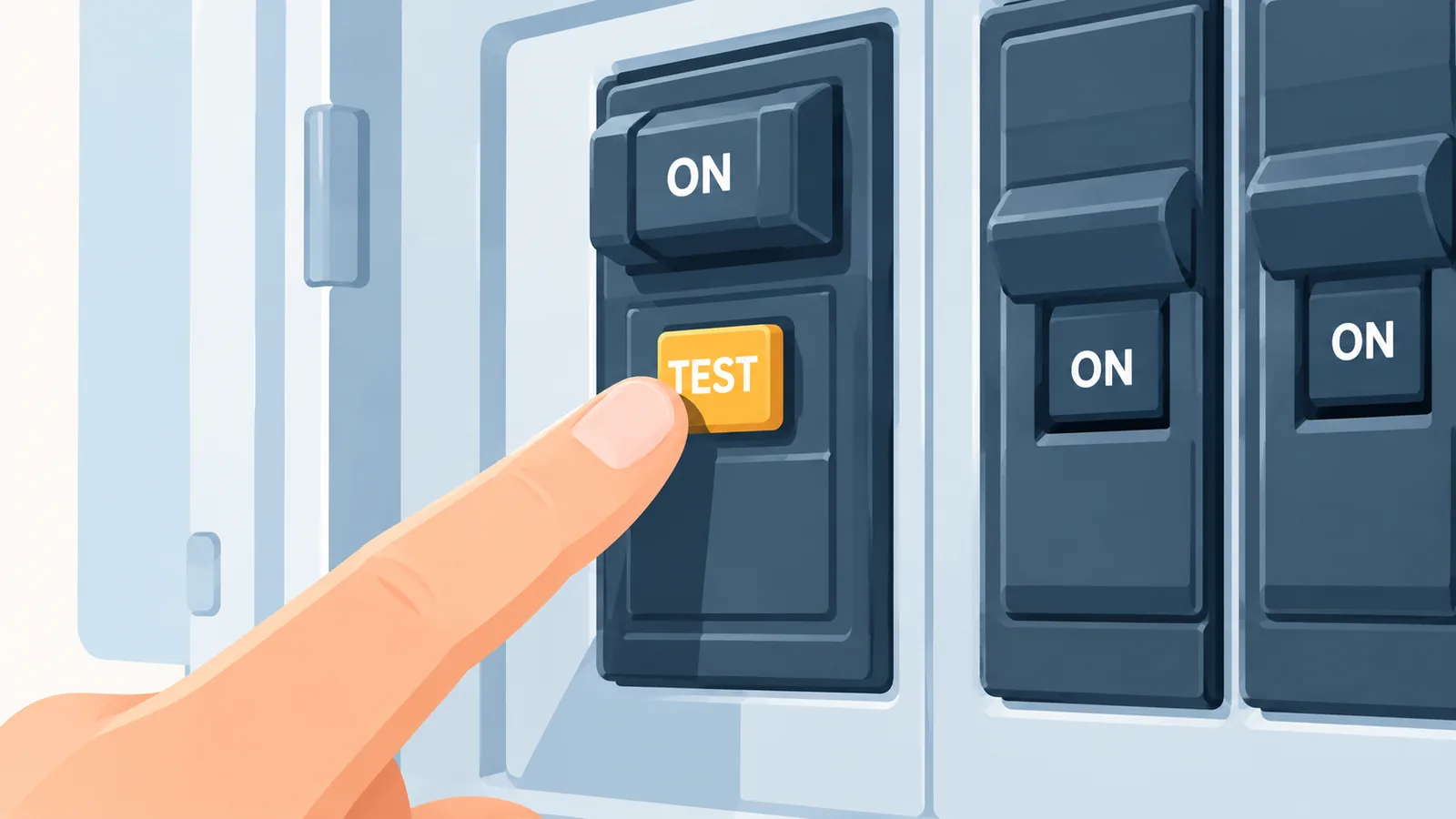
- How to Test an AFCI Breaker With the TEST Button
- How to Test a GFCI Breaker or Outlet
- What Never to Do: Forcing a Trip With an Overload or Short
- Treating “Power Off” Carefully Before Electrical Work
- What to Do When a Breaker Keeps Tripping
- Frequently Asked Questions
- Switching a breaker to OFF cuts power to that circuit. It does not prove the breaker would protect you in a real fault.
- The TEST button on an AFCI or GFCI device is the safe way to check its protection.
- Never create a short circuit, ground fault, or overload to see whether a breaker trips.
- A breaker that trips often, or a TEST button that does nothing, is a job for a licensed electrician.
What “Tripping” a Breaker Means and How It Works
A breaker is an overcurrent protection device. When too much current flows, it opens the circuit and separates the connected load from the power source [5]. It can react in two ways: a thermal response to a sustained overload, and a magnetic response to a very large fault current [5].
Breakers do not always trip the instant current rises. A short surge, such as an air conditioner or refrigerator starting up, is tolerated, and the breaker acts if the elevated current continues [2]. That is an automatic trip. Switching the handle yourself is a manual switch-off, and the two are not the same thing.
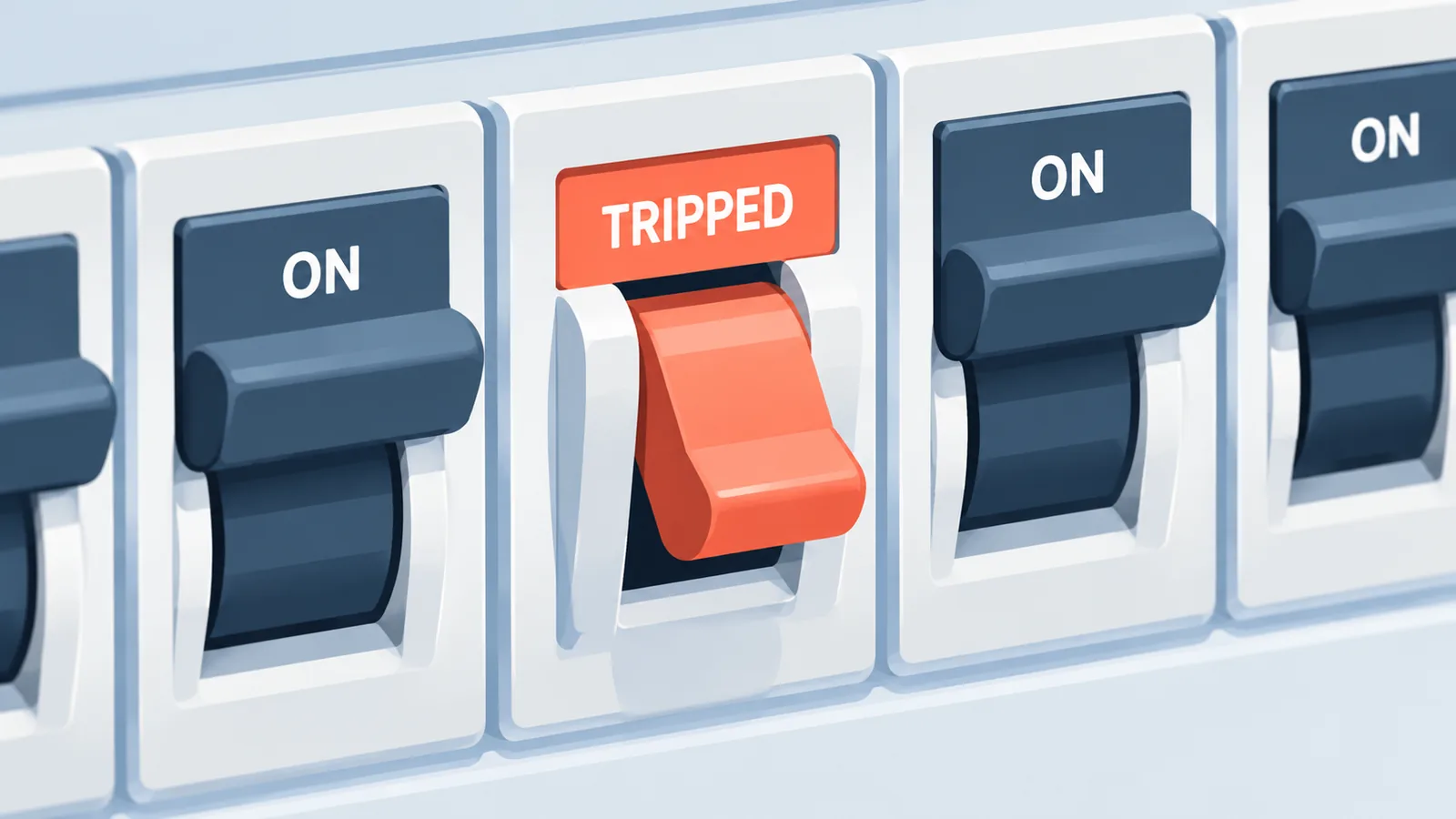
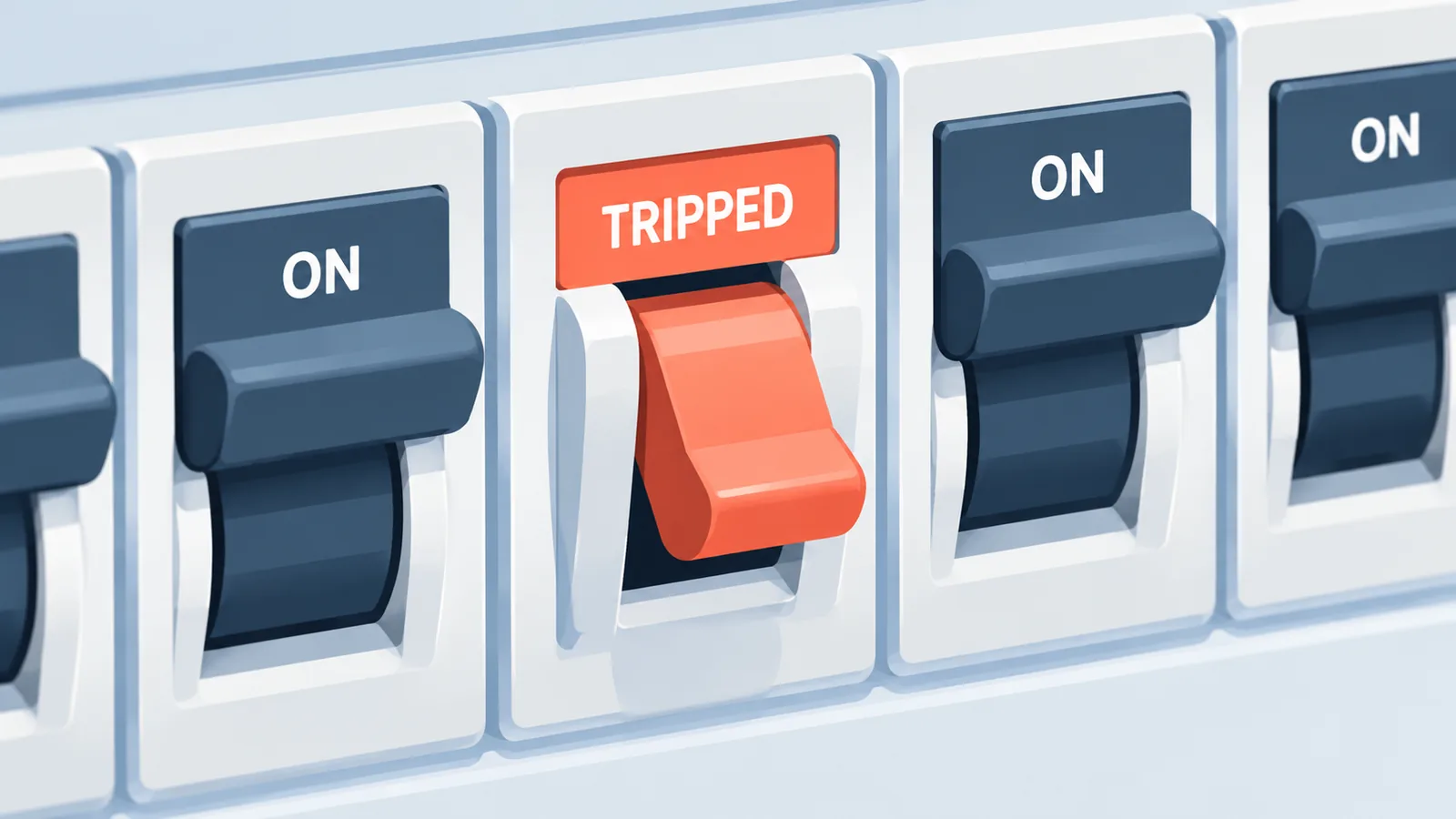
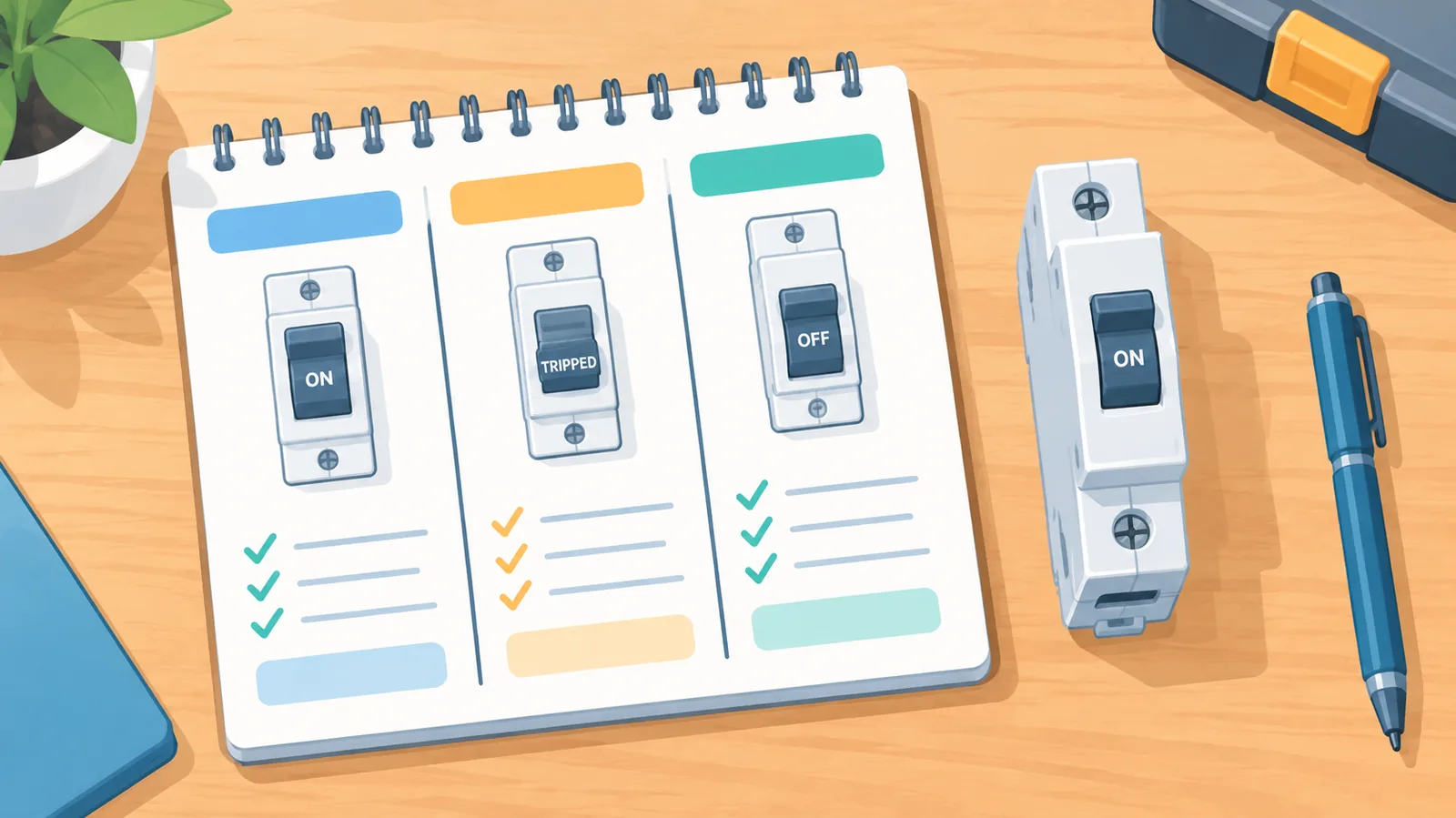
Where the handle ends up depends on the breaker. After an AFCI test it moves to OFF, or to a TRIP position if the breaker has one [3]. A tripped GFCI breaker rests in the off or center position [4]. Whichever you see, reset by moving the handle fully OFF and then ON.
When You Might Need to Trip a Breaker on Purpose
There are a few ordinary reasons to switch a breaker off or press a TEST button at home:
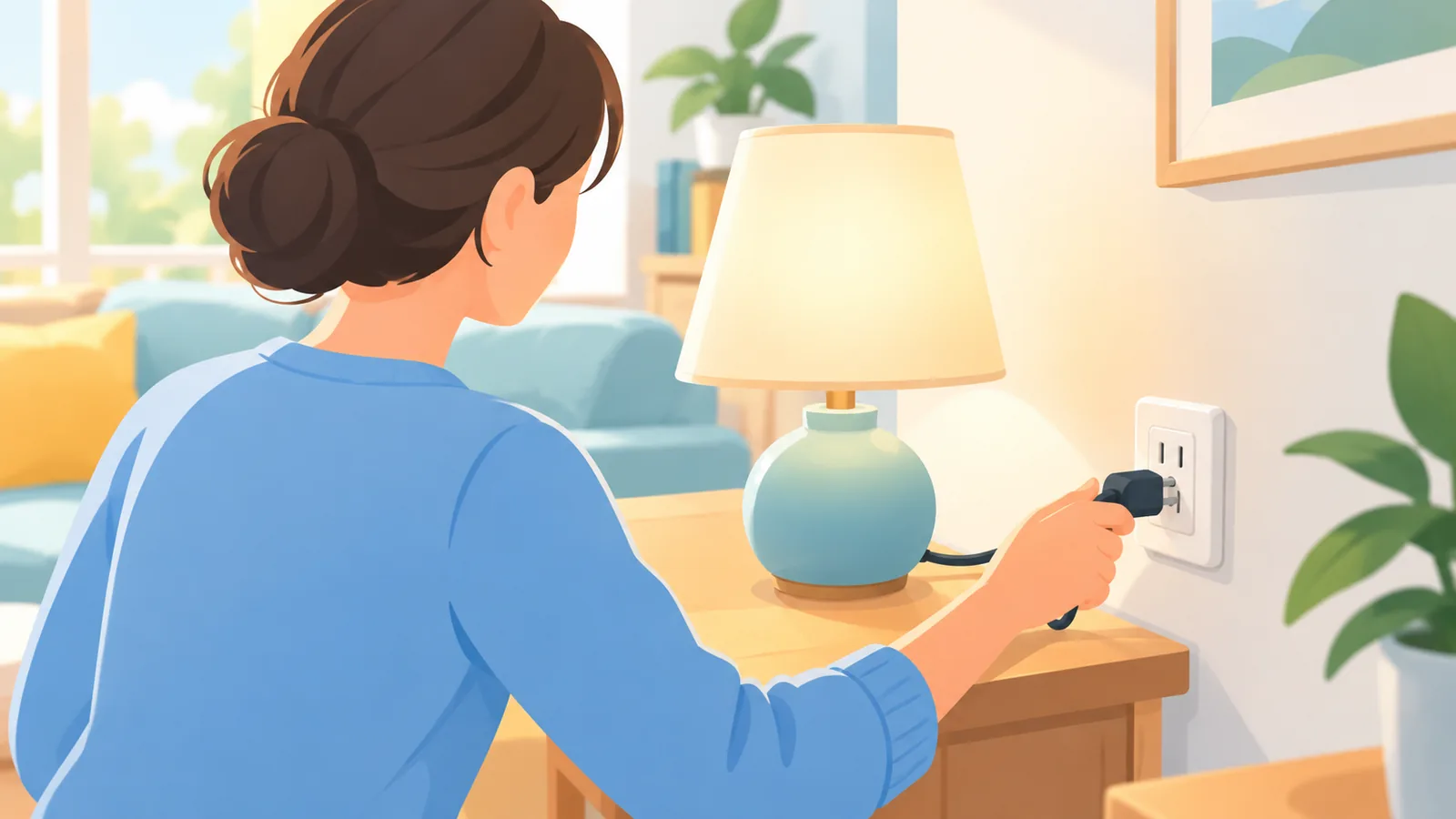
- Cutting power to one circuit before a simple household task.
- Working out which breaker controls which outlet or light, so the panel labels are accurate.
- Testing the protection built into AFCI and GFCI devices.
None of these replaces professional electrical work. Anything beyond simple device replacement belongs with a licensed electrician [2].
How to Switch a Breaker Off to Check a Circuit
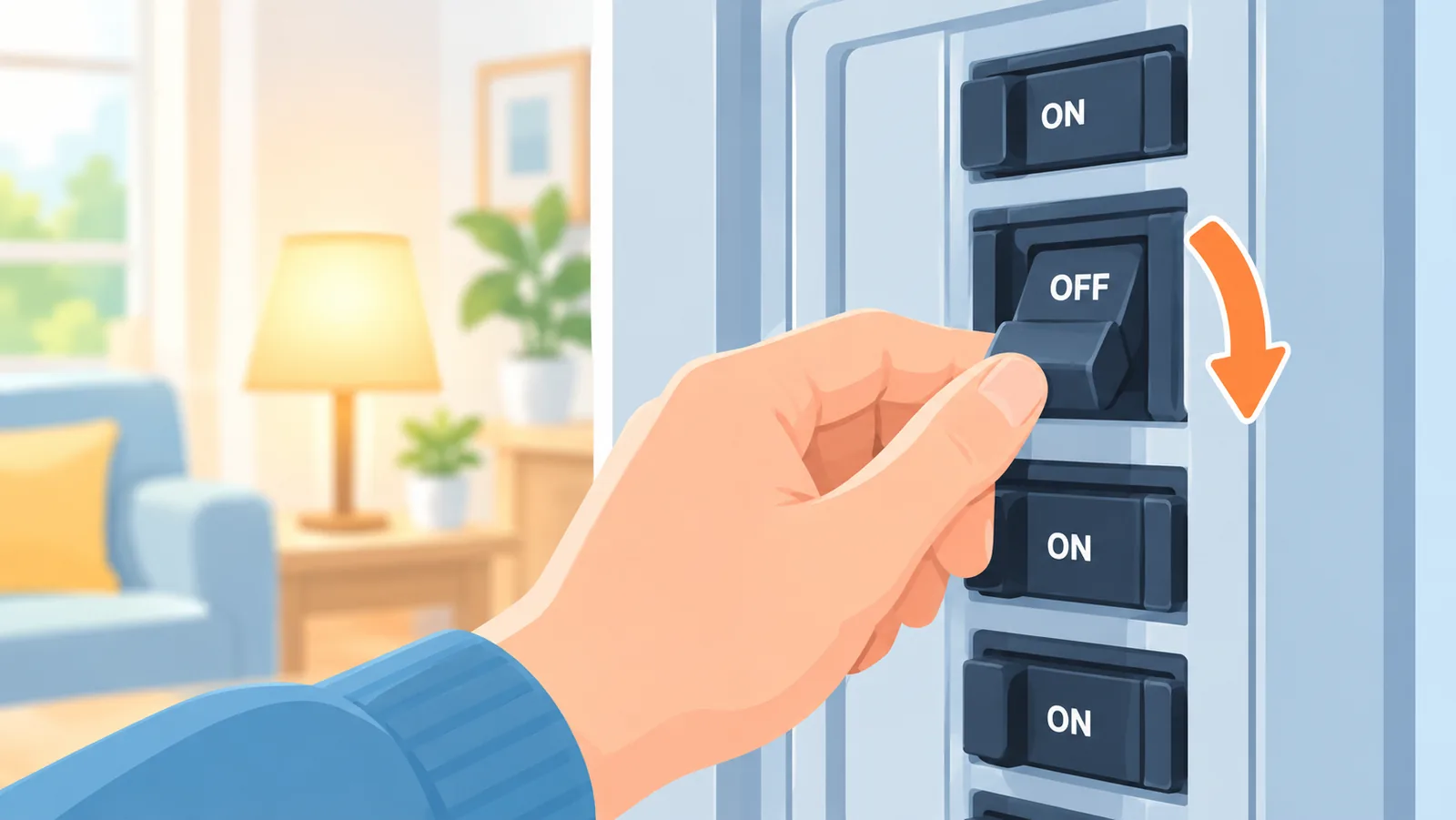
This simple method confirms which breaker feeds a circuit [1]:
- Turn on a light or plug in and run a device on the circuit you want to identify.
- Open the panel door. Do not remove any inner cover or touch wiring.
- Flip the matching breaker handle to OFF.
- Check that the light or device loses power. If it does not, you have the wrong breaker or the circuit is fed from elsewhere.
- Switch the breaker back to ON and update the panel label if needed.
Treat this as an identification step only. A dead light tells you the circuit is switched off at the breaker, which is not the same as proof that it is safe to work on (see section 8).
Why Switching Off Is Not the Same as Testing Protection
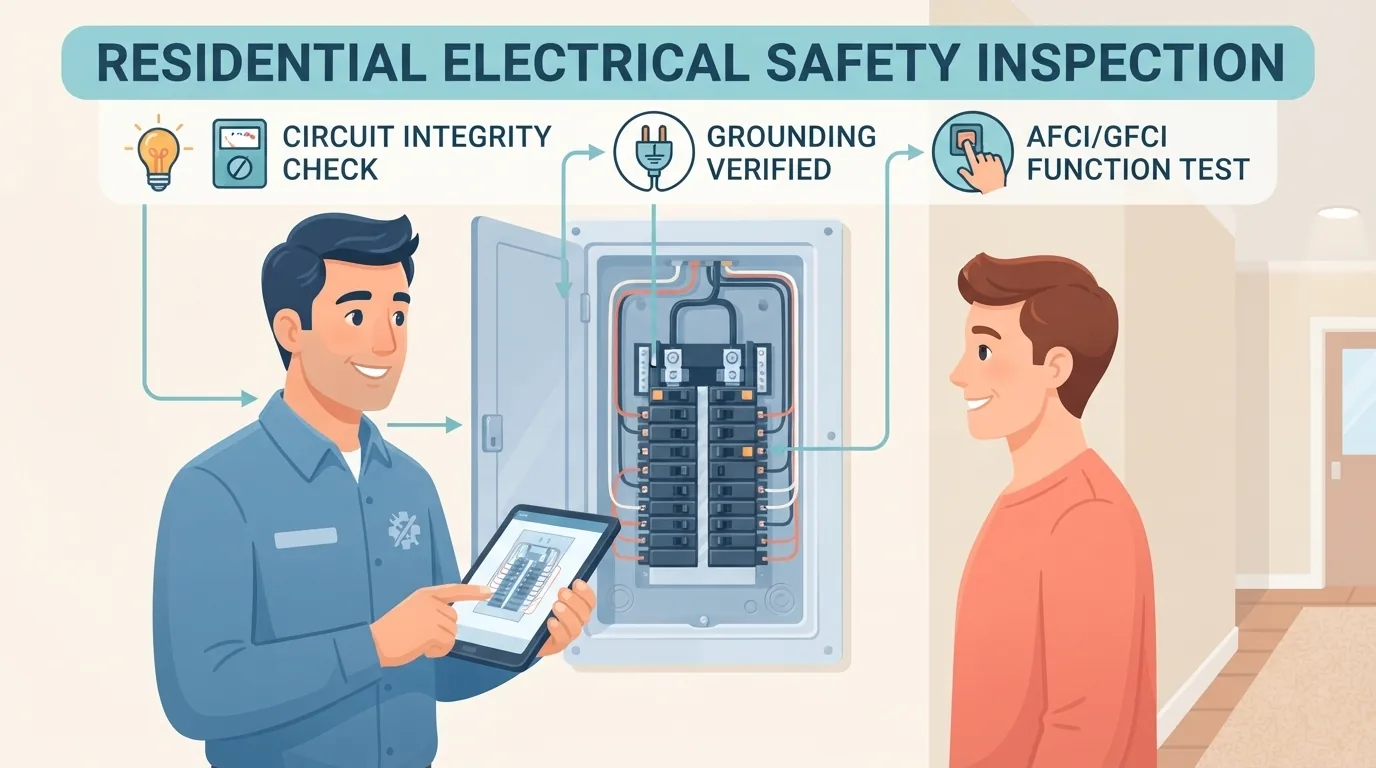
Flipping the handle shuts off a circuit, but it does not show that the breaker would react to a real fault. For AFCI devices, ESFI describes a separate TEST-button procedure for exactly that purpose [3]. The table compares the three actions people confuse.
| Question | Manual switch to OFF | TEST button | Forced overload or short |
|---|---|---|---|
| What it does | Cuts power to the circuit by hand | Simulates a fault inside an AFCI or GFCI device | Creates a real hazard on the wiring |
| What it shows | Which outlets and lights the breaker feeds | Whether the protective device responds | Nothing safe or useful for a homeowner |
| Who should do it | Any homeowner | Any homeowner, following the device’s steps | No one at home; controlled overload tests are for qualified professionals [2] |
| Main risk | Mistaking “off” for “safe to work on” | Low when done as instructed | Shock and fire |
How to Test an AFCI Breaker With the TEST Button
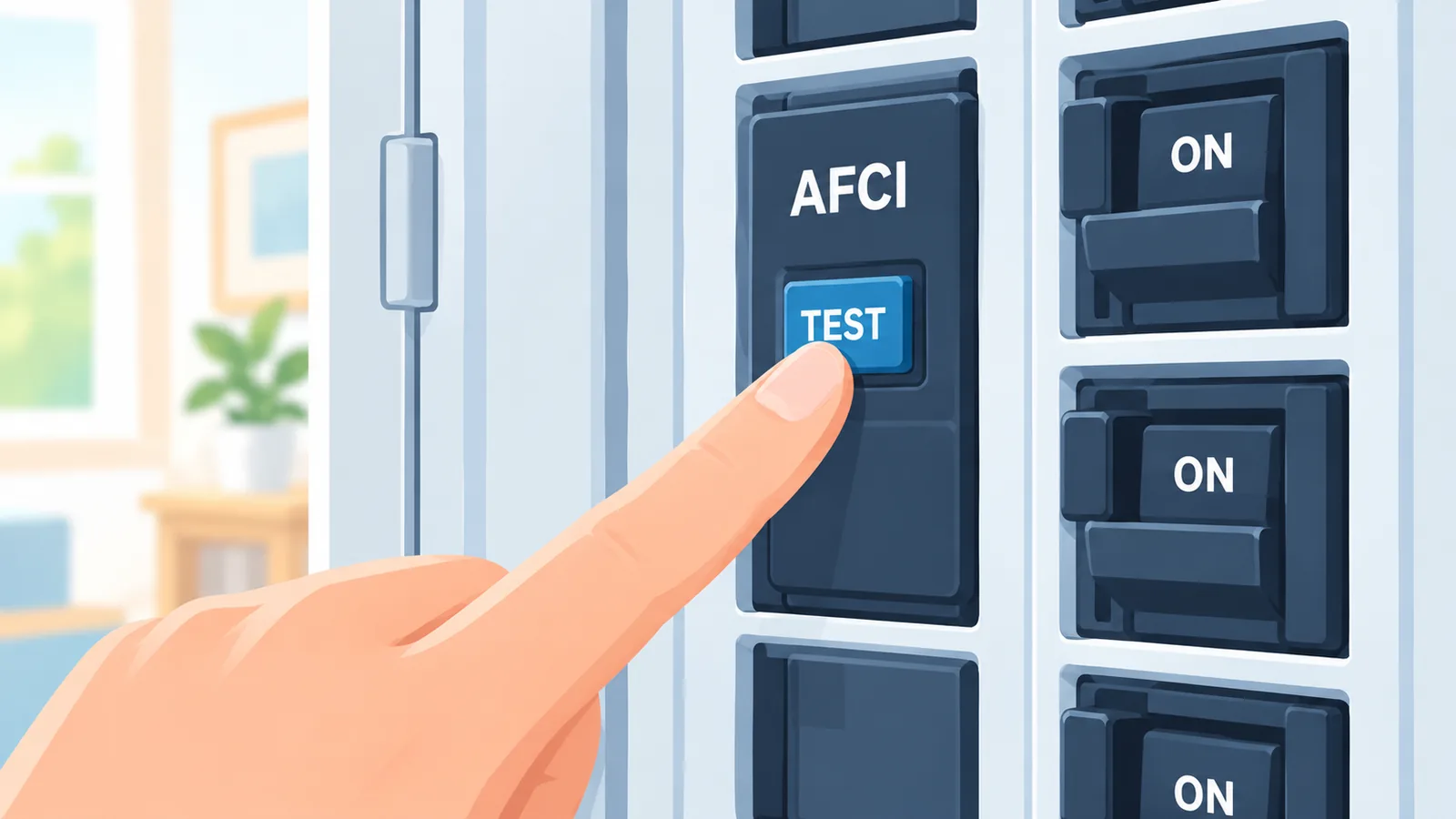
An arc fault circuit interrupter (AFCI) protects against electrical fires, and ESFI says to test yours every month [3]. Unlike switching a breaker off, this test is done with the power on.
- Make sure the power is on.
- Open the electrical service panel door.
- With the breaker handle in the ON position, press the AFCI TEST button.
- A working AFCI trips, and the handle moves to OFF or to the TRIP position if the breaker has one.
- Reset it by turning the handle OFF and then ON again.
- If the AFCI does not trip, call a licensed electrician to replace it.
How to Test a GFCI Breaker or Outlet
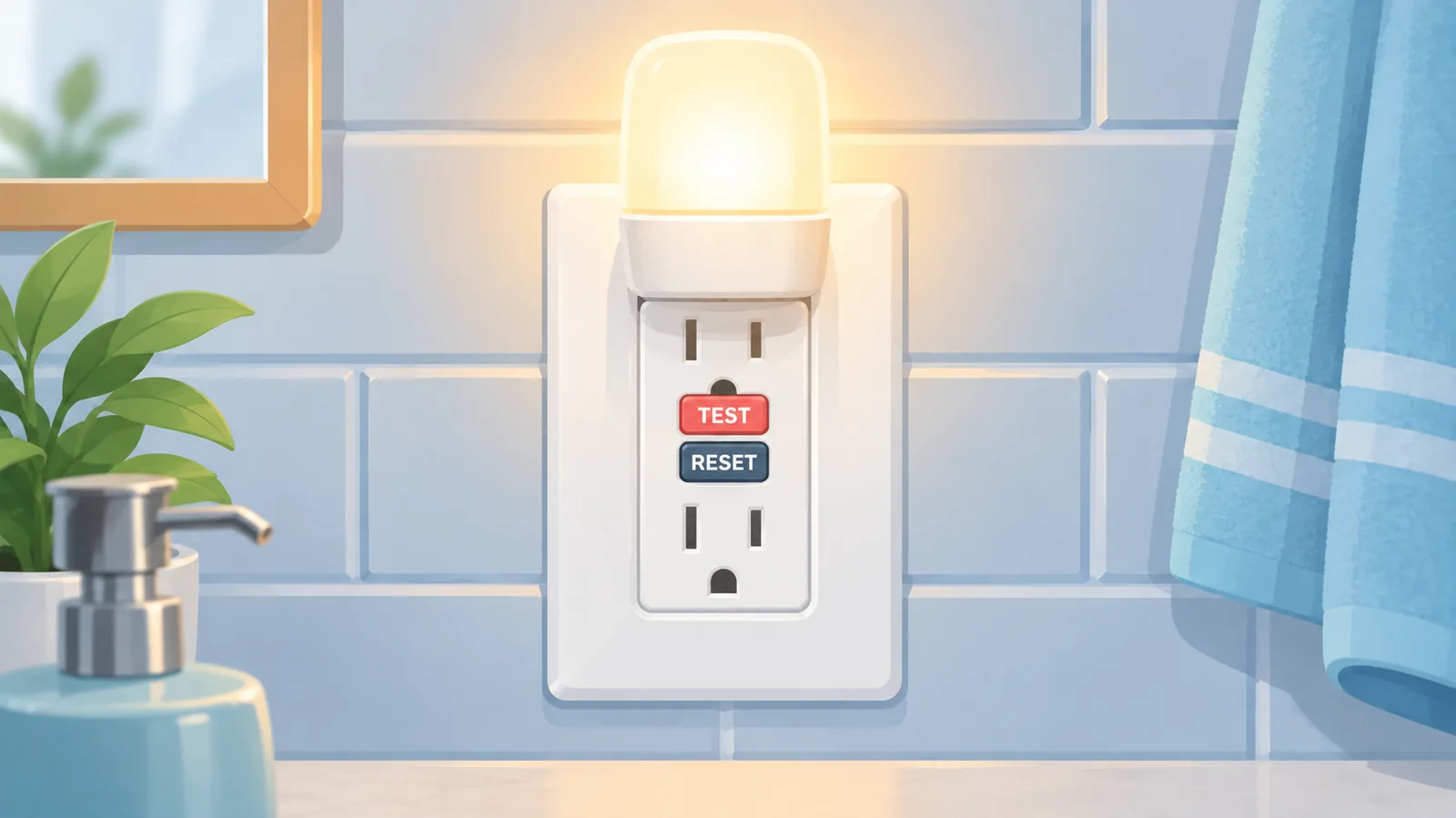
GFCIs come as breakers and as outlets, and they shut off power when a ground fault occurs, for example when equipment gets wet [4]. ESFI lists bathrooms, garages, kitchens, basements, laundry areas and outdoor receptacles among the places that require them [4].
- Find the GFCI outlet and press RESET.
- Plug in a nightlight or similar device and confirm it is on.
- Press the TEST button on the outlet or breaker.
- The device should turn off. On a breaker, the handle will sit in the off or center position.
- Press RESET, or switch the breaker to ON, and the device should turn back on.
If the test or the reset does not work, ESFI says the GFCI should be replaced [4]. Replacement is work for a qualified electrician. ESFI’s GFCI guidance gives no testing interval, so follow the instructions that came with your device.
🛒 Recommended Product
What Never to Do: Forcing a Trip With an Overload or Short
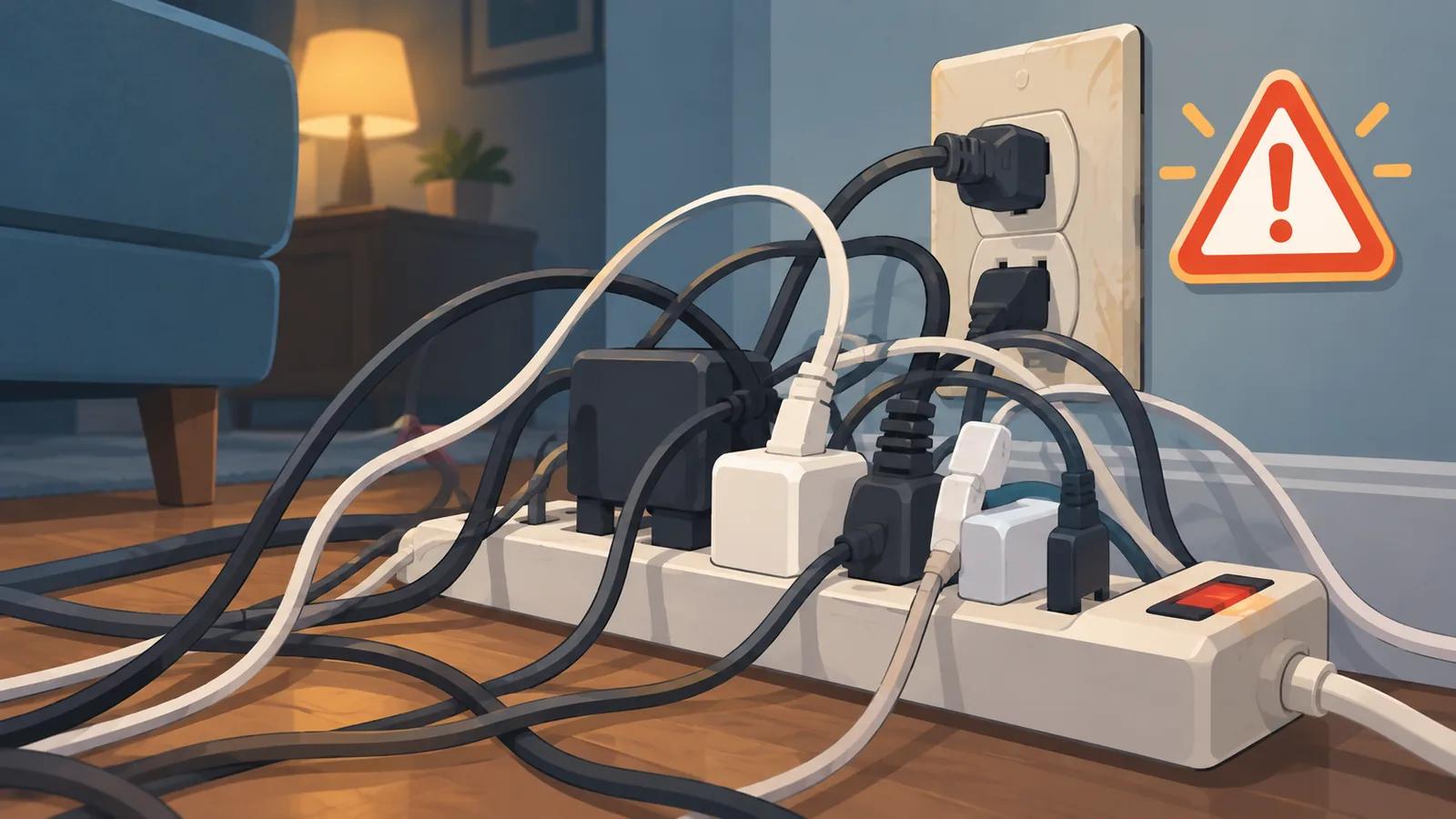
It can be tempting to “prove” a breaker works by plugging in too many appliances or by creating a short. Do not do this. Deliberately creating a short circuit, a ground fault, or an overload risks electric shock and fire. This Old House notes that testing a standard breaker by overloading a circuit is something only qualified professionals should do under controlled conditions [2].
Real overloads announce themselves. ESFI lists these warning signs [7]:
- A burning smell.
- Discolored outlets or switches.
- Buzzing or sizzling sounds.
If you notice any of them, stop using the circuit and have it inspected.
Treating “Power Off” Carefully Before Electrical Work
A breaker in the OFF position is not enough, by itself, to treat a circuit as safe. ESFI’s guidance for electrical work points to a fuller routine: confirm you are qualified for the job, check for hazards, lock out and tag the source, and verify that no voltage is present before touching anything [8].
Opening the panel cover or replacing breakers is also not a homeowner task. This Old House advises leaving that work to a licensed professional because working inside a panel can be very dangerous [2]. This article covers only what you can do from the outside of the panel.
What to Do When a Breaker Keeps Tripping
ESFI treats frequent tripping as a sign of an electrical problem and recommends inspection by a qualified electrician [6]. This Old House lists four common causes [2]:
- Overloaded circuit: too many devices drawing more power than the circuit can handle.
- Short circuit: a hot wire touching a neutral wire, from loose connections, damaged wires, or faulty appliances.
- Ground fault: current taking an unintended path, often involving water.
- Arc fault: damaged, overheated, or stressed wiring or devices.
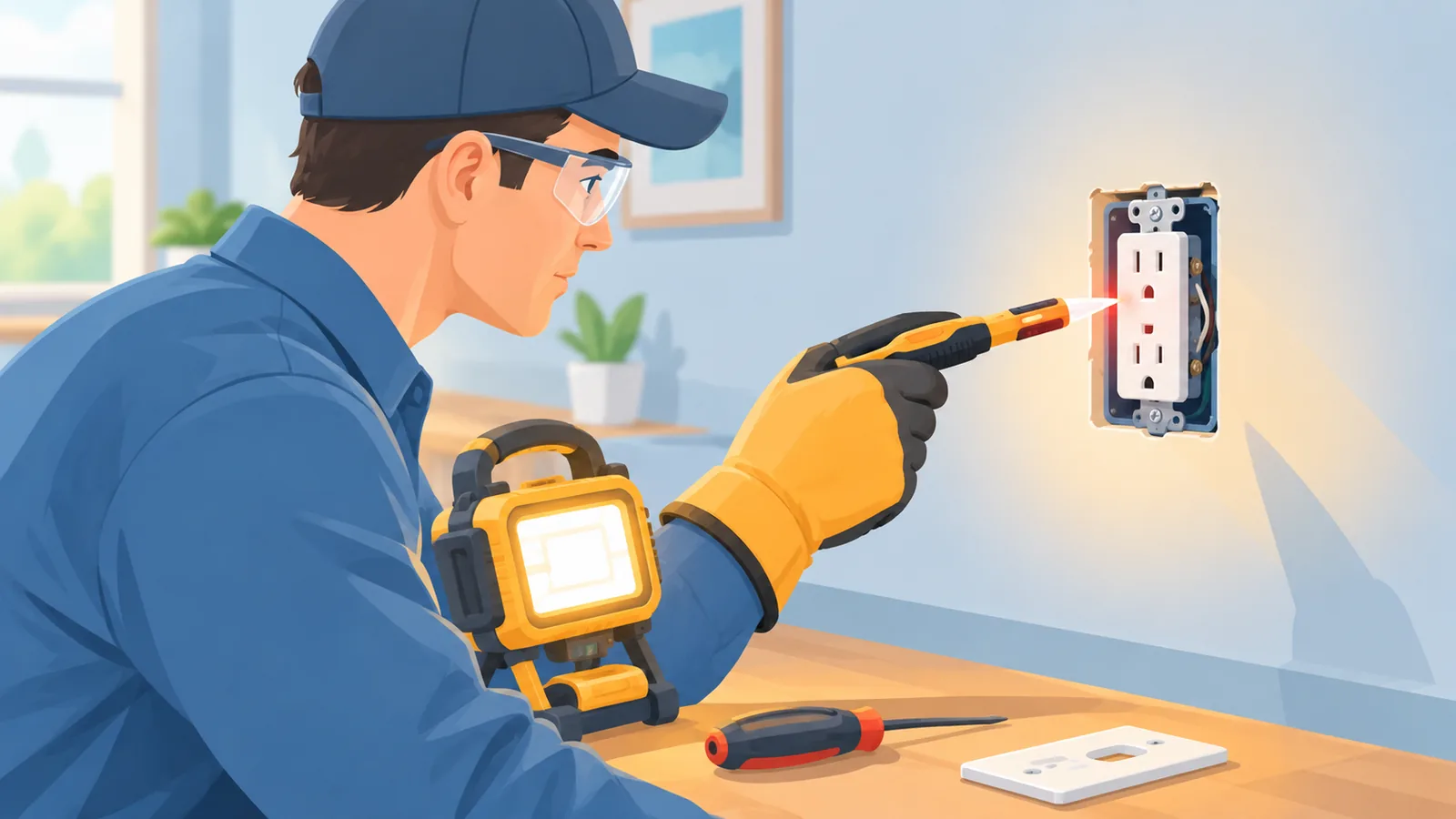
A quick checklist:
- Unplug or turn off what is on the circuit.
- Check for heat, a burning smell, discoloration, or unusual noise [7].
- If any warning sign is present, do not reset the breaker. Call an electrician.
- If there is none, reset the breaker once with the handle fully OFF and then ON, and add devices back one at a time.
- If it trips again, stop resetting and call an electrician.
This Old House also says to call a professional if a breaker does not trip when you expect it to, since it may be faulty [2].
Frequently Asked Questions
Is turning a breaker off the same as testing it?
No. Switching it off cuts power to the circuit, while a TEST button checks whether an AFCI or GFCI device responds to a simulated fault [3][4].
Where is the handle after a breaker trips?
It depends on the breaker. It may be at OFF, at a TRIP position if the breaker has one, or at the center position on a GFCI breaker [3][4]. Reset by moving it fully OFF and then ON.
Can I test a breaker by overloading a circuit?
No. Controlled overload testing of a standard breaker is professional work [2], and forcing a short or overload at home risks shock and fire.
How often should I press TEST on AFCI and GFCI devices?
ESFI says to test AFCIs every month [3]. For GFCIs, follow the instructions that came with the device, because ESFI’s GFCI guidance does not give a set interval.
When should I call an electrician?
Call one if a breaker trips frequently, if you smell burning or see damage, if an AFCI or GFCI fails its test, or if a breaker does not trip when expected [2][3][6].
To sum up: a manual switch-off identifies and isolates a circuit, a TEST button checks the protection built into AFCI and GFCI devices, and forcing a fault is never a safe test. If a breaker keeps tripping or a TEST button fails, bring in a licensed electrician rather than resetting again and again.
Before touching any wiring or panel, read ESFI’s safety guidance on confirming that power is really off.
References
- Galvin Power, How to Trip a Circuit Breaker Safely? Important Things to Know
- This Old House, Why Do Circuit Breakers Trip?
- Electrical Safety Foundation International, How to Test an AFCI
- Electrical Safety Foundation International, How to Use GFCIs
- BC Trades Modules, Construction Electrician Apprenticeship Program: Level 1
- Electrical Safety Foundation International, Fuse and Breaker Breakdown
- Electrical Safety Foundation International, Don’t Overload Your Home
- Electrical Safety Foundation International, Test Before You Touch
Want more comparisons and buying guides?
Citing this article
Source: Atovia (Atovia). https://atovia.kr