⚠️ This page connects you to Atovia’s partners and affiliate markets. We may receive a commission from affiliate partners for activities made through these links. Discount offers may change at any time according to policy! Rest assured, there are no additional costs to you! We hope this saves you time in finding the right items!
A harness that looks great online can still rub behind the elbows, restrict the shoulders, or let a dog back out in the middle of a walk. This guide starts with fit and walking habits, then narrows to two picks with honest trade-offs.
As an Amazon Associate I earn from qualifying purchases.
🛒 Recommended Product
- Quick Picks at a Glance
- How We Chose and What We Looked For
- Why Choose a Harness Over a Collar
- Front-Clip vs. Back-Clip: Which Suits Your Walks
- The Fit Check: Shoulders, Elbows, and Escape Resistance
- How to Measure and Size Correctly
- Deep-Chested Dogs and Neck-Closure Designs
- Will a No-Pull Harness Fix Pulling?
- Top Picks With Honest Trade-Offs
- Care, Daily Use, and Safe Habits
- Frequently Asked Questions
- Final Verdict: Choosing With Confidence
- Fit matters more than brand: free shoulders, no rubbing behind the elbows, and no backing out.
- Front clips can help steer a dog; back clips can cause a “sled effect” when a dog lunges.
- Sizing charts differ by brand, so measure your dog and check each maker’s chart.
- A “no-pull” label does not replace training.
- Supervise your dog, and take the harness off when you cannot watch directly.
Quick Picks at a Glance
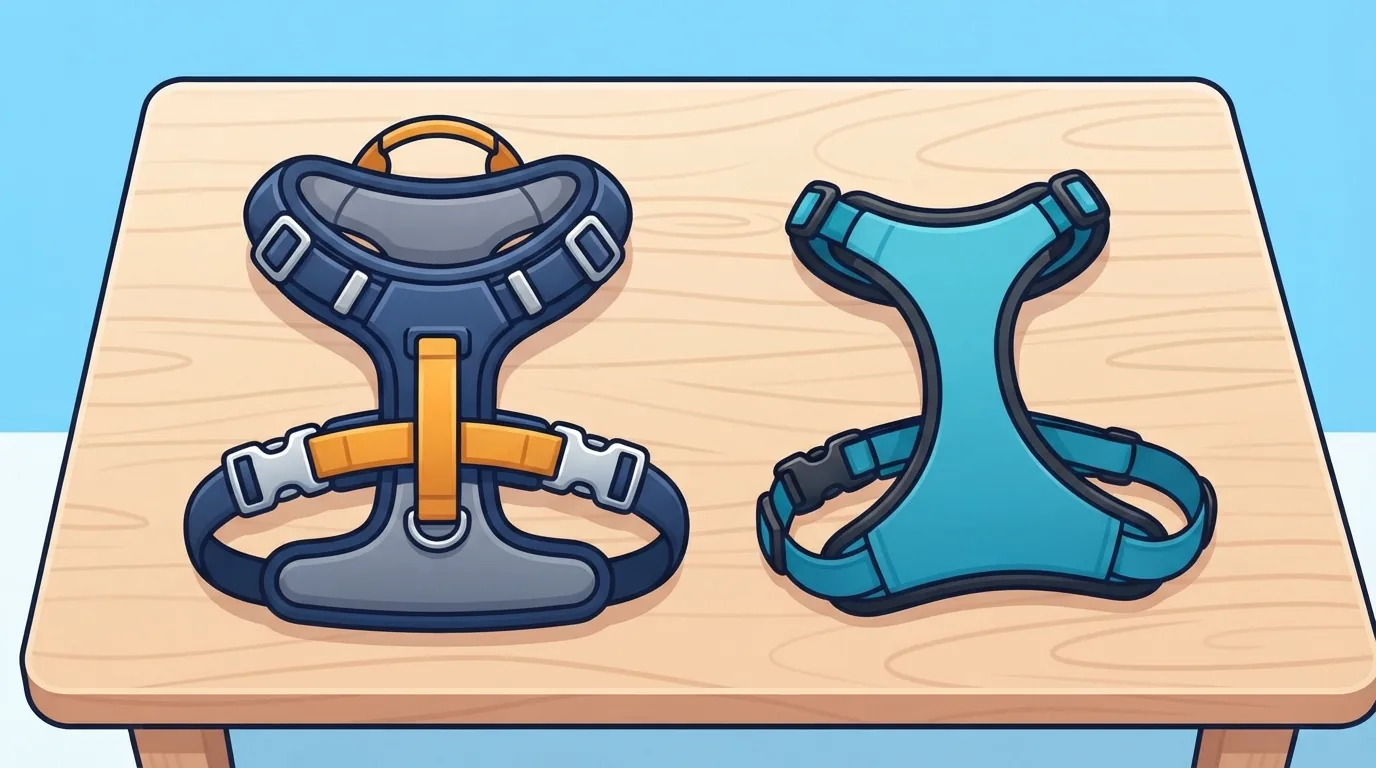
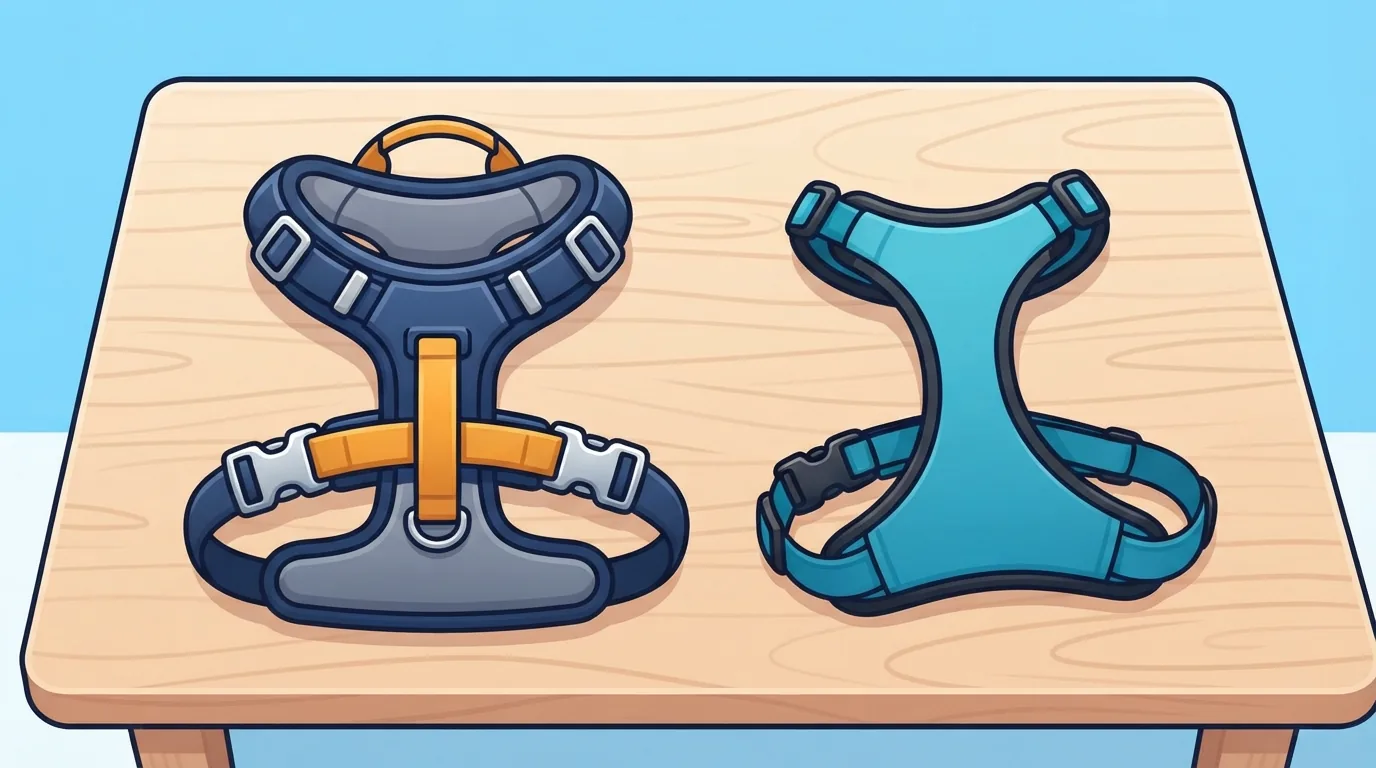
No single harness is best for every dog, so the two picks below are matched to features rather than crowned with a winner label. The details come from manufacturer specifications plus published veterinary and testing guidance. We did not test these harnesses ourselves, and nothing here is a guarantee for an individual dog.
| Feature | Ruffwear Front Range | Blue-9 Balance |
|---|---|---|
| Leash clip positions | Aluminum V-ring on the back and a reinforced loop at the front of the chest | Front and back leash points |
| Adjustment points | Four | Six-way adjustment |
| Neck closure or padding | Padded design | Neck buckle, so it does not have to go over the head |
| Standout feature | Padding plus reflective detail | Six-way adjustment with a neck buckle |
| Best for (general guidance) | Owners who want padding and both clip options | Owners who want the most adjustment points and a neck buckle |
| Things to verify | Price and availability not confirmed; check the size chart | Price and availability not confirmed; check the size chart |
How We Chose and What We Looked For
This guide is built from published sources rather than our own hands-on testing, so it is worth knowing what each source contributes.
Testing criteria from published comparisons
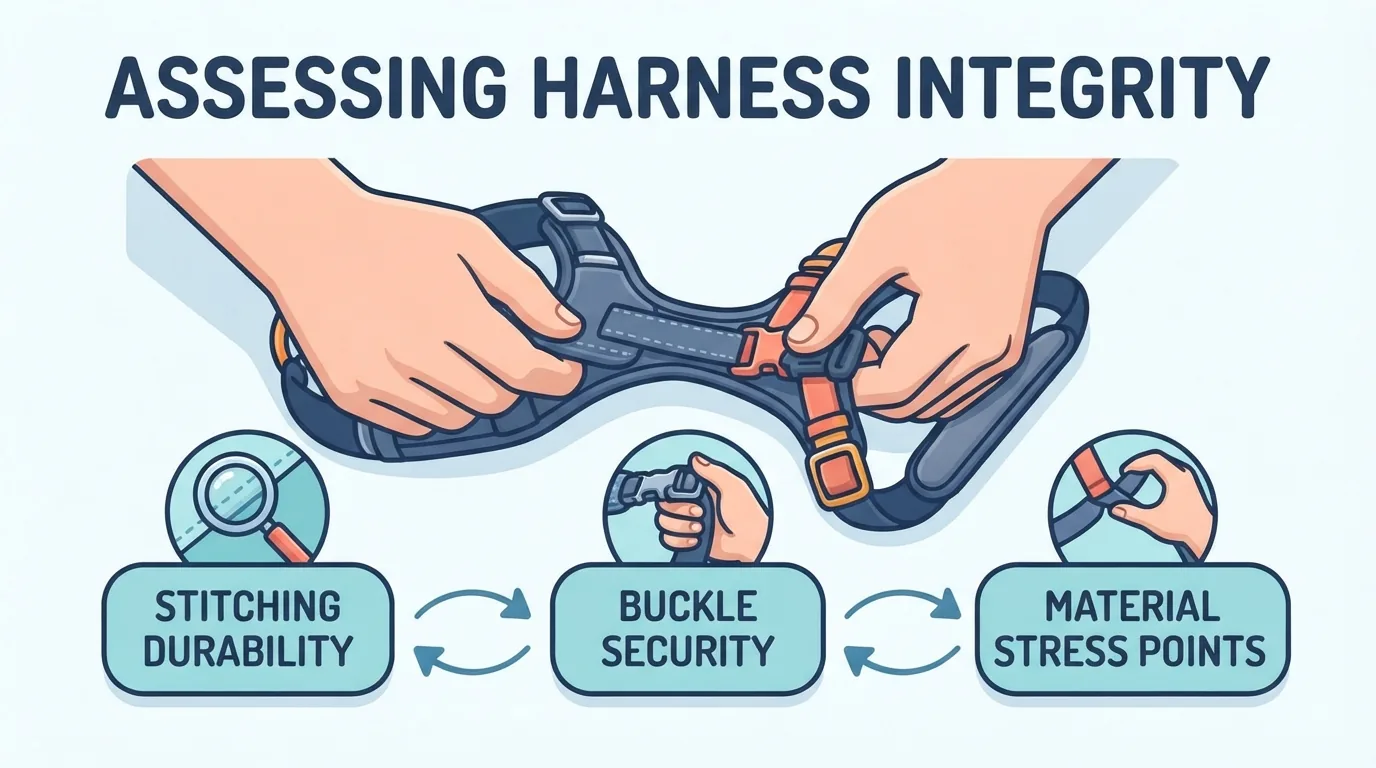
The consumer group Which? says it evaluates stitching, straps, buckles, leash attachment points, reflective elements, and how much water a harness absorbs and how long it takes to dry. Those are practical criteria to borrow when you read any product page.
Safety criteria from veterinary guidance
VCA Animal Hospitals describes a well-fitting harness as one that does not chafe, does not restrict shoulder movement, and does not let the dog slip out. We used those three checks as the backbone of this article.
What is and is not verified
- Product features come from the manufacturers’ own pages.
- We did not find independently documented drawbacks for either pick, which is not the same as saying there are none.
- We make no price, discount, shipping, or availability claims.
Why Choose a Harness Over a Collar
Many owners switch to a harness for walks because it lets them attach the leash somewhere other than the neck. Whether it suits your dog depends on how well it fits and how your dog walks.
Supervision comes first
VCA advises removing the harness when your dog is not directly supervised, to prevent tangles. A harness that is not fitted well can also let a dog back out of it.
Introduce it slowly
VCA recommends introducing a harness gradually in a quiet, safe setting and confirming your dog has adapted to it before you head out on a walk.
Front-Clip vs. Back-Clip: Which Suits Your Walks
Where the leash attaches changes how the harness feels in your hand.
Front clip
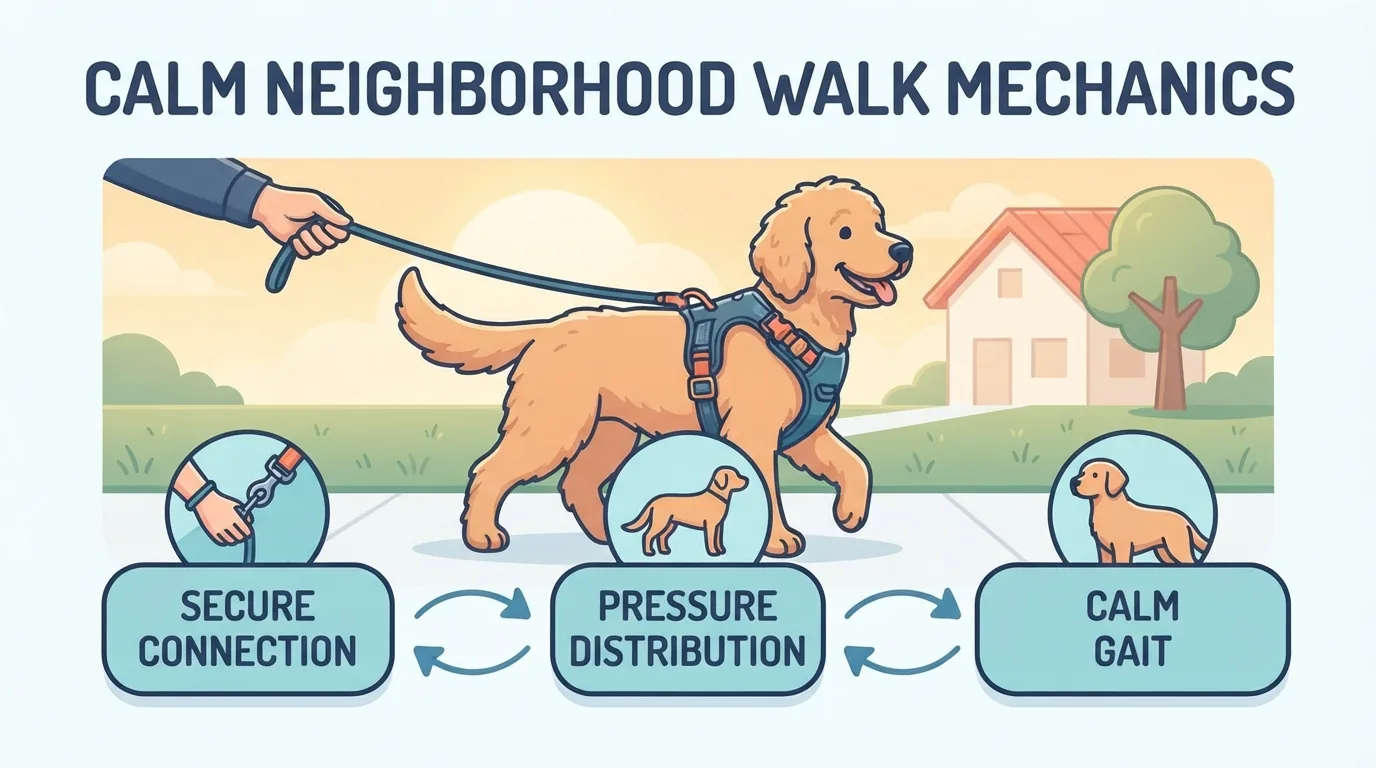
According to VCA, attaching the leash to a front clip can apply gentle pressure that turns your dog away from something that has caught their attention, or toward you.
Back clip
Which? points to a “sled effect” as the drawback of back-clip harnesses: when a dog suddenly pulls, the handler can be dragged along.
Having both options
Both products in this guide offer a front and a back attachment point, so you can choose the clip that fits the situation. Having both options does not solve pulling on its own.
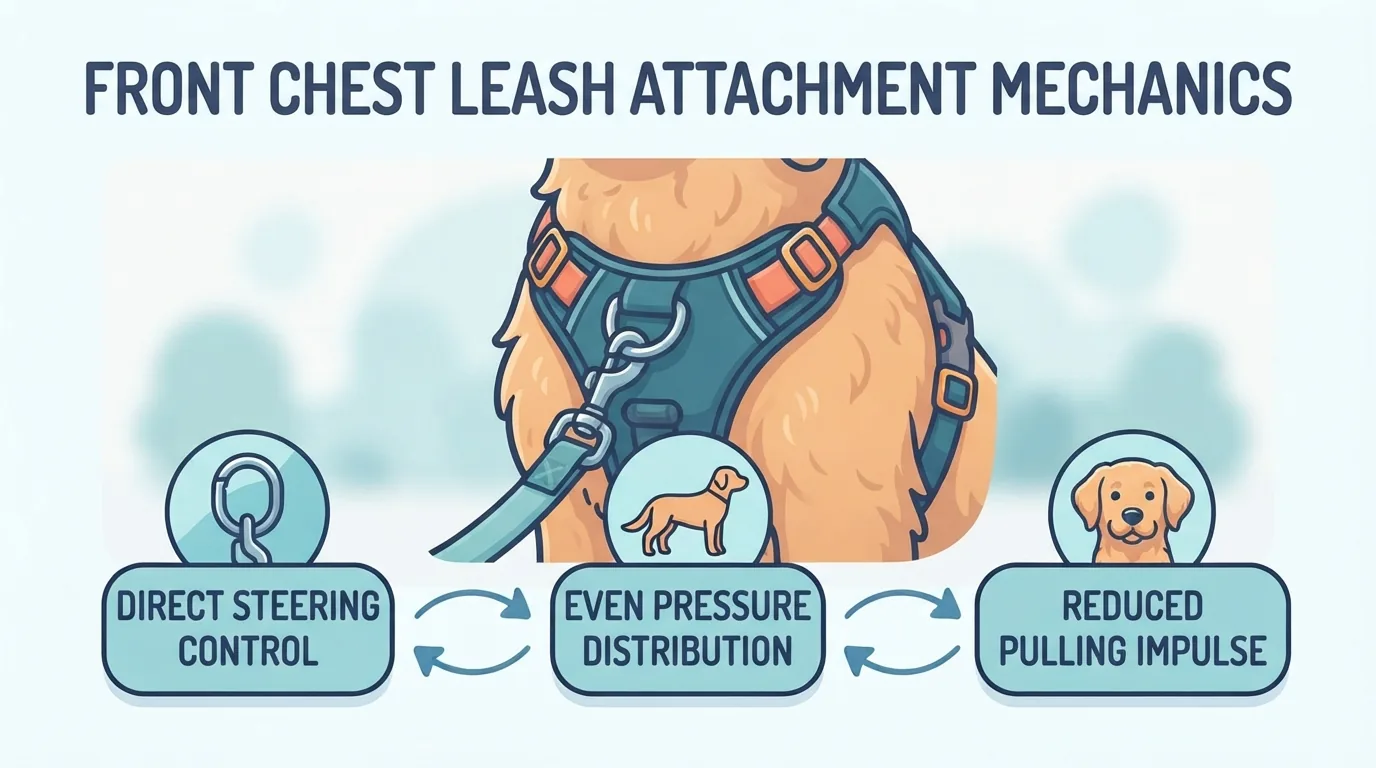
Try this at home: clip the leash to each attachment point in a calm spot and watch how your dog responds before you commit to one.
The Fit Check: Shoulders, Elbows, and Escape Resistance
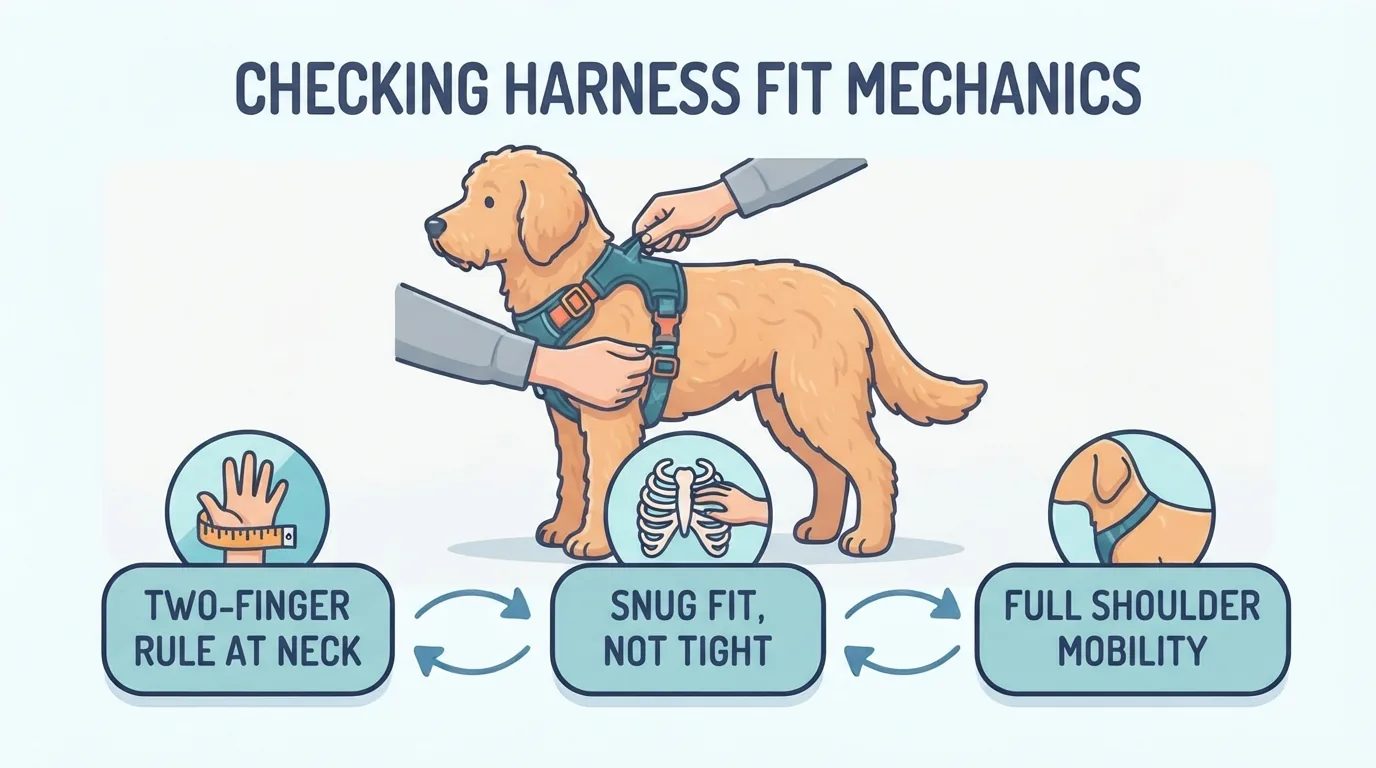
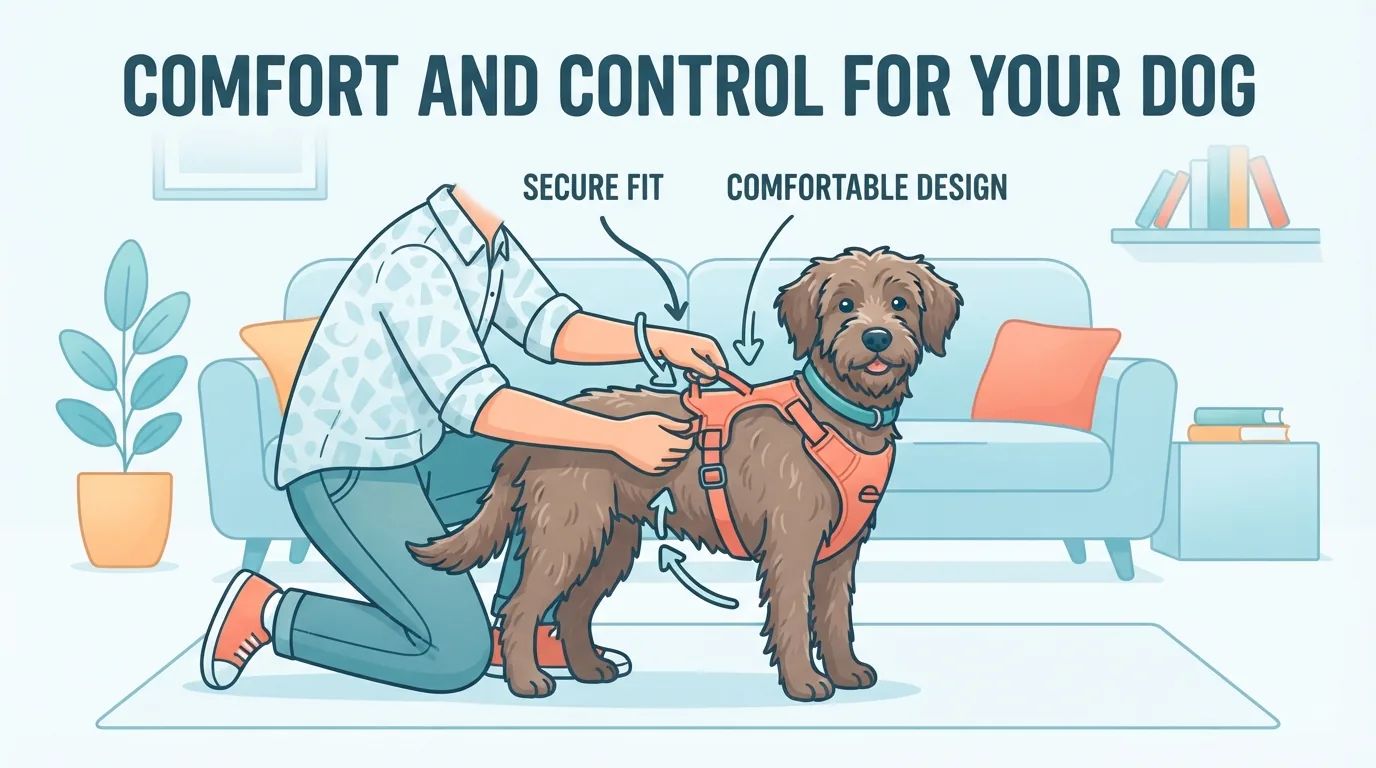
Fit is where most harness problems start. Run through these checks with the harness on, in a safe indoor space, before the first walk.
Three checks to run
- Free front-leg movement: your dog should be able to move the front legs without the straps getting in the way.
- No rubbing behind the elbows: VCA says a well-fitting harness does not chafe in this area, so look there first if your dog seems bothered.
- No backing out: make sure your dog cannot slip backward out of the harness.
Why shoulders matter
VCA notes that some harnesses can press on the shoulder joint or restrict movement. If your dog’s stride looks shortened or stiff, treat that as a reason to reconsider the style or the fit.
How to Measure and Size Correctly
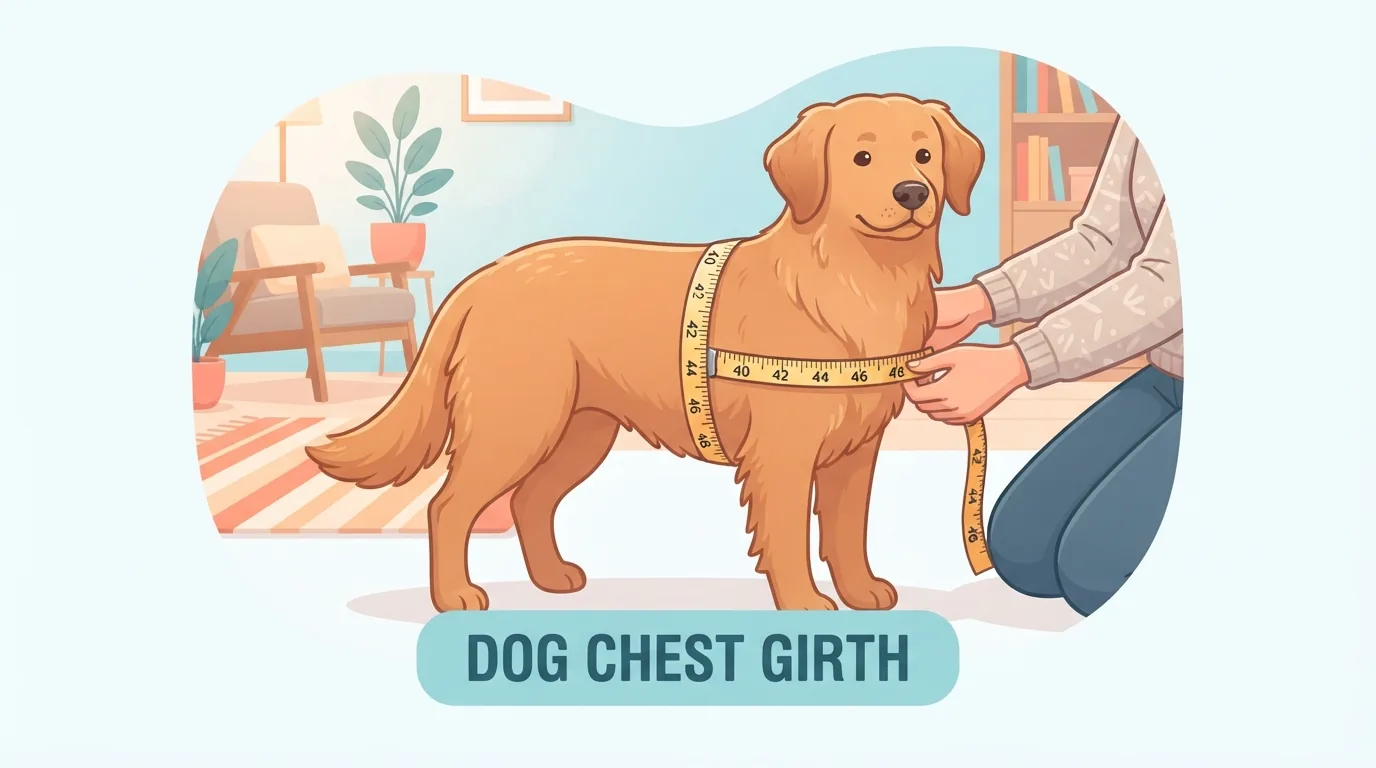
Start by measuring your dog’s chest girth with a soft tape, then compare the number with the chart for the specific harness you are considering. Sizing varies from brand to brand, so one company’s chart cannot be applied to another’s harness.
Example only: Ruffwear Front Range
The manufacturer lists these chest ranges, shown here as an example of how a chart works:
- XXS: 33–43 cm (about 13–17 in)
- XS: 43–56 cm (about 17–22 in)
- S: 56–69 cm (about 22–27 in)
- M: 69–81 cm (about 27–32 in)
- L/XL: 81–107 cm (about 32–42 in)
Inch values are approximate conversions; the centimeter figures are the manufacturer’s. If your dog falls between sizes, Ruffwear advises choosing the larger one. Always check the current chart on the product page, and do not use these numbers for any other brand.
🛒 Recommended Product
Deep-Chested Dogs and Neck-Closure Designs
Deep-chested dogs
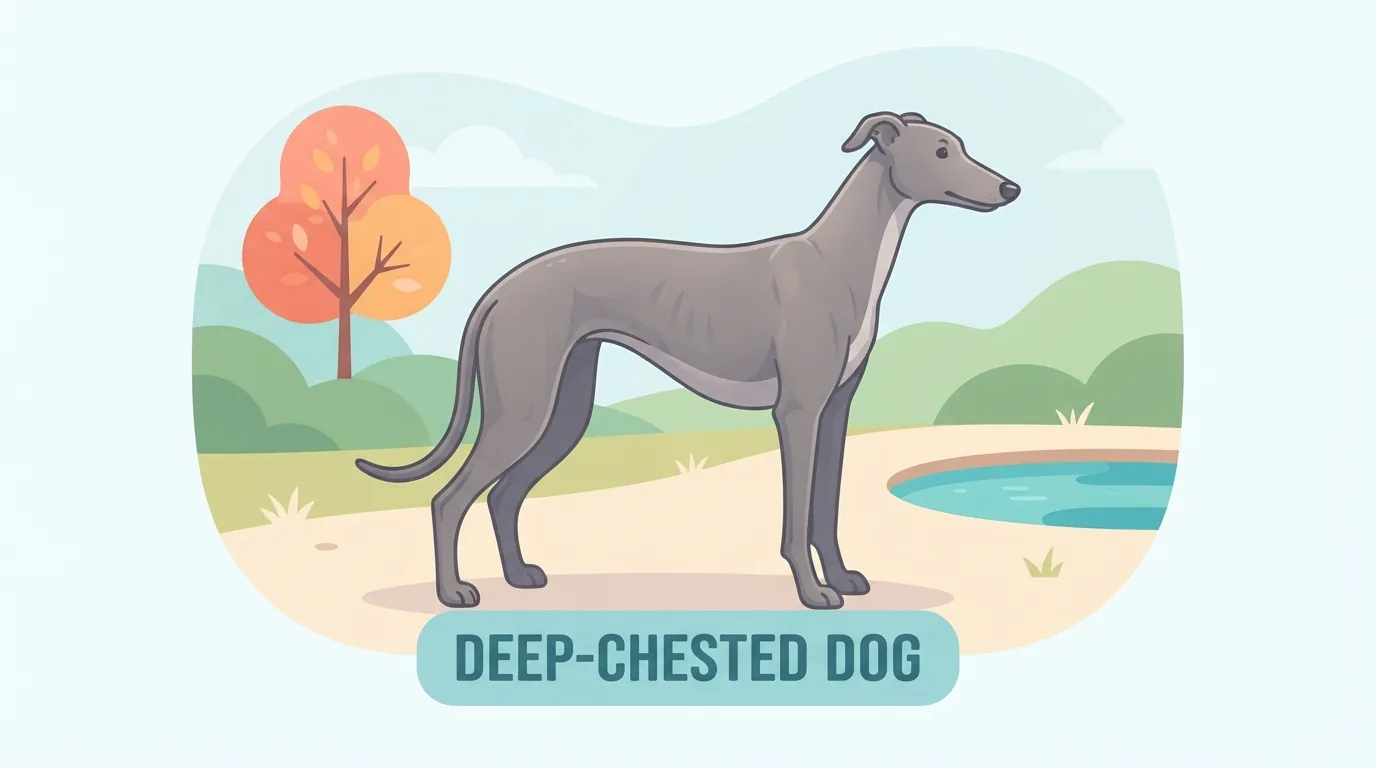
VCA explains that some deep-chested dogs may need a double-H style harness to stay safe. VCA also lists what a good H-style or Y-style harness should do: avoid chafing, allow free shoulder movement, and prevent the dog from slipping out. If your dog has a deep chest, ask your veterinarian or a trainer which style to try.
Neck closures
Blue-9 describes a neck buckle on the Balance harness so it does not have to go over the dog’s head. That may be easier to put on, particularly if your dog dislikes things being pulled over the head, though we found no independent evidence on how dogs respond to it.
Will a No-Pull Harness Fix Pulling?
Not by itself. VCA’s guidance on pulling points to positive-reinforcement training that is tailored to the individual dog, and a “no-pull” label on the packaging does not guarantee the behavior will change.
What to expect
- Equipment can help you manage a walk, but it does not teach loose-leash walking.
- Training works best when it reflects your dog’s own habits and motivations.
- If pulling is a persistent problem, consider asking a trainer for help.
Top Picks With Honest Trade-Offs
These two harnesses are described using manufacturer specifications. For both, we did not find independently documented drawbacks, and that is not a guarantee for your dog. The “suits” lines are general guidance based only on listed features.
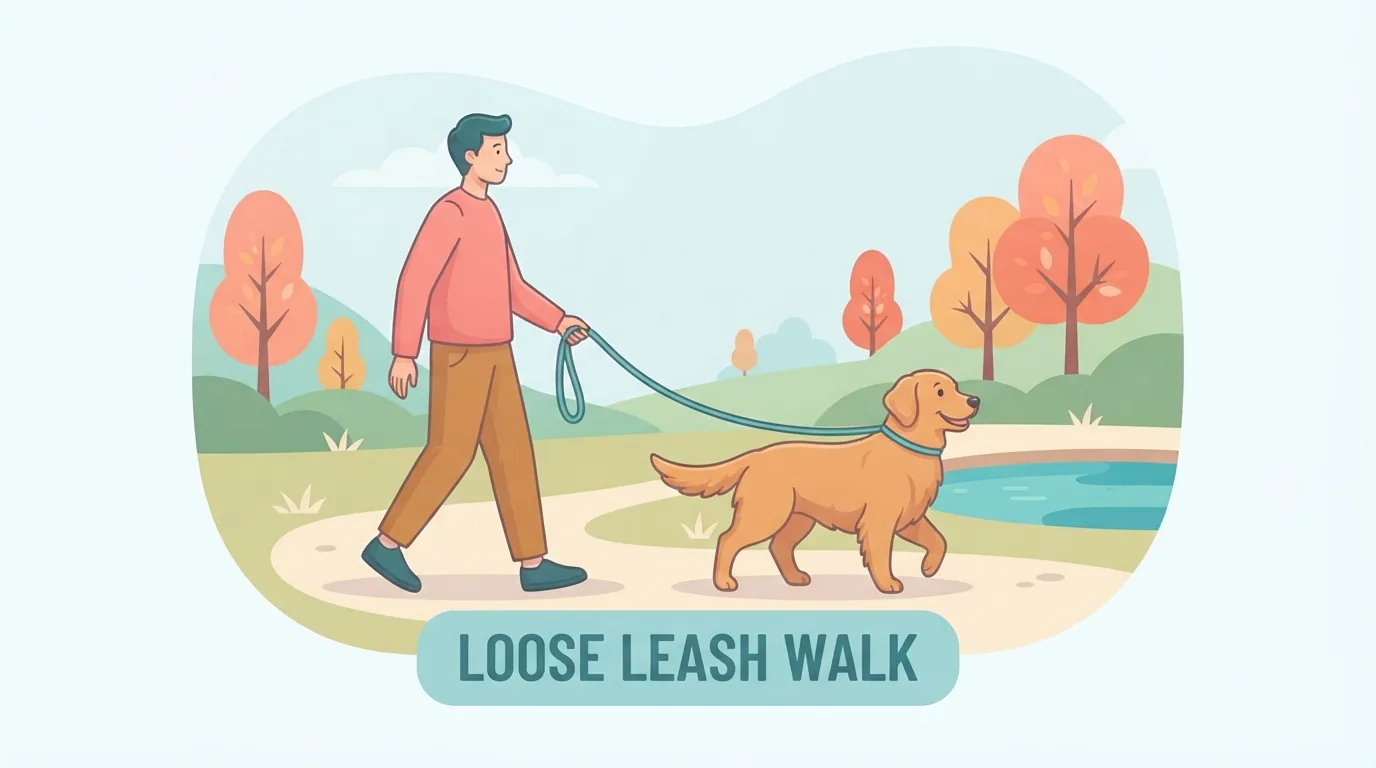
Ruffwear Front Range
- Features: padding, four adjustment points, an aluminum V-ring on the back, a reinforced loop at the front of the chest, and reflective detail.
- May suit: owners who want padding and the choice between a back clip and a front clip.
- Consider looking elsewhere if: you want more than four adjustment points, or your dog’s chest measurement does not match the manufacturer’s size chart.
Blue-9 Balance
- Features: six-way adjustment, front and back leash points, and a neck buckle so it does not need to go over the head.
- May suit: owners who want finer adjustment and an easier way to put the harness on.
- Consider looking elsewhere if: you prefer a design without a neck buckle, or you cannot confirm that it fits your dog’s measurements.
Other names to research
NBC Select’s 2026 roundup also lists Wild One, Kurgo Tru-Fit, 2 Hounds Design Freedom, and PetSafe Easy Walk. They are included only as names to research. That list is one outlet’s selection, not an endorsement, and we have not verified their specifications.
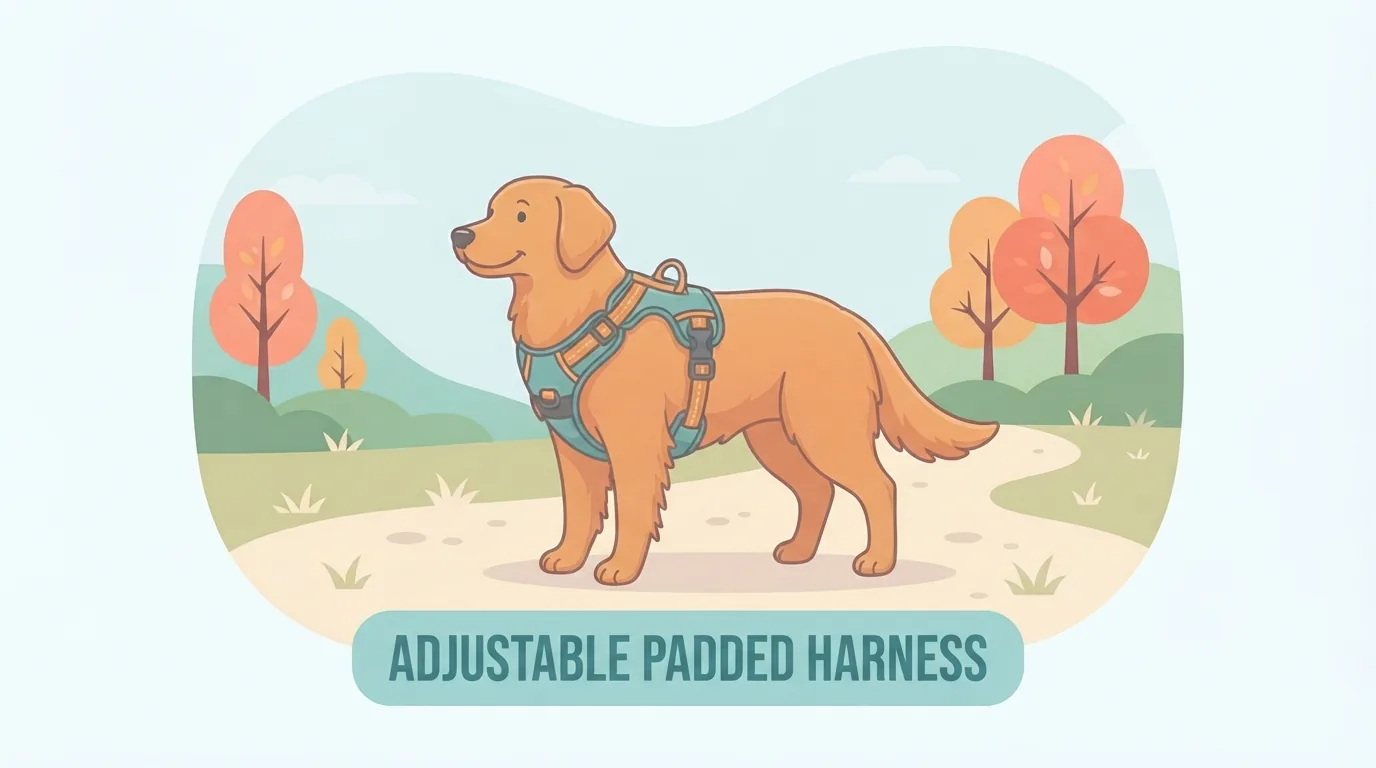
Check the manufacturer’s sizing chart before you buy.
View the Ruffwear Front Range page
View the Blue-9 Balance page
Care, Daily Use, and Safe Habits
Inspect the hardware
It is sensible to look over the straps, buckles, and stitching from time to time, since those are the parts Which? evaluates in its comparisons. We are not suggesting a specific schedule.
Follow the care instructions
Cleaning and drying steps vary by product, so follow the manufacturer’s care instructions on the product page.
Supervision rules
- Take the harness off when your dog is not directly supervised, to prevent tangles.
- Introduce it gradually in a calm setting before relying on it for walks.
- Stop and re-check the fit if you notice rubbing, restricted movement, or backing out.
Frequently Asked Questions
Can a dog wear a harness all day at home?
The guidance we found is to remove the harness when your dog is not directly supervised, to prevent tangles. Introduce it gradually, and ask your veterinarian if you are unsure.
Is a front clip or back clip better?
It depends on your dog and your walks. A front clip can gently turn a dog toward you or away from distractions, while a back clip can lead to a sled effect if your dog lunges. Harnesses with both clips let you choose.
How tight should a harness be?
We did not find a numeric standard in our sources, so rely on the checks that were confirmed: free front-leg movement, no rubbing behind the elbows, and no backing out of the harness.
Does a no-pull harness work on its own?
No. A “no-pull” label does not guarantee the behavior is fixed, and VCA points to positive-reinforcement training tailored to the individual dog.
What if my dog is between sizes?
For the Ruffwear Front Range, the manufacturer advises choosing the larger size. For any other brand, follow that brand’s own chart and guidance.
Is a harness safe for a deep-chested dog?
Some deep-chested dogs may need a double-H style harness for safety, according to VCA. Ask your veterinarian or a trainer which design suits your dog.
Final Verdict: Choosing With Confidence
The decision path is simple: measure your dog, match the clip style to how you walk, check the fit, and then train. A harness is a tool, and fit and supervision matter more than any brand name.
- Consider the Ruffwear Front Range if you want a padded harness with a back V-ring and a front chest loop, and its size chart suits your dog.
- Consider the Blue-9 Balance if you want six-way adjustment and a neck buckle, and you want both front and back leash points.
Both choices are based on manufacturer specifications and published guidance, not on our own testing, so verify the fit on your own dog before relying on either one.
References
Want more comparisons and buying guides?