⚠️ This page connects you to Atovia’s partners and affiliate markets. We may receive a commission from affiliate partners for activities made through these links. Discount offers may change at any time according to policy! Rest assured, there are no additional costs to you! We hope this saves you time in finding the right items!
To find your Chinese zodiac sign, match your birth date to the Chinese zodiac year it falls in, then read off the animal for that year. The catch is that the zodiac year does not begin on January 1. In ordinary calendars it changes at Lunar New Year, so a birthday in January or February may belong to the previous year’s animal.
This guide walks you through the twelve animals, a simple step-by-step lookup, a quick check for January and February birthdays, and the two different ways people draw the year boundary. It also explains how to confirm your result against an official calendar table.
- The Quick Answer: What the Chinese Zodiac Is and How It Works
- The 12 Animals in Order
- Why Your Birth Year Alone May Not Be Enough
- Step-by-Step: Find Your Sign From Your Birth Date
- Born in January or February? A Quick Check
- Lunar New Year vs. Start of Spring: Two Ways to Draw the Line
- Double-Check Your Result Before You Rely on It
- Common Mistakes When Finding Your Zodiac Animal
- Chinese Zodiac vs. Korean Zodiac: Same Animals?
- What Your Sign Means: Tradition, Not Prediction
- Frequently Asked Questions
- Summary and Next Step
- The 12 animals repeat in a fixed order: Rat, Ox, Tiger, Rabbit, Dragon, Snake, Horse, Goat (also called Sheep), Monkey, Rooster, Dog, Pig.
- In ordinary calendars, the zodiac year changes at Lunar New Year, not on January 1.
- Lunar New Year falls on a different Gregorian date each year, usually in January or February, so birthdays in those months need a check.
- Some fortune-tellers use the Start of Spring (Lichun) instead, which can give a different animal.
- Chinese and Korean zodiac animals are the same twelve.
The Quick Answer: What the Chinese Zodiac Is and How It Works
The Chinese zodiac is a cycle of twelve animals used to name years, and it lines up with the twelve Earthly Branches of the traditional calendar system. Each year gets one animal, and after twelve years the cycle starts over.
It is also an old system. The Hong Kong Observatory notes that the animals have been used to record years in China for a very long time, going back to AD 100.
Here is what you will get below: a short lookup method in a few steps, the animal order as a chart, and a special check for anyone born in January or February.
The 12 Animals in Order
The animals always follow the same sequence. After the Pig, the cycle returns to the Rat and begins again, so any animal returns every twelve years.
- Rat
- Ox
- Tiger
- Rabbit
- Dragon
- Snake
- Horse
- Goat (also called Sheep)
- Monkey
- Rooster
- Dog
- Pig
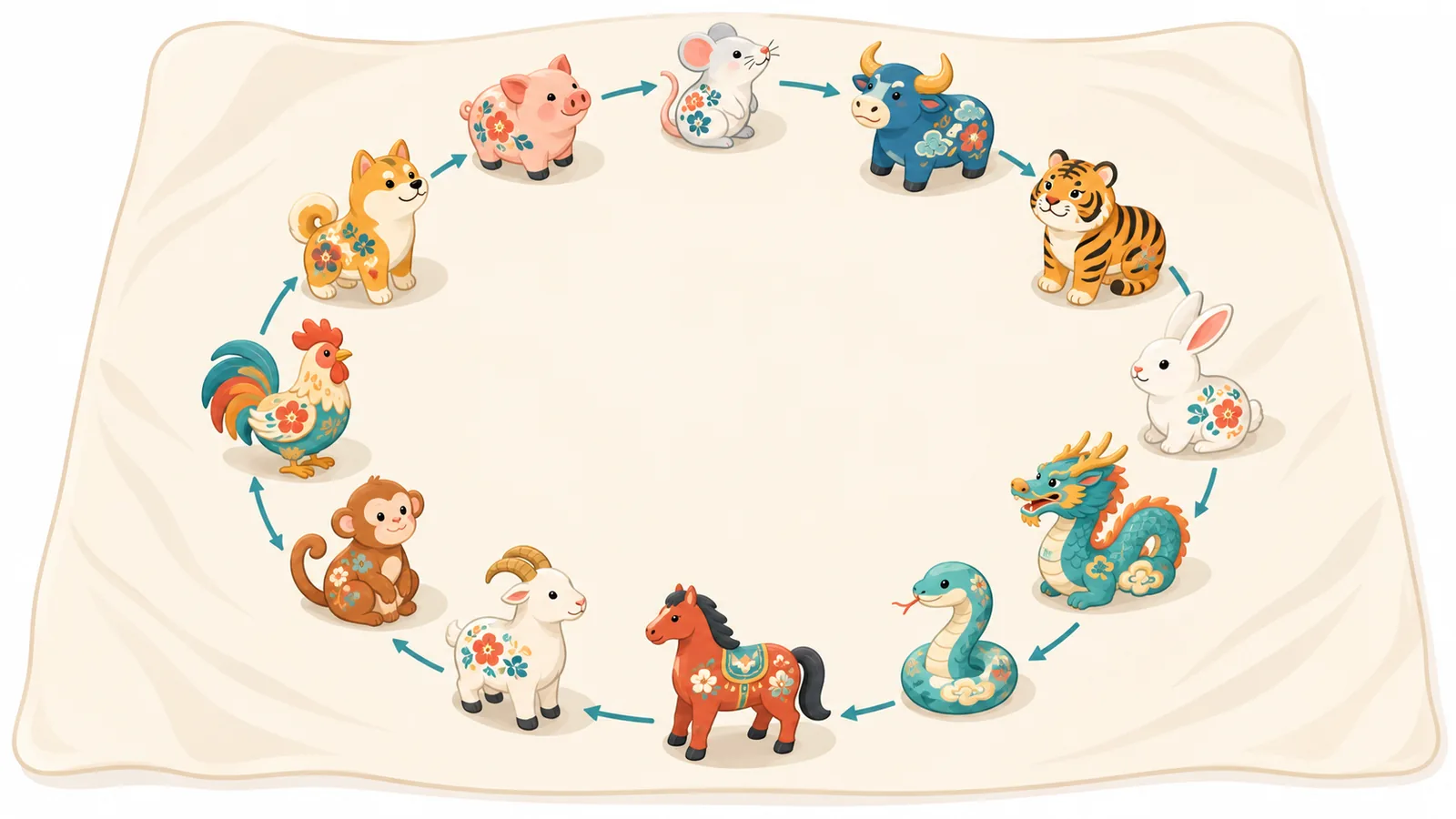
The order is fixed and is never rearranged. English sources use both “Goat” and “Sheep” for the eighth animal, and they refer to the same place in the cycle.
Why Your Birth Year Alone May Not Be Enough
The zodiac follows the traditional Chinese calendar, which reflects the movements of both the moon and the sun. That is why its new year does not land on the same day as the Gregorian January 1.
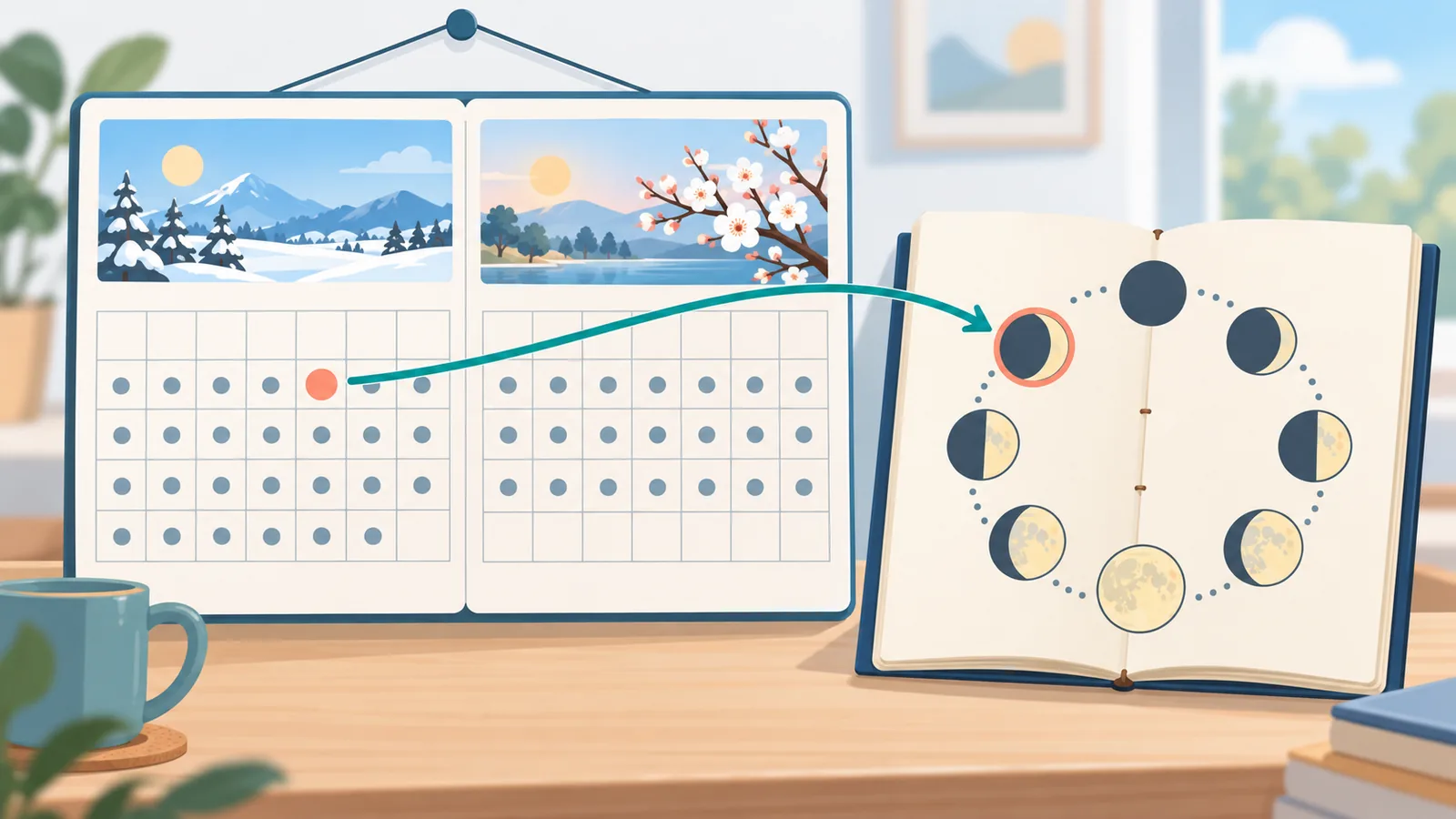
The first day of the lunar year falls on a different Gregorian date each year, usually in January or February. As a result, the Gregorian year of your birth does not always tell you your animal.
Here is the logic with a generic example. Suppose your birthday is in January, and in your birth year Lunar New Year arrives later in the same month or in February. Your birthday comes before the zodiac year changed, so you belong to the animal of the previous year, not the one printed on your birth certificate’s year.
Step-by-Step: Find Your Sign From Your Birth Date
This method uses the rule that ordinary calendars follow: the zodiac year changes at Lunar New Year.

- Note your full birth date. You need the month and day, not just the year.
- Look up Lunar New Year for your birth year. Use a Gregorian-to-Chinese calendar conversion table, such as the one the Hong Kong Observatory points to for the years 1901 to 2100.
- Compare your birthday with that date. If you were born before Lunar New Year that year, use the previous year’s animal. If you were born on or after it, use that year’s animal.
- Match the zodiac year to its animal. Use the 12-animal order above, or the animal shown for that year in the conversion table.
Born in January or February? A Quick Check
This check matters most for people with birthdays in January or February, because Lunar New Year usually falls in one of those two months. Use this short checklist:

- Was I born in January or February? If not, your Gregorian birth year will usually match, but confirming against the table is still wise.
- Did Lunar New Year in my birth year come before or after my birthday?
- If my birthday came first, I use the previous year’s animal.
- If my birthday came on or after Lunar New Year, I use my birth year’s animal.
To confirm the exact date for your year, check the Hong Kong Observatory page that links to its conversion table.

Lunar New Year vs. Start of Spring: Two Ways to Draw the Line
Not everyone uses the same boundary. The Hong Kong Observatory explains that ordinary calendars use the first day of the lunar year, while some fortune-tellers and fortune-telling enthusiasts use the Start of Spring (Lichun). The two rules can give different animals for people born in January or February.
| Item | Lunar New Year | Start of Spring (Lichun) |
|---|---|---|
| Method | Lunar New Year rule | Start of Spring rule |
| Where the year changes | First day of the lunar year | At the Start of Spring |
| Who commonly uses it | Ordinary calendars | Some fortune-tellers and enthusiasts |
| Effect on January/February births | May give a different animal than the other method | May give a different animal than the other method |
This article uses the Lunar New Year rule. Before you trust any calculator, check which rule it uses. If two tools give you different animals, the boundary rule is the first thing to compare.

Double-Check Your Result Before You Rely on It
Once you have an animal, confirm it. Look up your birth date in the Hong Kong Observatory’s Gregorian-to-Chinese calendar table, and make sure the animal for your zodiac year matches the one you picked.
If you also try a calculator, choose one that states its boundary rule, as the TravelChinaGuide calculator page does when it describes its two dividing methods. A result is only as reliable as the rule behind it.

Common Mistakes When Finding Your Zodiac Animal
- Using the Gregorian year without checking Lunar New Year. This is the most common error for January and February birthdays.
- Mixing the two boundary rules. Taking one tool’s answer on the Lunar New Year rule and another’s on the Start of Spring rule can leave you with conflicting animals.
- Confusing the zodiac animal with a Western star sign. They are separate systems.
- Trusting a calculator that does not say which rule it uses. Without the rule, you cannot judge a result for a boundary birthday.
Chinese Zodiac vs. Korean Zodiac: Same Animals?
Yes. Material from Korea’s National Heritage Institute lists the same twelve animals for Korea and China, in the same order.
That does not hold everywhere, though. A Korean academic journal abstract on the twelve branches and zodiac culture notes that the lineup of animals and the related customs differ among nations and peoples.
Even when two countries share the animals, your year boundary still depends on the calendar rule used, so the January and February check applies in either case.
What Your Sign Means: Tradition, Not Prediction
In many cultures, people link each zodiac animal to traits such as temperament, ability, or luck. Korea’s National Heritage Institute describes this as a folk custom, a cultural practice rather than a verified fact about a person.
Treat these associations as tradition and entertainment. They are fun to read, but they are not a tested way to predict character or the future. If you want to explore further, elements and compatibility are popular topics in zodiac folklore, again as cultural tradition.
Frequently Asked Questions
Is the Chinese zodiac year the same as the calendar year?
Not always. The zodiac year changes at Lunar New Year, which falls on a different Gregorian date each year, usually in January or February.

What animal am I if I was born in January?
It depends on whether your birthday came before that year’s Lunar New Year. If it did, use the previous year’s animal. Check the conversion table to be sure.
Which date changes the zodiac sign, Lunar New Year or Lichun?
Ordinary calendars use Lunar New Year. Some fortune-tellers and enthusiasts use the Start of Spring (Lichun) instead, so the two methods can disagree for some January and February births.
Are Chinese and Korean zodiac animals the same?
Yes. Both use Rat, Ox, Tiger, Rabbit, Dragon, Snake, Horse, Goat (also called Sheep), Monkey, Rooster, Dog, and Pig.

Can my sign tell me my personality or fortune?
Tradition links animals to personality and luck, but this is a folk custom and not a verified predictor. Enjoy it as culture and entertainment.
Summary and Next Step
The Chinese zodiac is a fixed cycle of twelve animals, and your sign depends on which zodiac year your birthday falls in. Because the year changes at Lunar New Year, January and February birthdays need extra care. Confirm your result against an official table, and check which boundary rule any calculator uses.
Ready to confirm your animal? Check your birth date against the Gregorian-to-Chinese calendar reference from the Hong Kong Observatory.
References
- TravelChinaGuide, Chinese Zodiac
- Hong Kong Observatory, The 12-Year Animal Cycle
- Hong Kong Observatory, What year is it today?
- TravelChinaGuide, Chinese Zodiac Calculator
- Hong Kong Observatory, The Chinese Agricultural Calendar (Nongli)
- National Heritage Institute (Korea), article on the twelve zodiac animals
- KCI journal article on the twelve branches and zodiac culture
Want more comparisons and buying guides?
Citing this article
Source: Atovia (Atovia). https://atovia.kr