⚠️ This page connects you to Atovia’s partners and affiliate markets. We may receive a commission from affiliate partners for activities made through these links. Discount offers may change at any time according to policy! Rest assured, there are no additional costs to you! We hope this saves you time in finding the right items!
- 1. Understanding Cinematography and Why It Matters
- 2. The Rule of Thirds — Mastering Visual Composition
- 3. Lighting Techniques That Transform Any Scene
- 4. Camera Movement and Angles for Emotional Impact
- 5. Depth of Field and the Art of Focus Control
- 6. Color Grading and Establishing Visual Tone
- 7. The Long Take and Single-Shot Sequences
- 8. Dutch Angle and Unconventional Framing
- 9. Lens Choice and Its Emotional Impact on the Viewer
- 10. Practical Gear and Tools for Aspiring Cinematographers
- Cinematography is a deliberate visual language built from composition, light, movement, and color.
- The rule of thirds is the single most important compositional framework every filmmaker must internalize.
- Lighting defines mood more powerfully than any other on-set decision.
- Lens choice is an emotional decision, not merely a technical one.
- The right gear at every budget level can produce genuinely cinematic results.
1. Understanding Cinematography and Why It Matters
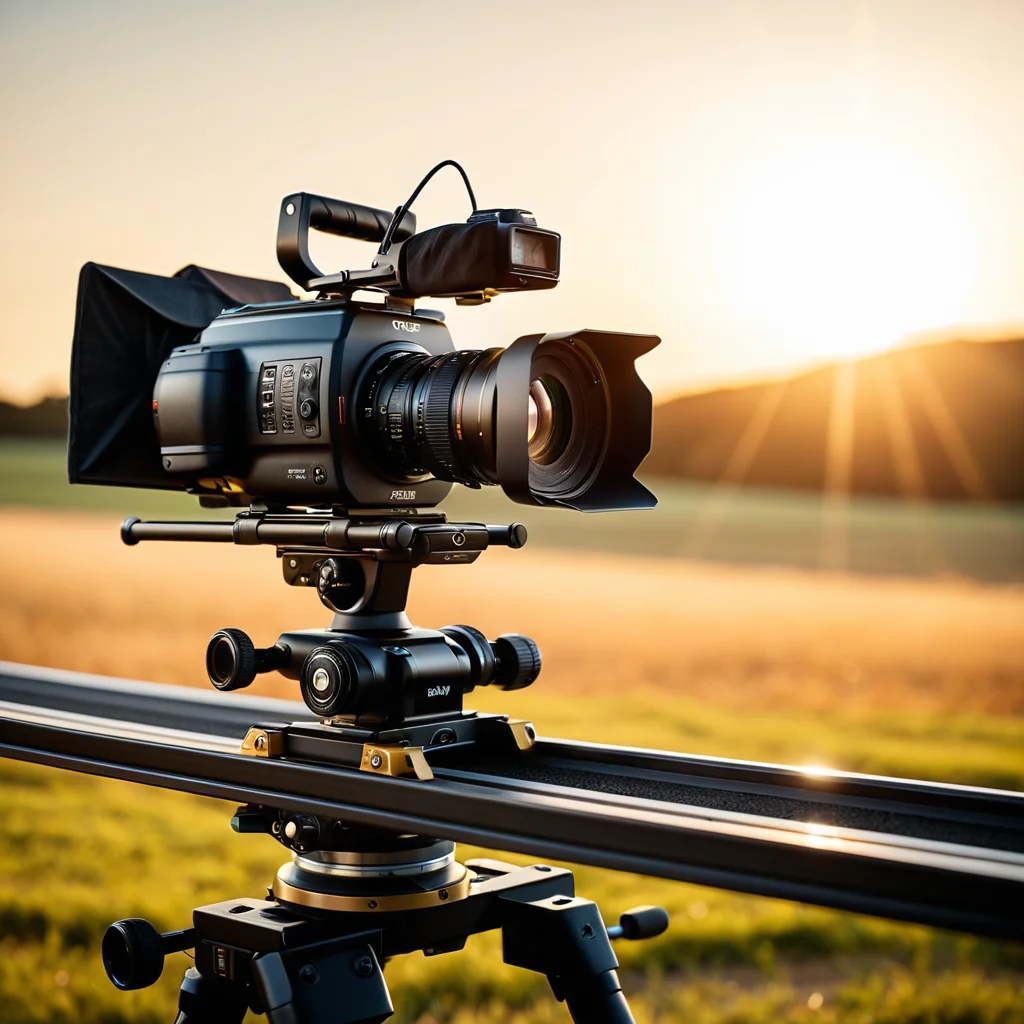
Cinematography is the discipline of capturing moving images with intention. It encompasses every visual decision made between the moment a camera is pointed at a subject and the moment a finished frame reaches an audience. Where the camera sits, how light falls across a face, which lens compresses or expands a room — all of these choices are the cinematographer’s domain.
The Director of Photography, or DP, is responsible for translating a screenplay’s words into visual emotion. Great cinematography does not call attention to itself; it pulls audiences deeper into the story without their awareness. Poor cinematography, by contrast, breaks immersion and signals amateurism instantly.
Whether you are a film student, an independent filmmaker, or a passionate enthusiast, learning these foundational techniques will permanently change how you see movies — and how you make them.
2. The Rule of Thirds — Mastering Visual Composition

The rule of thirds divides any frame into a 3×3 grid using two horizontal and two vertical lines. The four intersection points created by this grid are the natural resting places for the human eye. Placing your subject on one of these points — rather than dead center — produces images that feel balanced, dynamic, and alive.
This principle applies equally to horizon lines in landscape shots, to eyelines in dialogue scenes, and to action in movement sequences. Keeping a character’s eyes on the upper third line, for example, is standard practice in professional portraiture and interview filmmaking alike.
Directors like Wes Anderson deliberately center their subjects to create a symmetrical, theatrical aesthetic. But that choice only works because Anderson understands the rule so thoroughly that subverting it becomes its own visual statement. Learn the rule first. Break it only with purpose.
| Composition Approach | Visual Effect | Best Used In |
|---|---|---|
| Rule of Thirds | Dynamic, natural balance | Most narrative and documentary work |
| Centered Symmetry | Controlled, theatrical, deliberate | Stylized drama, comedy, art film |
| Negative Space | Isolation, tension, loneliness | Character studies, psychological drama |
| Frame Within a Frame | Depth, voyeurism, context | Mystery, thriller, indie drama |
3. Lighting Techniques That Transform Any Scene

Lighting is the most expressive instrument a cinematographer wields. It shapes faces, builds atmosphere, signals genre, and guides the viewer’s eye across every frame. No other single decision on set carries more emotional weight.
Three-point lighting — key light, fill light, and backlight — forms the foundation taught in every film school worldwide. The key light is the primary source; the fill light softens shadows on the opposite side; the backlight separates the subject from the background. This setup is versatile, reliable, and endlessly adjustable.
High-key lighting floods the frame with even, soft illumination — the visual language of romantic comedies, commercials, and feel-good narratives. Low-key lighting embraces shadow and contrast, producing the tension and menace associated with film noir and psychological thrillers. Practical lighting uses real-world sources — lamps, candles, computer screens — visible within the frame to ground scenes in authentic, lived-in environments.
Roger Deakins, the most celebrated active cinematographer in the world, frequently builds entire scenes around a single motivated light source, achieving a naturalism that feels effortless but requires extraordinary precision.
| Lighting Style | Mood Created | Ideal Genre |
|---|---|---|
| High-Key | Bright, warm, optimistic | Comedy, Romance, Commercial |
| Low-Key | Tense, shadowy, foreboding | Noir, Horror, Thriller |
| Practical | Realistic, intimate, grounded | Drama, Indie, Documentary |
| Available/Natural | Raw, honest, immersive | Documentary, Neorealism |
🛒 Recommended Product
4. Camera Movement and Angles for Emotional Impact
A camera that never moves tells a fundamentally different story than one in constant motion. Movement communicates urgency, intimacy, instability, and grandeur in ways that words and static images cannot replicate.

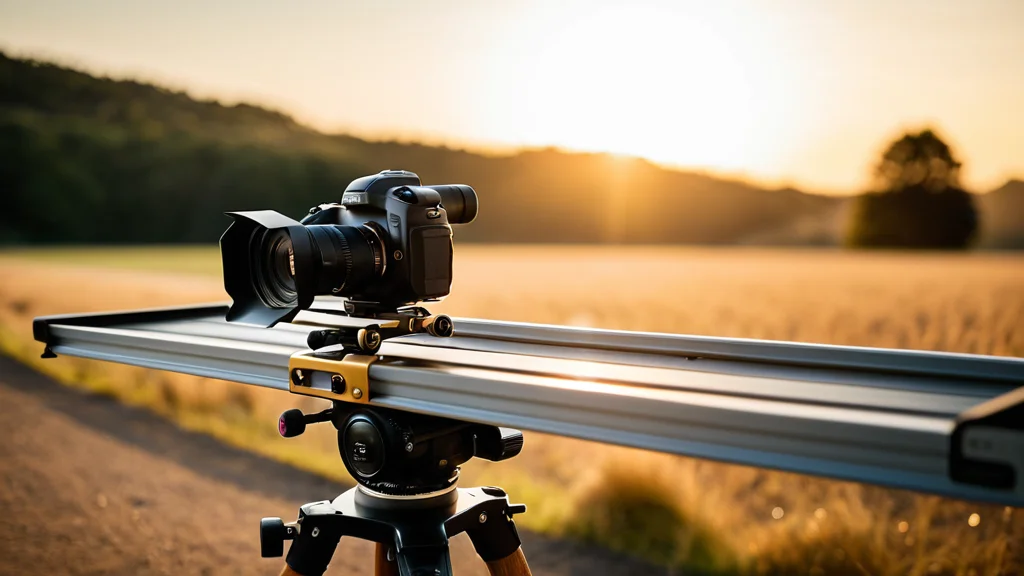
The dolly shot moves the camera physically forward or backward on a track, producing a smooth, grounded sense of approach or retreat. The tracking shot follows a character in parallel motion, placing the audience alongside them in shared experience. Handheld camera work introduces an organic, unsettled energy ideal for action sequences or scenes of emotional volatility. Crane and jib shots sweep upward to reveal scale and context. The Steadicam glides through spaces with a floating, dreamlike quality that feels immersive without the mechanical coldness of a dolly.
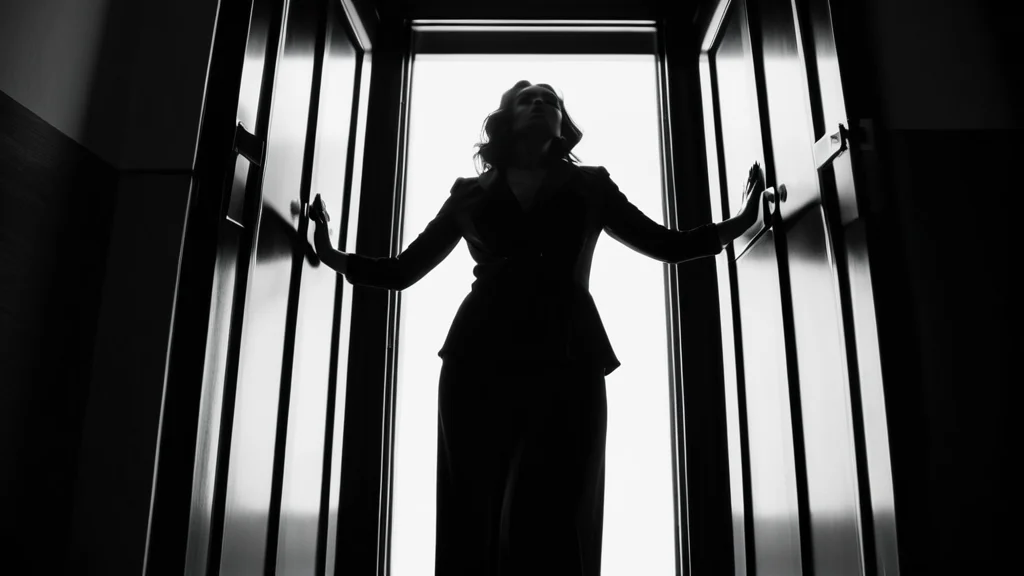
Camera angles carry equal narrative authority. A low-angle shot elevates its subject, communicating power, dominance, and threat. A high-angle shot diminishes a character, rendering them vulnerable, small, or overwhelmed. Eye-level angles feel neutral and observational — the visual equivalent of a calm, uninflected narrator.
5. Depth of Field and the Art of Focus Control
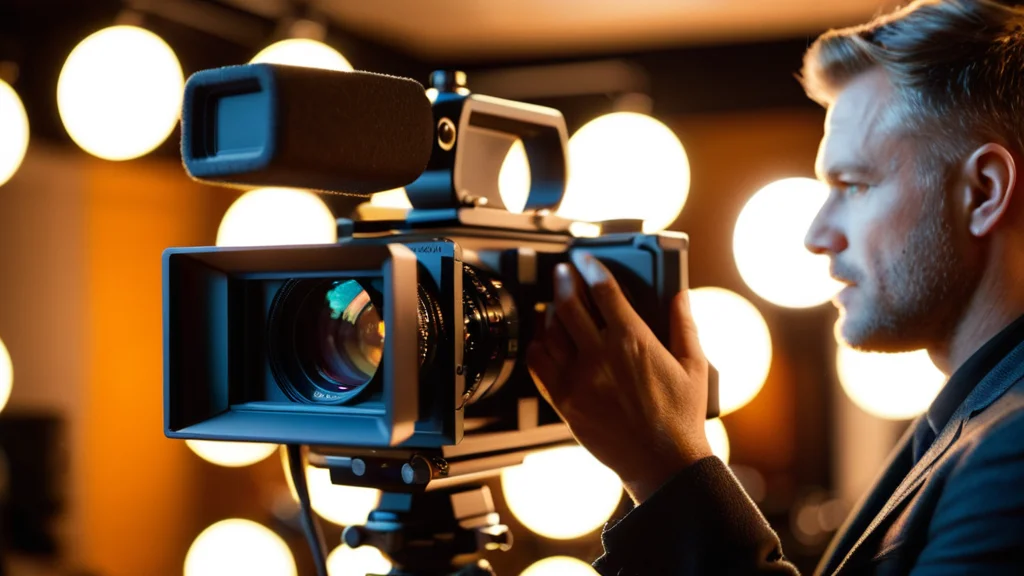
Depth of field describes how much of the image appears in sharp focus at any given moment. A shallow depth of field isolates the subject in crisp clarity against a softly blurred background — the signature cinematic look audiences immediately associate with professional filmmaking. A deep depth of field keeps everything sharp from the nearest foreground element to the most distant background detail.
Three variables control depth of field: aperture, focal length, and the camera’s distance from the subject. Wide apertures (f/1.4 to f/2.8) produce the shallowest DOF and the most dramatic background blur, commonly called bokeh. Narrow apertures (f/8 to f/16) extend sharpness across the entire frame — useful for establishing shots and visual storytelling that depends on environmental context.
Rack focus — the deliberate mid-shot shift from one focal point to another — is one of cinema’s most elegant narrative tools. In a single uninterrupted movement, it transfers the audience’s attention from one subject to another, reorienting the emotional center of a scene without a cut.
6. Color Grading and Establishing Visual Tone
Color grading is the post-production process of adjusting the hue, saturation, contrast, and luminance of footage to establish a coherent visual identity across an entire film. It is what gives movies their signature look — the quality that makes one film feel instantly distinct from another even before a single line of dialogue is spoken.
The Matrix used a pervasive green cast inside the simulation to signal artificiality and digital oppression. Mad Max: Fury Road deployed a high-contrast orange-and-teal palette that amplifies the scorched desolation of its desert world. Moonlight employed soft, blue-inflected tones to convey vulnerability, introspection, and emotional exposure.
DaVinci Resolve is the industry standard grading platform, and its full-featured free version is one of the most generous professional tools available to independent filmmakers today. Learning it is one of the highest-return investments any filmmaker can make in their own craft.
7. The Long Take and Single-Shot Sequences
A long take is an extended, uninterrupted shot — sometimes lasting several minutes — that unfolds in real time without the relief of an edit. When executed with precision, it is among the most viscerally powerful techniques in all of cinema. The absence of cuts removes the psychological safety valve that editing provides, trapping the audience in the immediacy of a moment.
Alfonso Cuaron’s Children of Men contains a six-minute car ambush sequence of almost unbearable tension, shot in a single continuous take. Sam Mendes’ 1917 was designed to read as one unbroken two-hour shot, an achievement that required months of choreographic planning and extraordinary collaboration across every department on set.
For filmmakers practicing the long take, a high-quality motorized gimbal — such as the DJI RS 4 or Ronin RS3 Pro — is an essential investment, enabling the smooth, sustained camera movement these sequences demand over extended durations.
8. Dutch Angle and Unconventional Framing
The Dutch angle, also called the Dutch tilt, rotates the camera on its roll axis so that the horizon line runs diagonally across the frame rather than horizontally. The resulting instability communicates psychological disorientation, moral ambiguity, impending danger, or narrative unease — all without a single word of dialogue.
Beyond the Dutch tilt, unconventional framing encompasses a broad toolkit of visual strategies: shooting through doorways, windows, or foreground objects to create depth and voyeuristic tension; using mirror reflections to divide or fragment a subject’s identity; positioning characters deliberately in extreme negative space to amplify their isolation or insignificance.
These techniques work most effectively when deployed sparingly and with clear intention. Overuse transforms a powerful tool into visual noise. Used at precisely the right narrative moment, however, an unconventional frame can be more emotionally resonant than any line of dialogue.
9. Lens Choice and Its Emotional Impact on the Viewer
Focal length is not a neutral technical specification. It is an emotional decision that fundamentally shapes how audiences relate to subjects, spaces, and stories. Every lens choice is a statement about the relationship between the camera and the world it is observing.
Wide-angle lenses between 14mm and 35mm expand perceived space, exaggerate depth, and distort faces at close distances in ways that feel unsettling or immersive. Normal lenses between 40mm and 58mm approximate human vision, producing a naturalistic, observational quality well suited to dialogue and character-driven drama. Telephoto lenses from 85mm upward compress space, isolate subjects against softly separated backgrounds, and create the intimate proximity associated with portraiture and emotional close-ups.
Anamorphic lenses represent a category unto themselves. Used on films including Interstellar and La La Land, they produce distinctive horizontal lens flares, a slightly oval bokeh, and a wider aspect ratio that reads as cinematic almost instinctively to contemporary audiences.
| Lens Type | Focal Range | Emotional Quality |
|---|---|---|
| Wide-Angle | 14mm – 35mm | Expansive, distorted, immersive |
| Normal | 40mm – 58mm | Naturalistic, observational, neutral |
| Telephoto | 85mm – 200mm+ | Intimate, compressed, isolating |
| Anamorphic | Varies | Cinematic, flared, wide-screen |
10. Practical Gear and Tools for Aspiring Cinematographers
Great cinematography does not require a Hollywood budget. It requires choosing the right tools for your current level, understanding what each piece of equipment actually contributes to your image, and investing deliberately in the areas that will most expand your creative capability.
At the beginner level, a mirrorless camera with full manual controls — such as the Sony ZV-E10 or Canon EOS R50 — paired with a 50mm prime lens and a basic LED panel kit provides everything needed to practice every technique covered in this guide. DaVinci Resolve’s free version handles color grading at a professional standard from day one.
Intermediate filmmakers benefit most from a full-frame or Super 35 cinema body such as the Sony FX3, Canon EOS R5 C, or Blackmagic Pocket Cinema Camera 6K, combined with a motorized gimbal, a set of cine-style prime lenses, and a field monitor equipped with waveform and vectorscope tools for proper exposure evaluation.
At the advanced and professional level, cameras like the Arri Alexa 35 or RED KOMODO-X deliver the image quality demanded by broadcast and theatrical release. Anamorphic lens sets, full professional lighting packages including the ARRI SkyPanel S60 and Aputure 600d Pro, and a dedicated color grading suite complete a production-ready setup.
These ten cinematography techniques represent the foundational grammar of visual storytelling. Mastering them does not happen overnight, but every intentional frame you shoot and every great film you study with analytical attention accelerates your growth. The cinematographers who shaped the visual history of cinema — Gordon Willis, Vilmos Zsigmond, Emmanuel Lubezki, Roger Deakins — built their craft the same way: one deliberate frame at a time.
Invest in the right tools, commit to continuous learning, and let the films that move you be your greatest teachers.