⚠️ This page connects you to Atovia’s partners and affiliate markets. We may receive a commission from affiliate partners for activities made through these links. Discount offers may change at any time according to policy! Rest assured, there are no additional costs to you! We hope this saves you time in finding the right items!
- What Hobby Horse Jumping Is and What You Need to Start
- Build a Simple Low Jump at Home
- DIY Jump or Ready-Made Jump?
- Pick a Safe Surface and Check Your Footwear
- Find Your Rhythm Before You Jump
- Step-by-Step Jump Technique
- Common Mistakes That Knock Poles Down
- Raise the Difficulty Gradually
- A Quick Look at Competition Rules
- Frequently Asked Questions
Hobby horse jumping is all about clearing a pole with control: a steady approach, a clean takeoff, and a smooth landing. This guide shows you how to set up a safe low jump, learn the rhythm and footwork, and raise the challenge step by step.
Everything here is based on hobby horse sources, not real horse riding. Posture and technique from real-horse jumping should not be copied over to hobby horse jumping.
- Start with a low jump you can clear safely, and raise the difficulty only after the basics feel steady.
- Count the last three gallop steps before the jump to set your rhythm.
- Take off on your lead leg and let the other leg follow.
- A grass or arena-type surface and non-slip shoes help reduce the risk of slips and trips.
- Competition rules differ by organizer, so check the current rules of the event you plan to enter.
What Hobby Horse Jumping Is and What You Need to Start
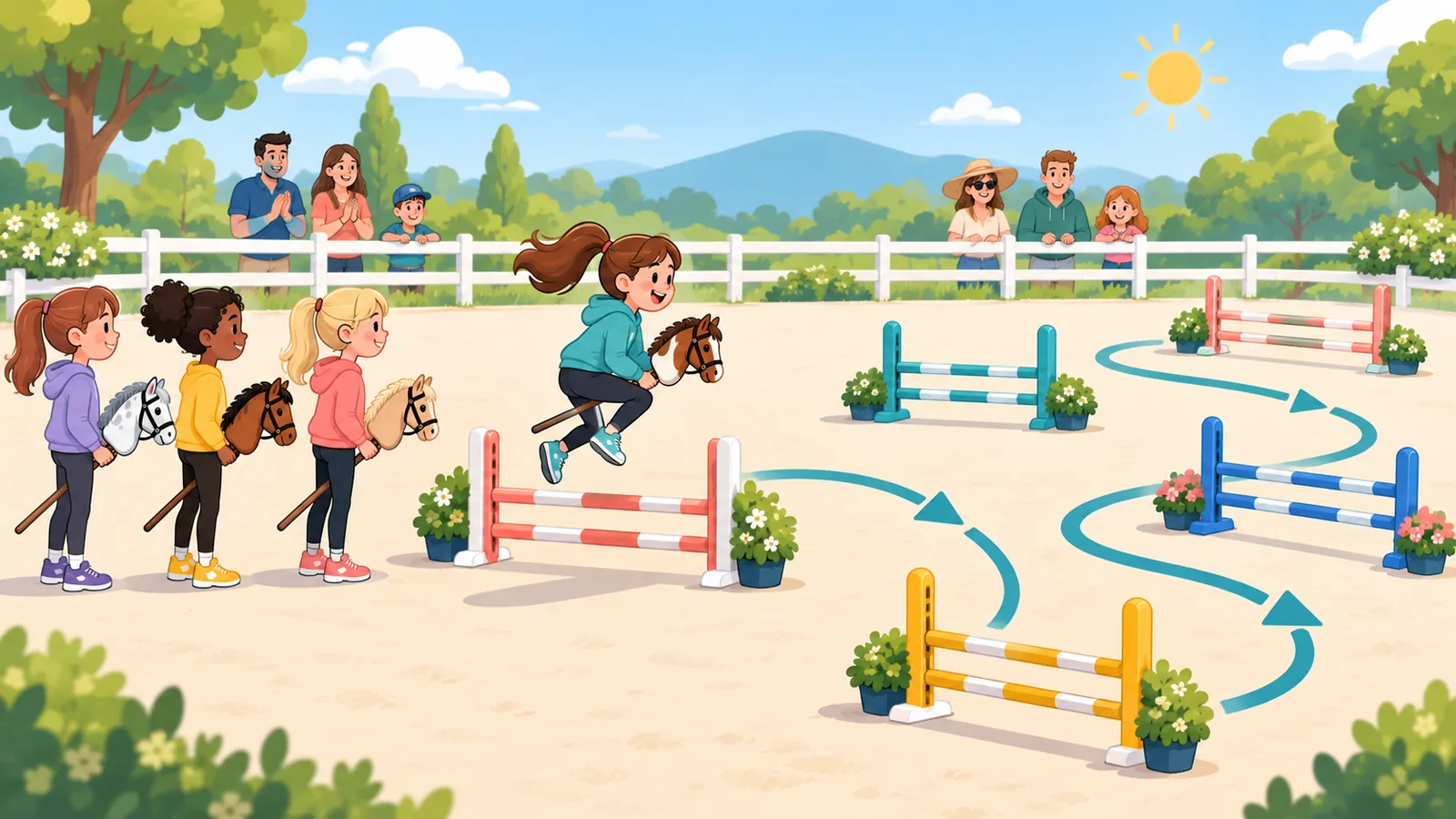
Hobby horse jumping means riding a hobby horse on foot and clearing a pole or small obstacle. Hobby horse technique guidance centers on three things: a stable upper body and a controlled approach, takeoff, and landing, practiced step by step.
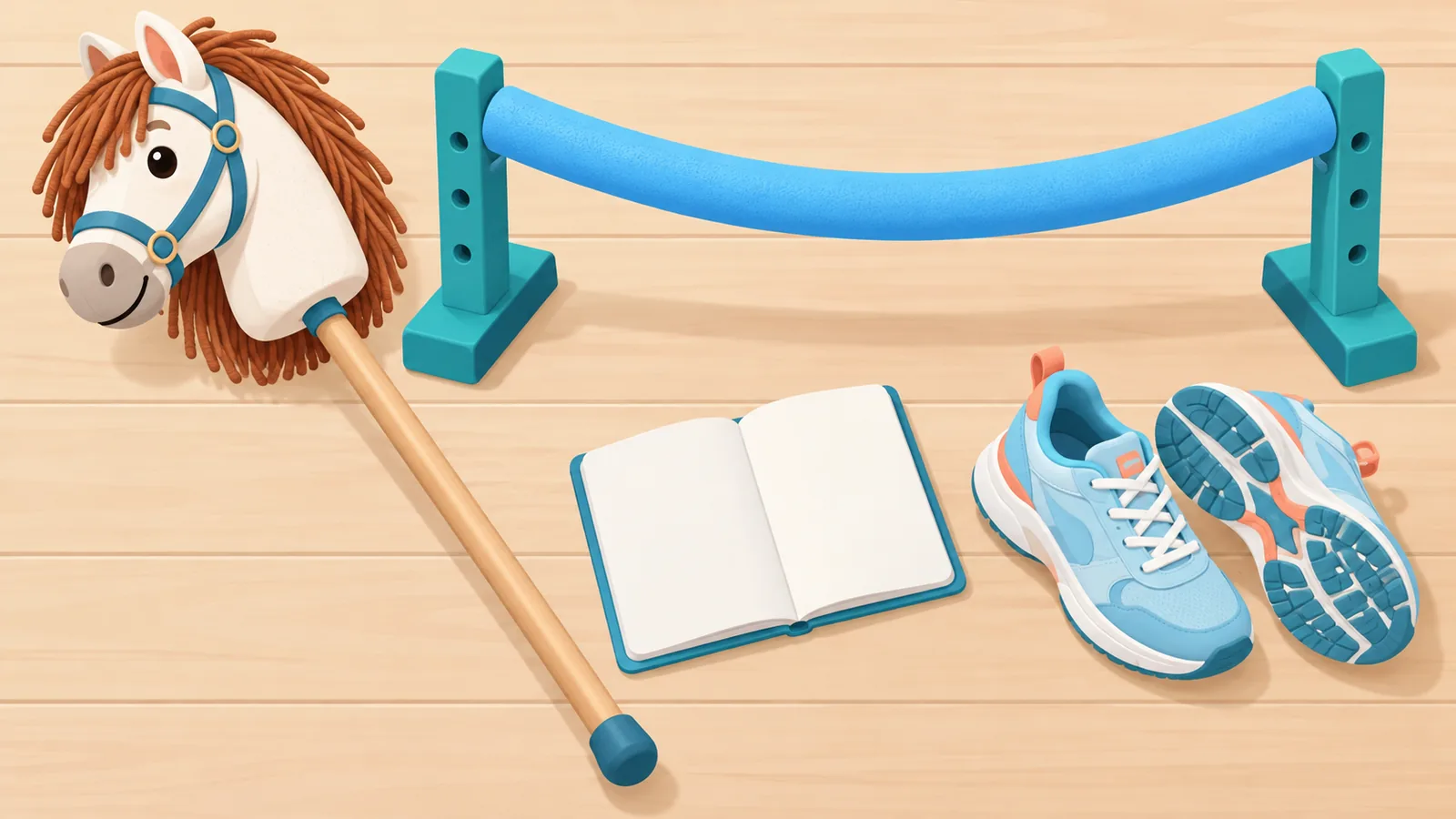
To get started, you only need four things:
- A hobby horse
- A clear, open practice space
- A simple low jump (see the next section)
- Suitable shoes (see the section on surfaces and footwear)
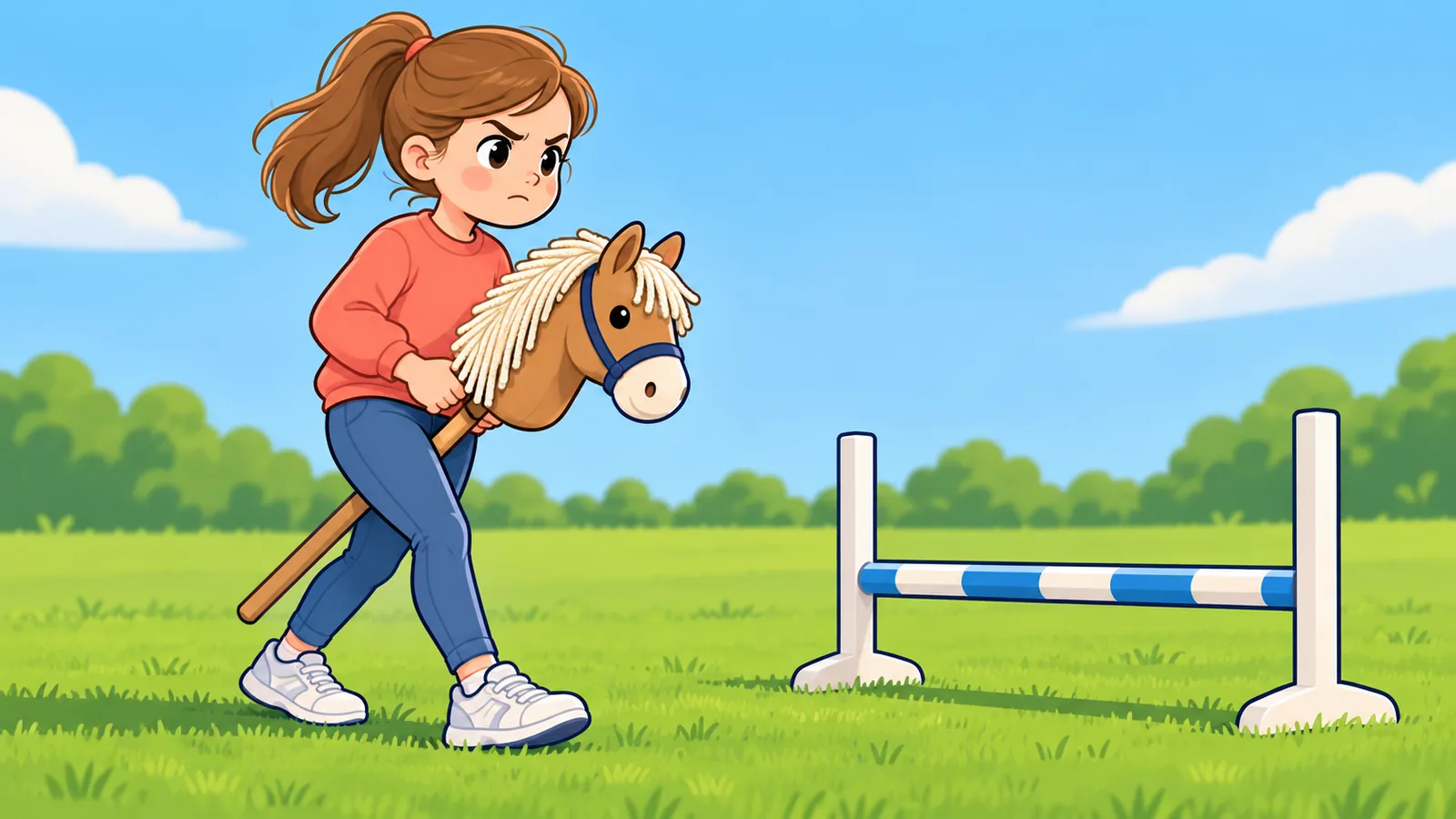
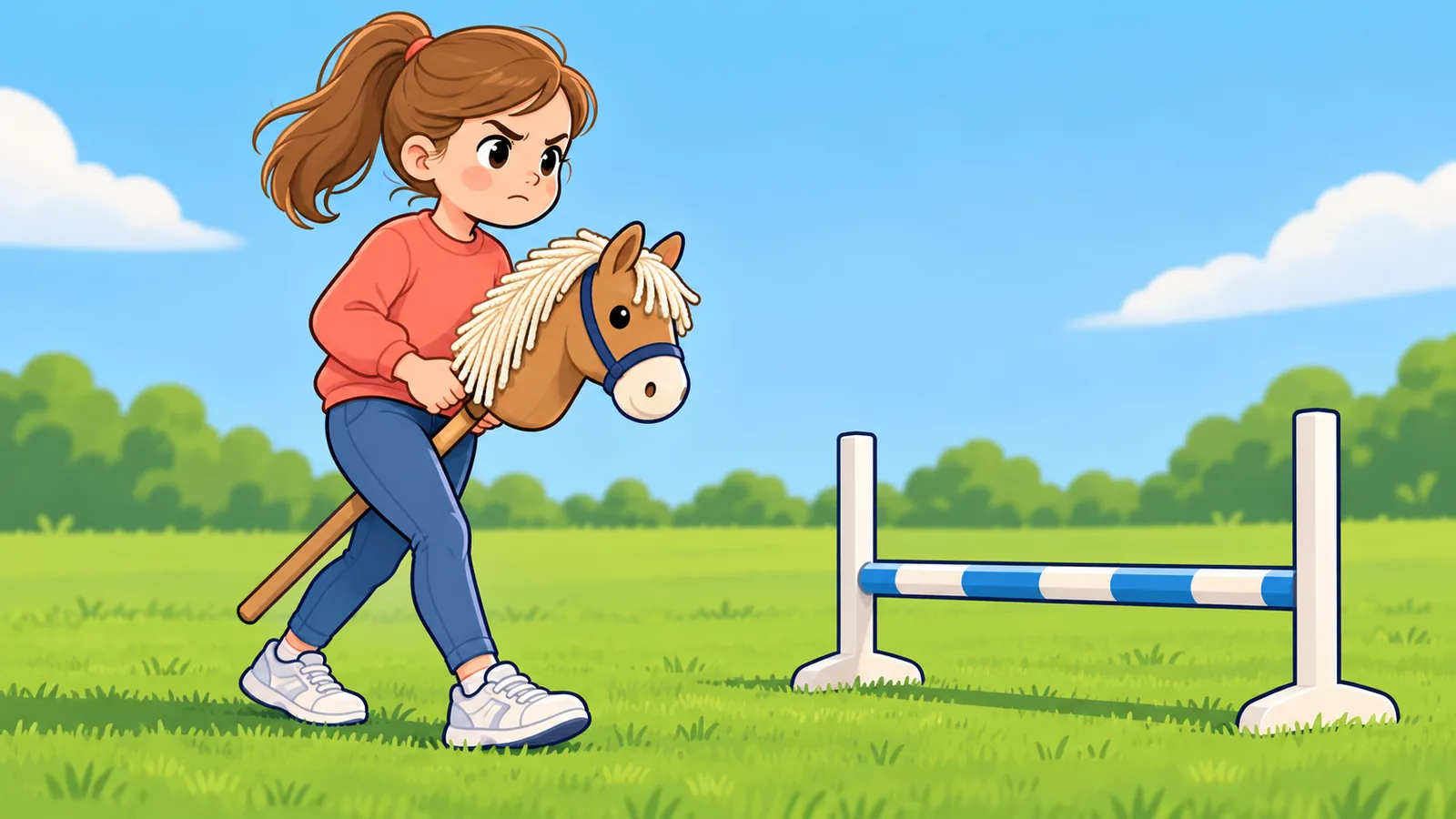
Begin with a low jump you can clear safely, and build up from there.
Build a Simple Low Jump at Home
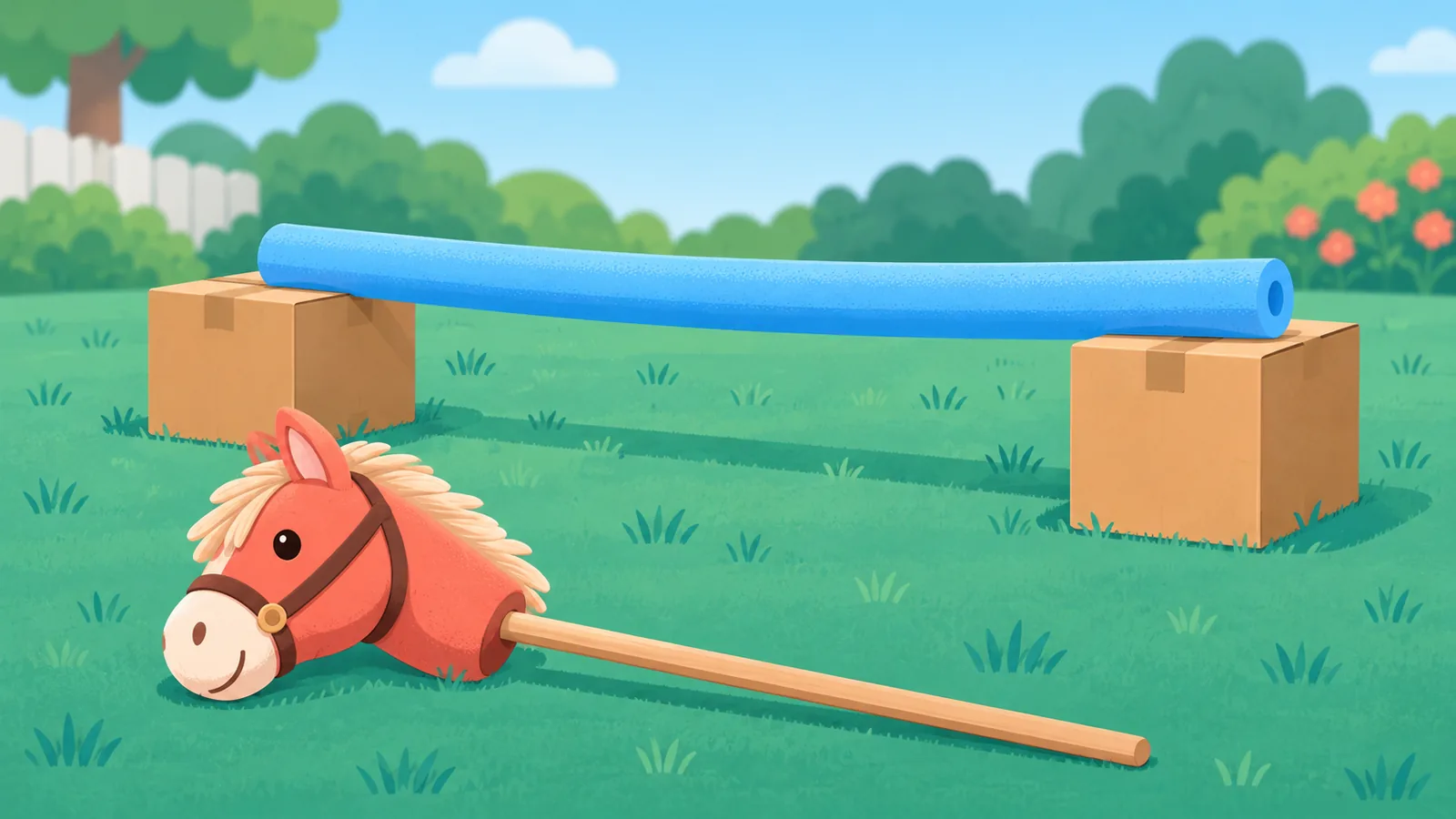
You do not need special equipment to begin. An activity guide from DIY.org suggests resting a light pole or a pool noodle on top of small boxes to make a low obstacle. It also suggests leaving space between jumps if you set up a short course.
The official guide from Tryon Resort adds that household items can be reused as jump poles. Its advice for placement is to set the pole so it falls off easily when touched, and so it will not catch your feet and trip you.
First-jump checklist
- The pole is light and falls off easily when touched.
- Nothing sticks out where your feet could catch.
- The jump is low enough that you can clear it safely.
- If you set up more than one jump, there is clear space between them.
DIY Jump or Ready-Made Jump?
Both options work for beginners. The table below compares only what the sources actually describe. The ready-made example is a product page from byASTRUP.
| Feature | DIY jump | Ready-made jump (byASTRUP example) |
|---|---|---|
| Materials | Light poles or pool noodles on small boxes, or reused household items | Purpose-made adjustable jump with a pole |
| Height | Set by the boxes or items you choose | Adjustable from 20 to 60 cm |
| Pole length | Depends on what you use | 100 cm |
| Listed price | Depends on what you already have | €59.95 as listed on the page; prices vary by region and time |
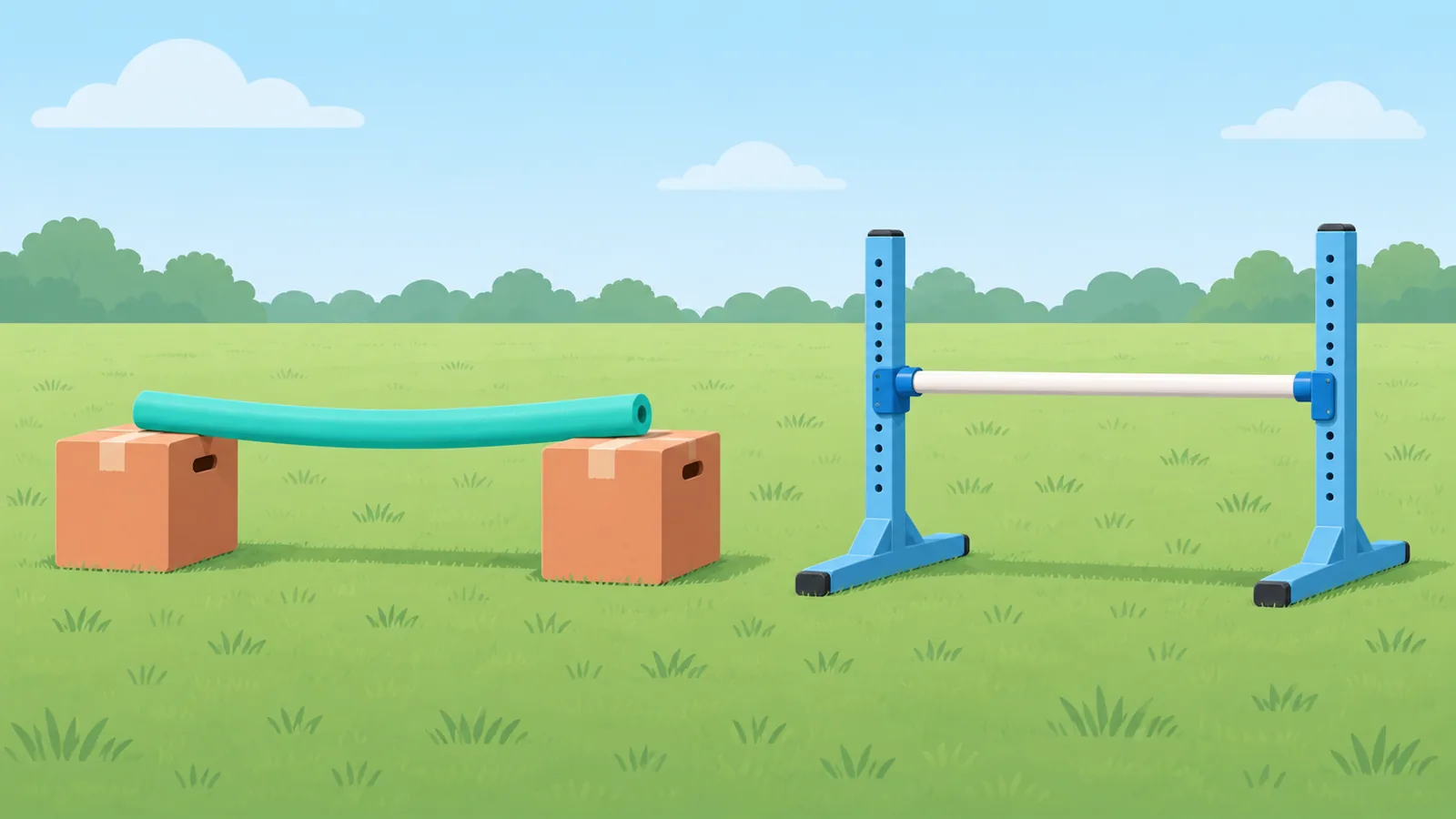
No universal starting height for beginners has been established in the sources. Choose a height you can clear safely, and lower it if you are unsure.
Pick a Safe Surface and Check Your Footwear
The Tryon Resort guide recommends surfaces such as grass or an arena-type floor as safer ground for a course. It also advises taking extra care when it is raining or has just rained.
On footwear, the seller Hobby-Horse.com recommends non-slip sneakers. That is one retailer’s advice. The UK Hobby Horse Association also requires suitable footwear at its own events, so good shoes matter at competitions too.

Pre-practice safety checklist
- The ground is grass or an arena-type surface, and it is not wet or slippery.
- Your shoes have good grip.
- The practice area is clear of obstacles you do not intend to jump.
- The pole is placed so it falls when touched and cannot catch your feet.
- Children practice under adult supervision (a general safety note).
Find Your Rhythm Before You Jump
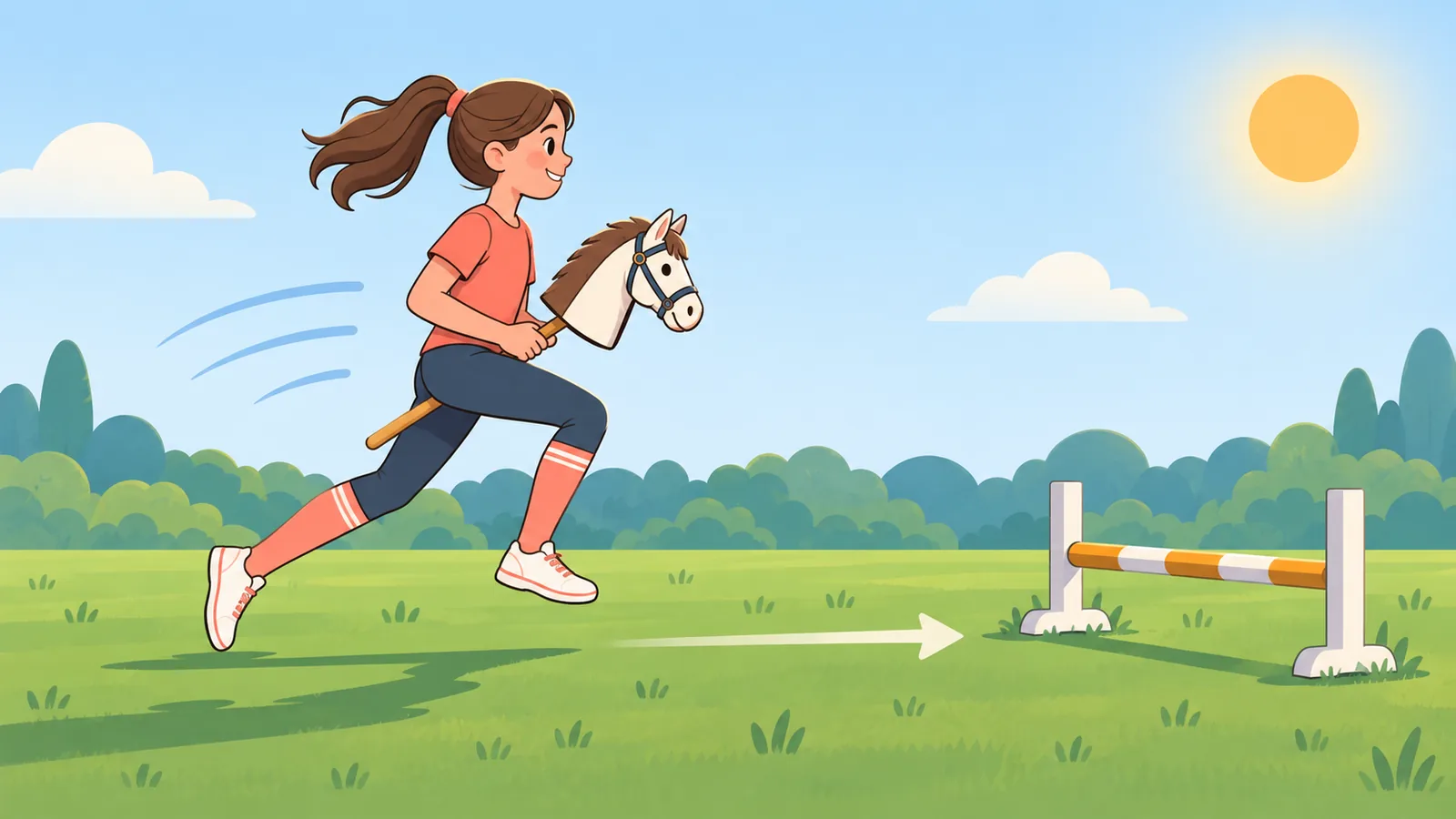
Rhythm comes before height. The technique guide from the Hobby Horse Lexikon recommends a stable upper body and a controlled approach, rather than rushing at the obstacle.
Its practical tip for setting the rhythm is to count the last three gallop steps before the jump. Practice this on a low jump until the count feels automatic.
🛒 Recommended Product
Step-by-Step Jump Technique
Follow these steps on a low jump you can clear safely, based on the Hobby Horse Lexikon guidance:
- Approach with a stable upper body and a controlled pace.
- Count the last three gallop steps to set your rhythm.
- Take off on your lead leg.
- Let the other leg follow as you clear the pole.
- Land under control.
- Keep the flow going and recover your gallop after landing.
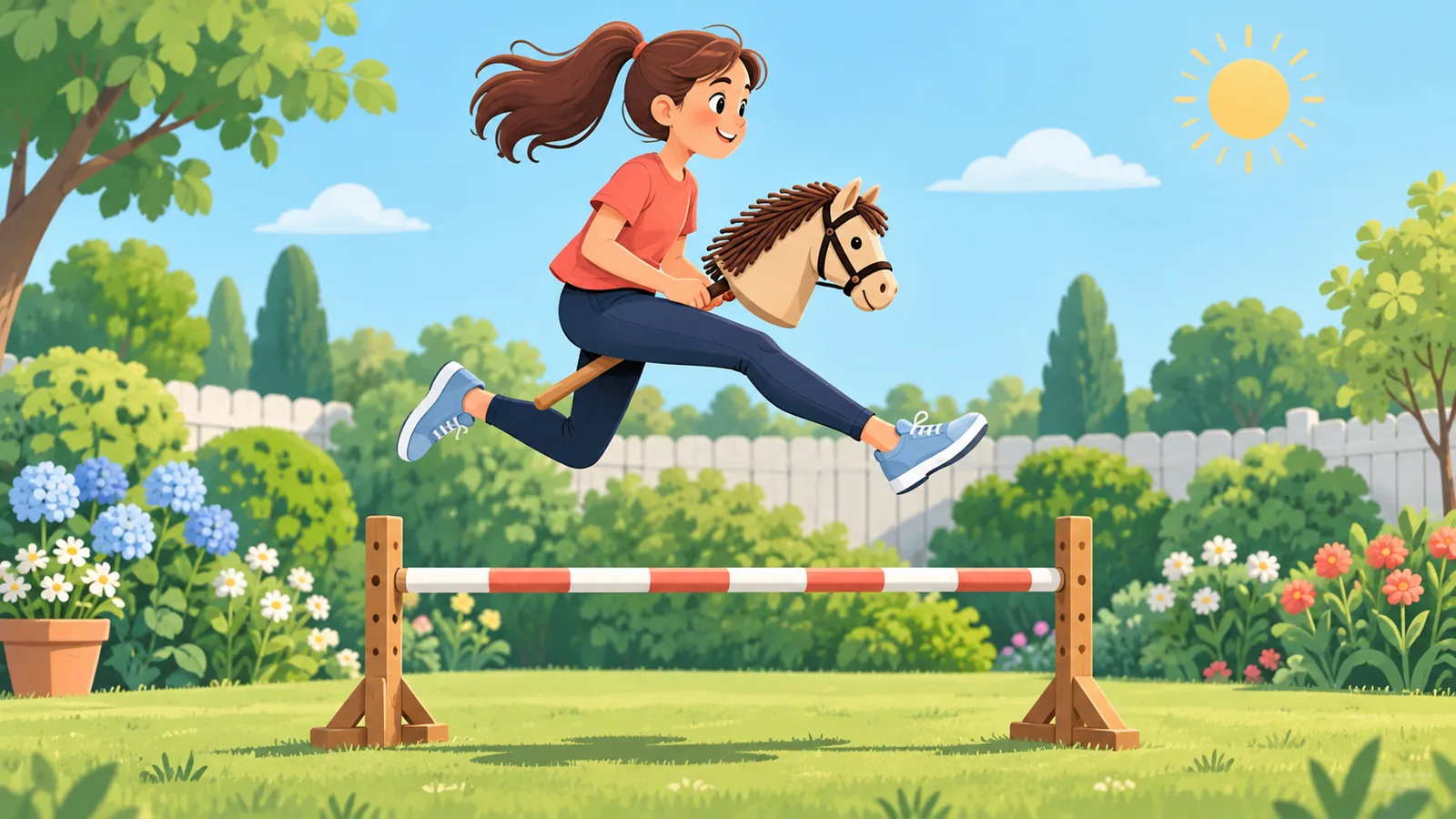
On how to hold the hobby horse, the UK Hobby Horse Association says its competitors keep the hobby horse between their legs and hold the reins or the horse by hand. That is that association’s guidance, so check your own event’s rules if you compete.
Remember that real-horse riding posture does not transfer to hobby horse jumping, so stick to hobby horse technique.
Common Mistakes That Knock Poles Down
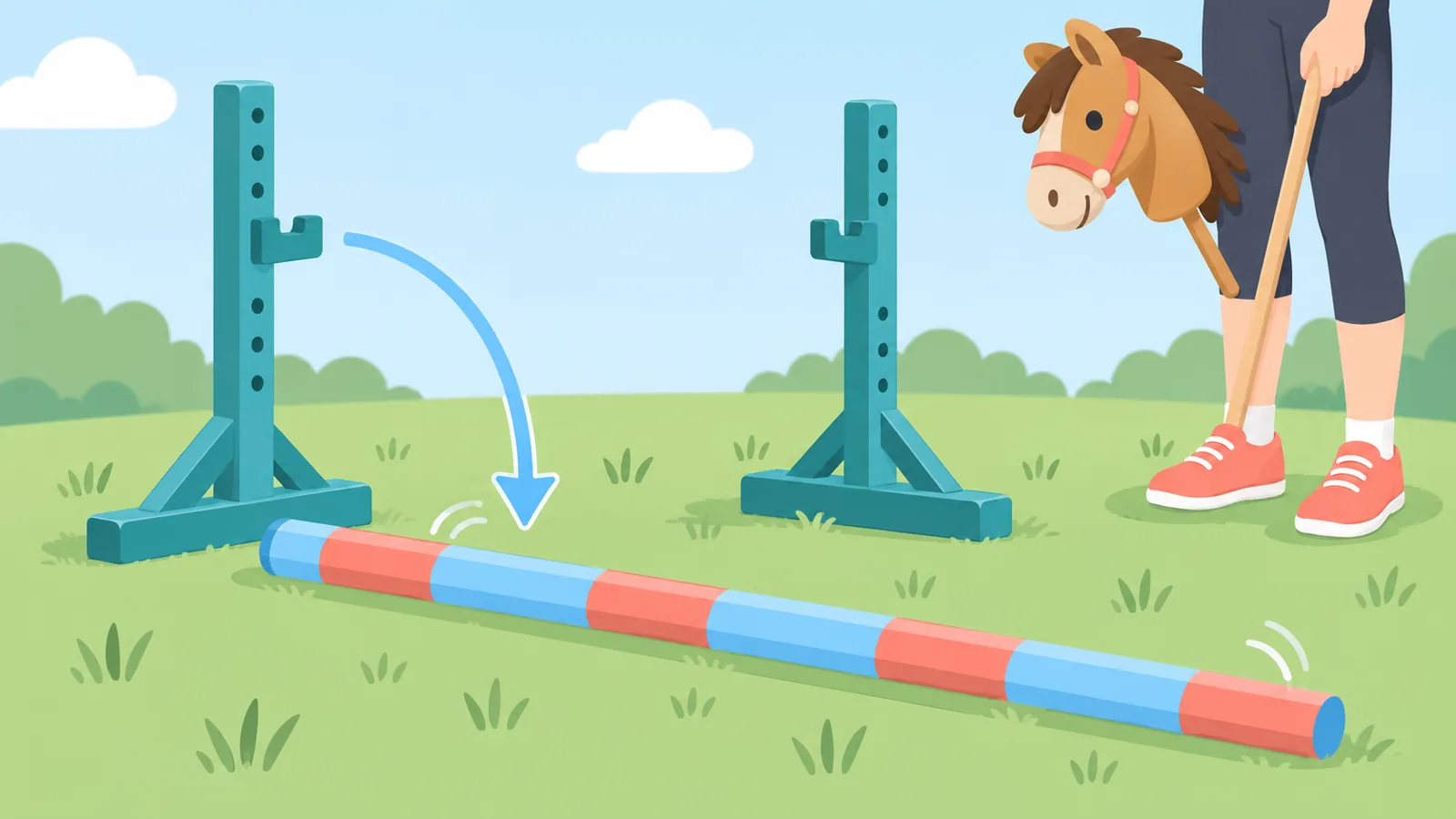
The seller Hobby-Horse.com names two causes of dropped poles: a poor takeoff and a jump height that does not match the rider’s level. This is one seller’s advice. The quick fixes below are common-sense suggestions, not findings from that source.
| Symptom | Likely cause | Quick fix (suggestion) |
|---|---|---|
| Pole drops as you leave the ground | Poor takeoff | Slow down, recount your last three steps, and adjust where you take off |
| Pole drops repeatedly | Jump height does not match your skill | Lower the jump until you clear it cleanly again |
Raise the Difficulty Gradually
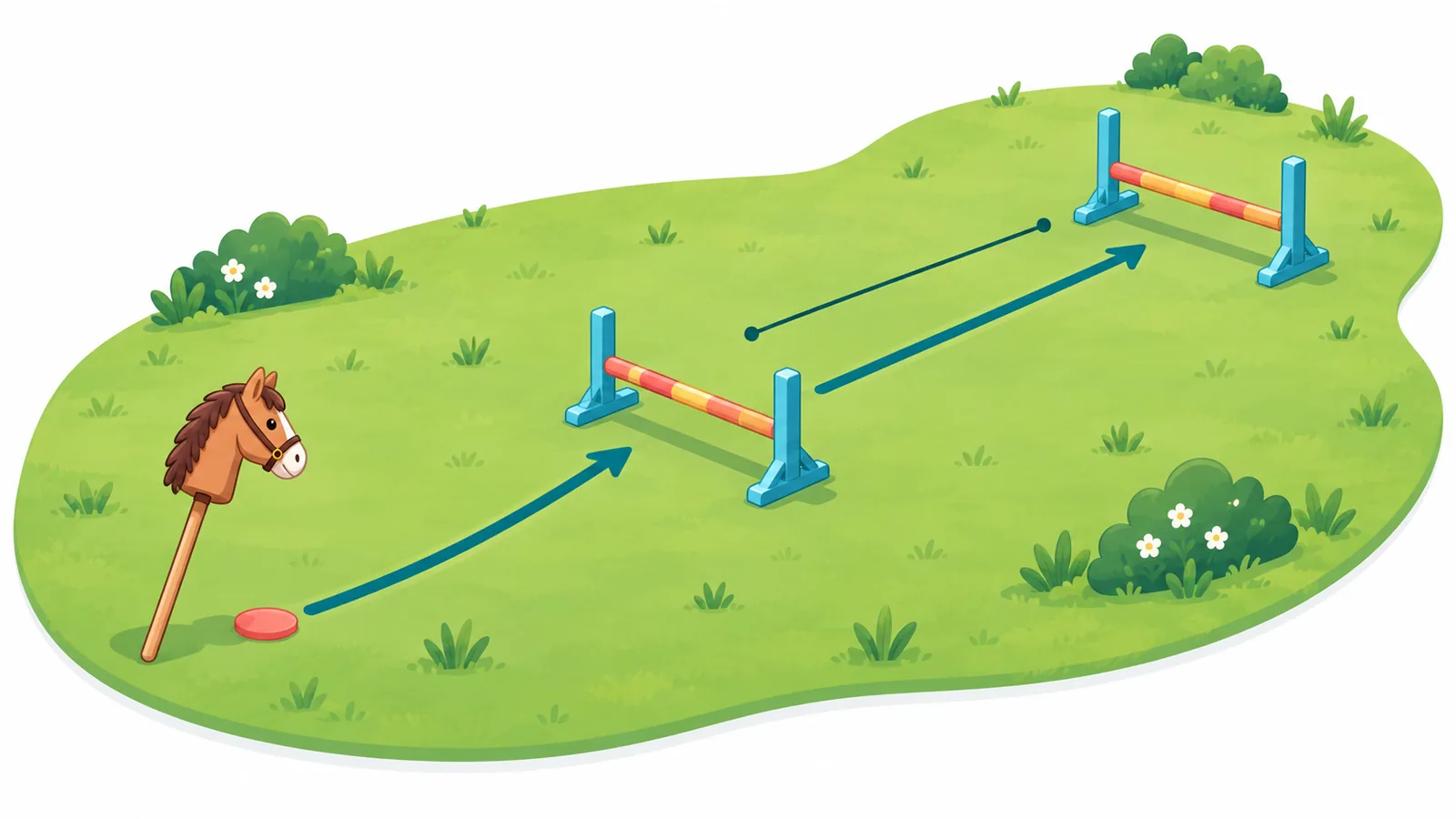
The Hobby Horse Lexikon advises changing height, spacing, and combinations of jumps only after the basics are solid, and doing so slowly. Treat each step below as a goal to repeat several times before moving on.
- A single low jump you clear safely.
- A slightly higher jump.
- Two jumps with space between them (DIY.org suggests leaving space between jumps in a course).
- A short course of several jumps.
Ready-to-move-up checklist
- Your approach is clean and controlled.
- Your rhythm is steady.
- Your landing is controlled and you recover your gallop.
- You can repeat all of this several times in a row.
A Quick Look at Competition Rules
Rules differ by organizer, so always check the current rules for the event you plan to enter. Two examples show how organizers publish them:
- The UK Hobby Horse Association describes its own show jumping format as 8 jumps, 4 scored for style and 4 timed. It also requires suitable footwear.
- The Finnish Hobbyhorse Association publishes official competition rules, which it applies to its own events and recommends for others. Its materials page marks the show jumping rules as updated on November 26, 2024. The rule details themselves were not verified for this article.
Frequently Asked Questions
What can I use to make hobby horse jumps?
Light poles or pool noodles resting on small boxes work, as do reused household items as poles. Make sure poles fall easily and cannot catch your feet.
How high should my first jump be?
Low enough that you can clear it safely. No universal beginner height has been established, so there is no single number to follow.
Which leg should I lead with?
Take off on your lead leg and let the other leg follow, then recover your gallop after landing.
Does the surface matter?
Yes. Grass or an arena-type floor is recommended as safer, and you should take extra care in or after rain.
Do I need special shoes?
One seller recommends non-slip sneakers, and the UK association requires suitable footwear at its events. Choose shoes with good grip.
Can I use real horse riding technique?
No. Use hobby horse technique, since real-horse posture does not carry over.
References
- Hobby Horse Lexikon: Sprungtechniken im Hobby Horsing
- DIY.org: Jump With a Horse
- Tryon Resort: 2020 Hobby Horse Official Guide
- byASTRUP: Hobby Horse Jump
- UK Hobby Horse Association: Frequently Asked Questions
- Finnish Hobbyhorse Association: Materials
- Hobby-Horse.com: 5 Common Mistakes in Hobby Horsing Jumping and How to Avoid Them
Want more comparisons and buying guides?
Citing this article
Source: Atovia (Atovia). https://atovia.kr