⚠️ This page connects you to Atovia’s partners and affiliate markets. We may receive a commission from affiliate partners for activities made through these links. Discount offers may change at any time according to policy! Rest assured, there are no additional costs to you! We hope this saves you time in finding the right items!
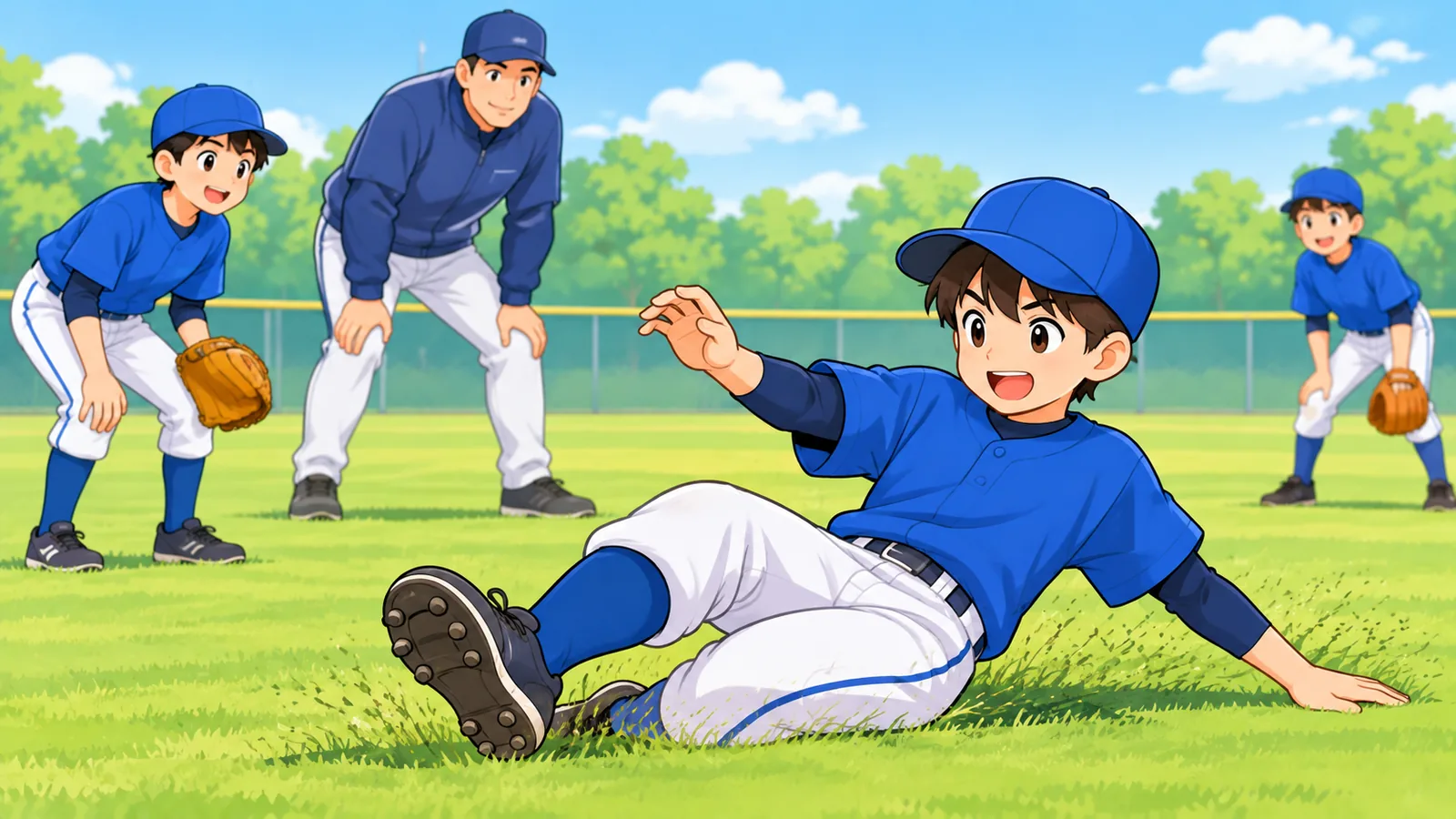
You slid into second, popped up, and now your hip or knee is stinging with dirt ground into the skin. A slide burn looks like a burn, but it is really a friction scrape, also called an abrasion. So the first job is not cooling it down. It is getting the wound clean and covered.
- Is a Slide Burn a Burn or a Scrape?
- How Do You Clean a Slide Burn?
- How Should You Cover and Dress the Wound?
- What Can You Do for the Pain?
- How Do You Spot an Infected Slide Burn?
- When Should You See a Doctor?
- Can You Go Back to the Next Game?
- Slide Burn Care at a Glance
- How Can You Cut Down on Slide Burns?
- Quick FAQ
- Your Next Step Today
Key Takeaways
- Rinse with running water or sterile saline until the visible dirt is gone.
- Cover a clean, shallow scrape with a nonstick sterile bandage.
- Leave blisters alone.
- Knees, hips, and wounds bigger than your palm deserve a medical check.
This article is general first-aid information, not medical advice. If you are unsure about an injury, ask a clinician.
Is a Slide Burn a Burn or a Scrape?
[[IMAGE_1]]
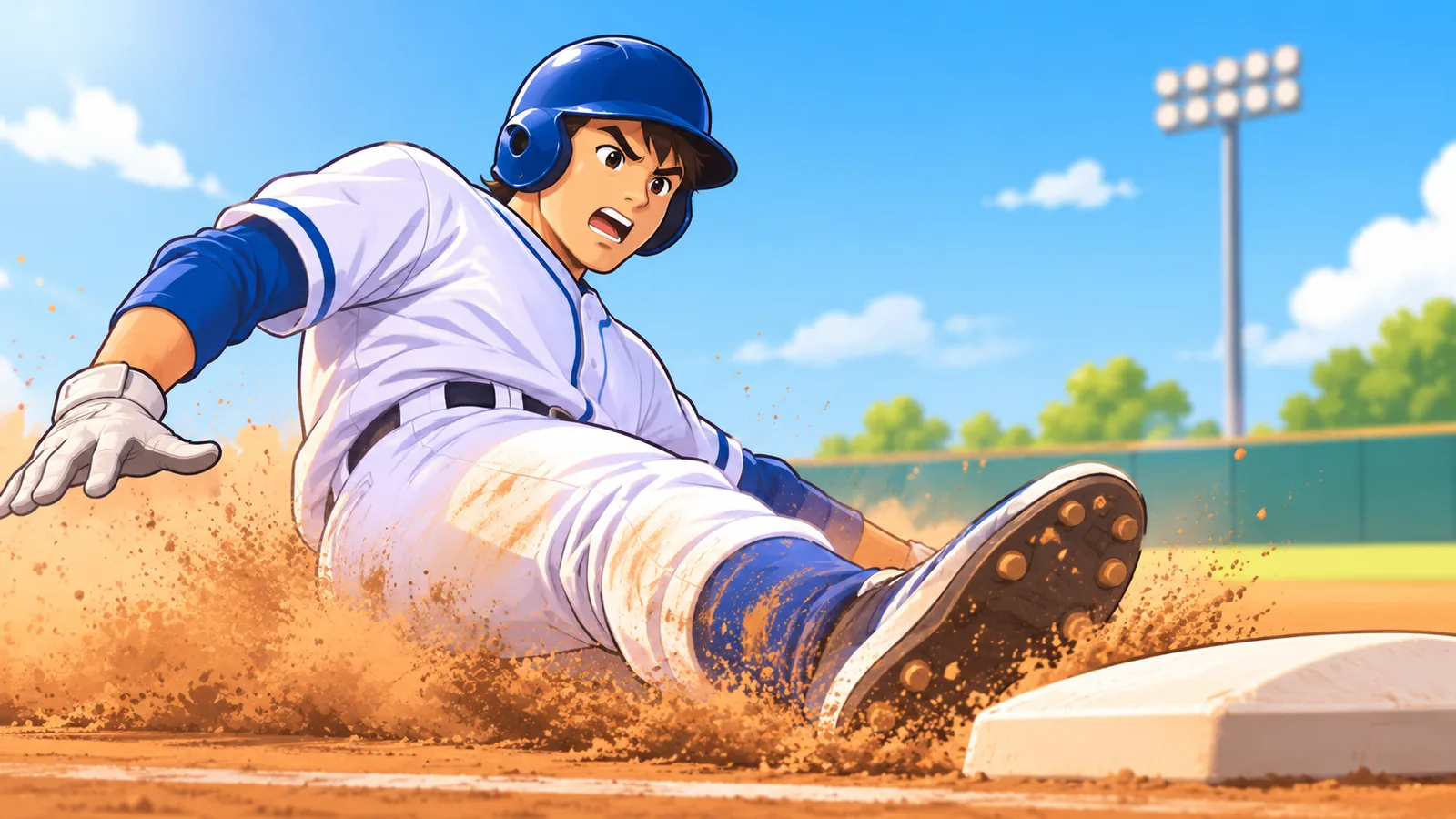
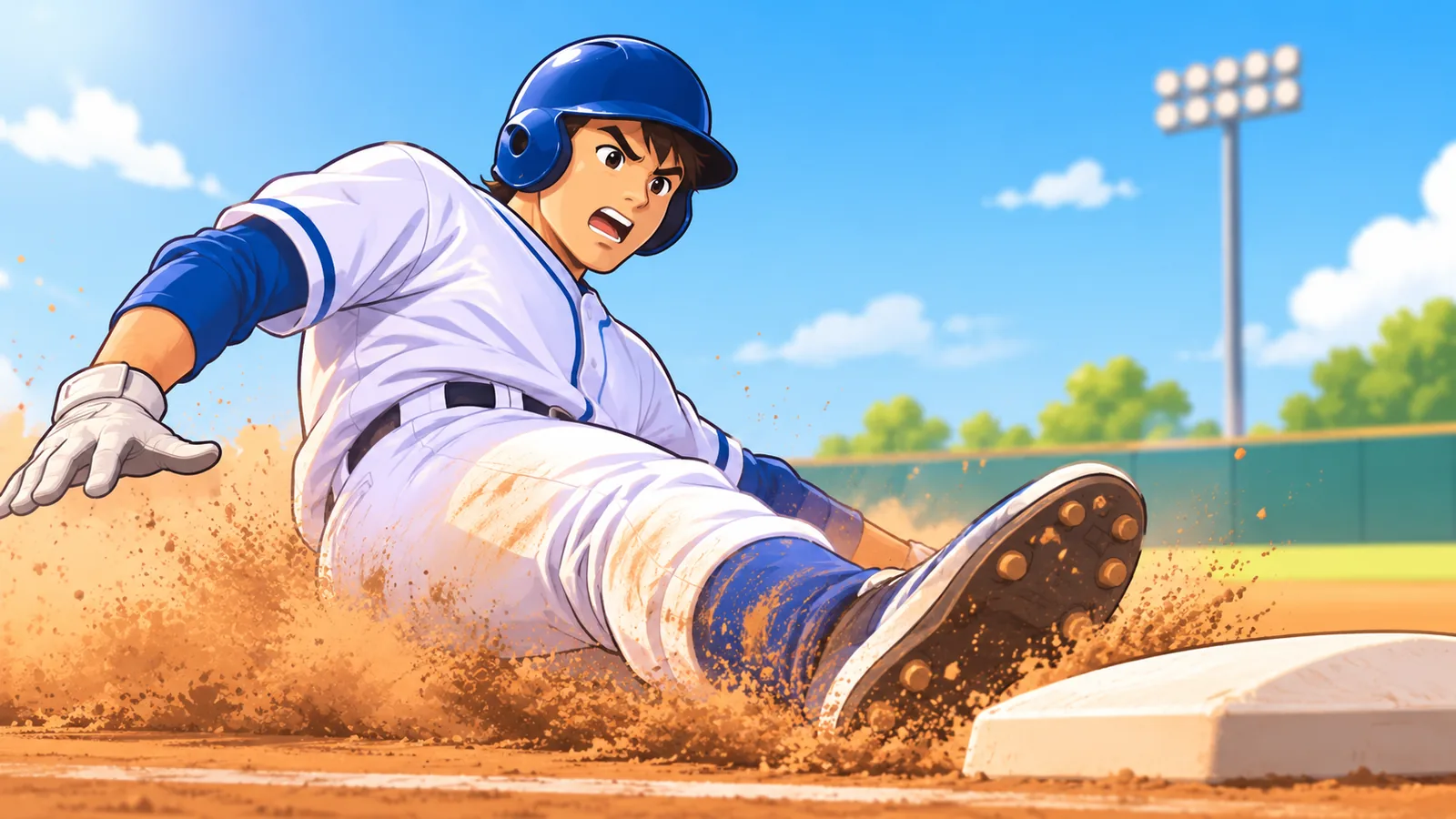
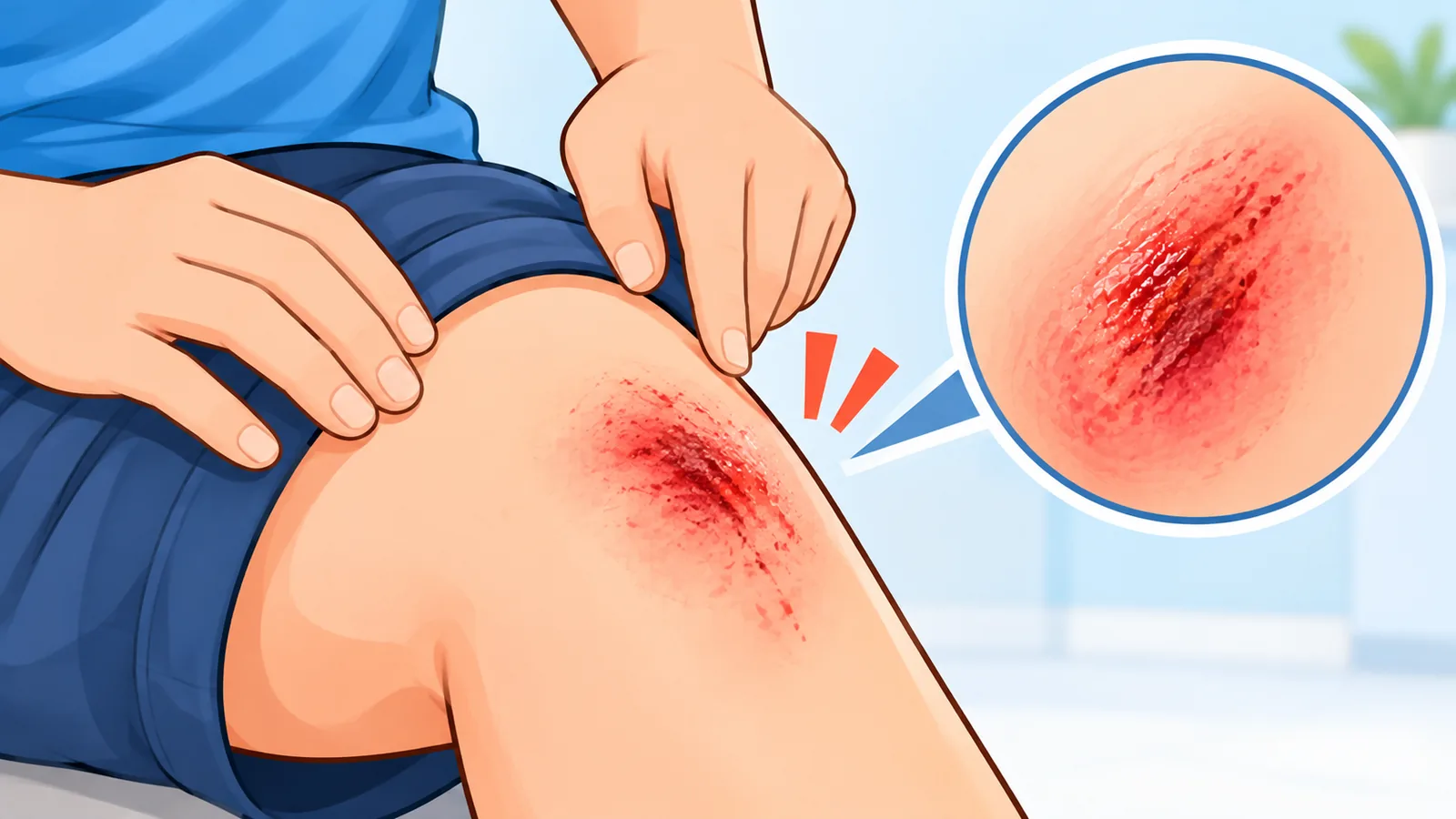
It is a friction scrape that rubs off the top layer of skin, so you treat it like an abrasion. Cleveland Clinic lists sliding into home plate as a common cause of this kind of injury.
You will also hear the name “turf burn.” Baylor College of Medicine explains that these wounds come from friction against the surface, not from heat. Grass fields and dirt infields can both cause them.
Here’s the catch: you can’t always tell how bad a wound is from the name alone. Depth and embedded dirt decide the path, which is why this article includes a clear list of doctor triggers.
How Do You Clean a Slide Burn?
[[IMAGE_2]]
Rinse it with running tap water or sterile saline until the visible dirt is gone. The 2024 American Heart Association and American Red Cross first aid guidelines treat that kind of rinse as more sensible than reaching for antiseptics.
How long should you rinse it?
There is no magic timer. Keep rinsing until you can no longer see dirt, grass, or grit in the wound.
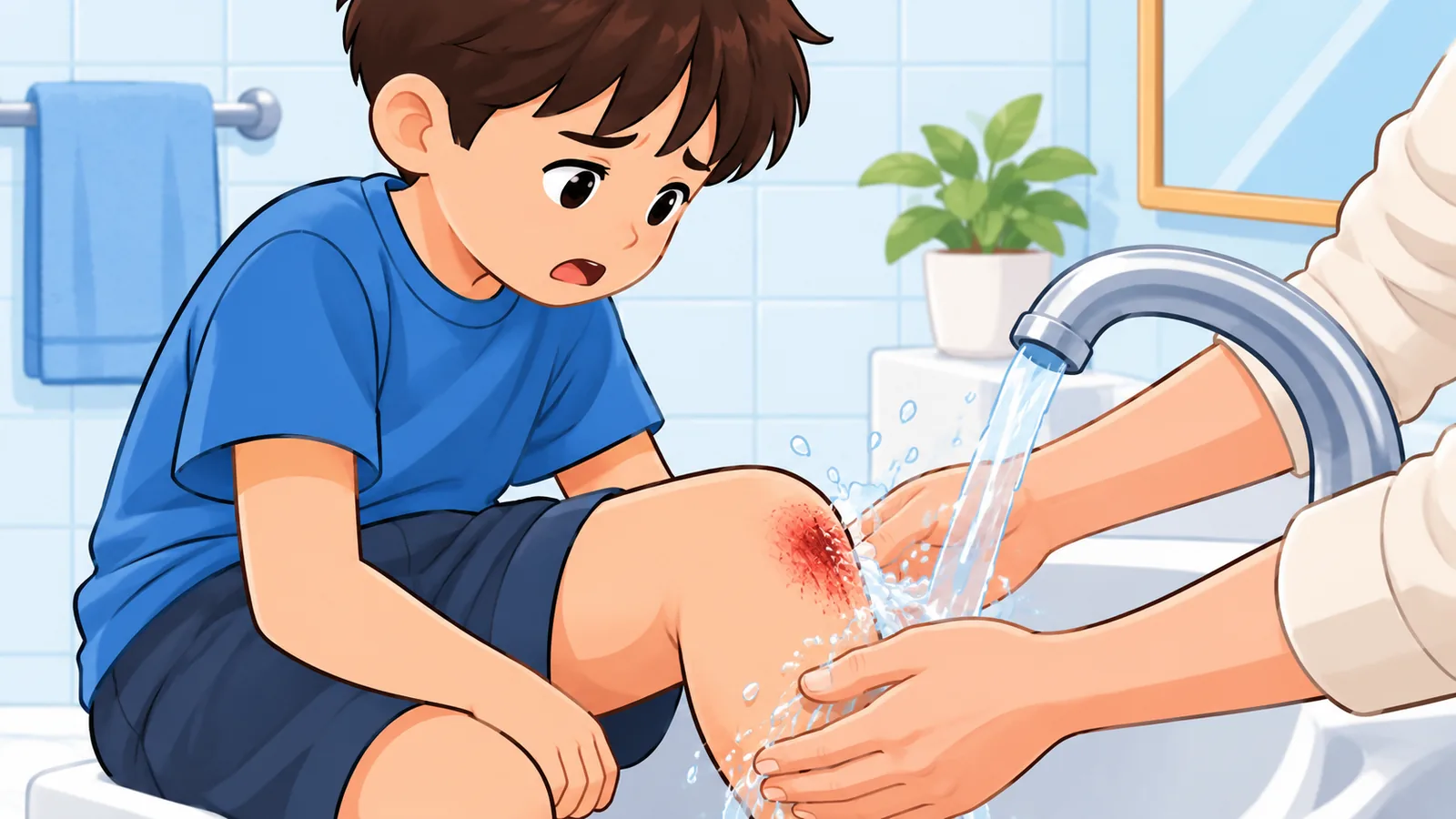
For a minor scrape, gentle soap and water on the skin around the wound is fine. Cleveland Clinic also says small, visible bits can be lifted out carefully.
What about dirt that won’t come out?
Do not dig at it. If the pieces are large, or there are several of them, leave them alone and get the wound looked at, as Cleveland Clinic advises.
How Should You Cover and Dress the Wound?
[[IMAGE_3]]
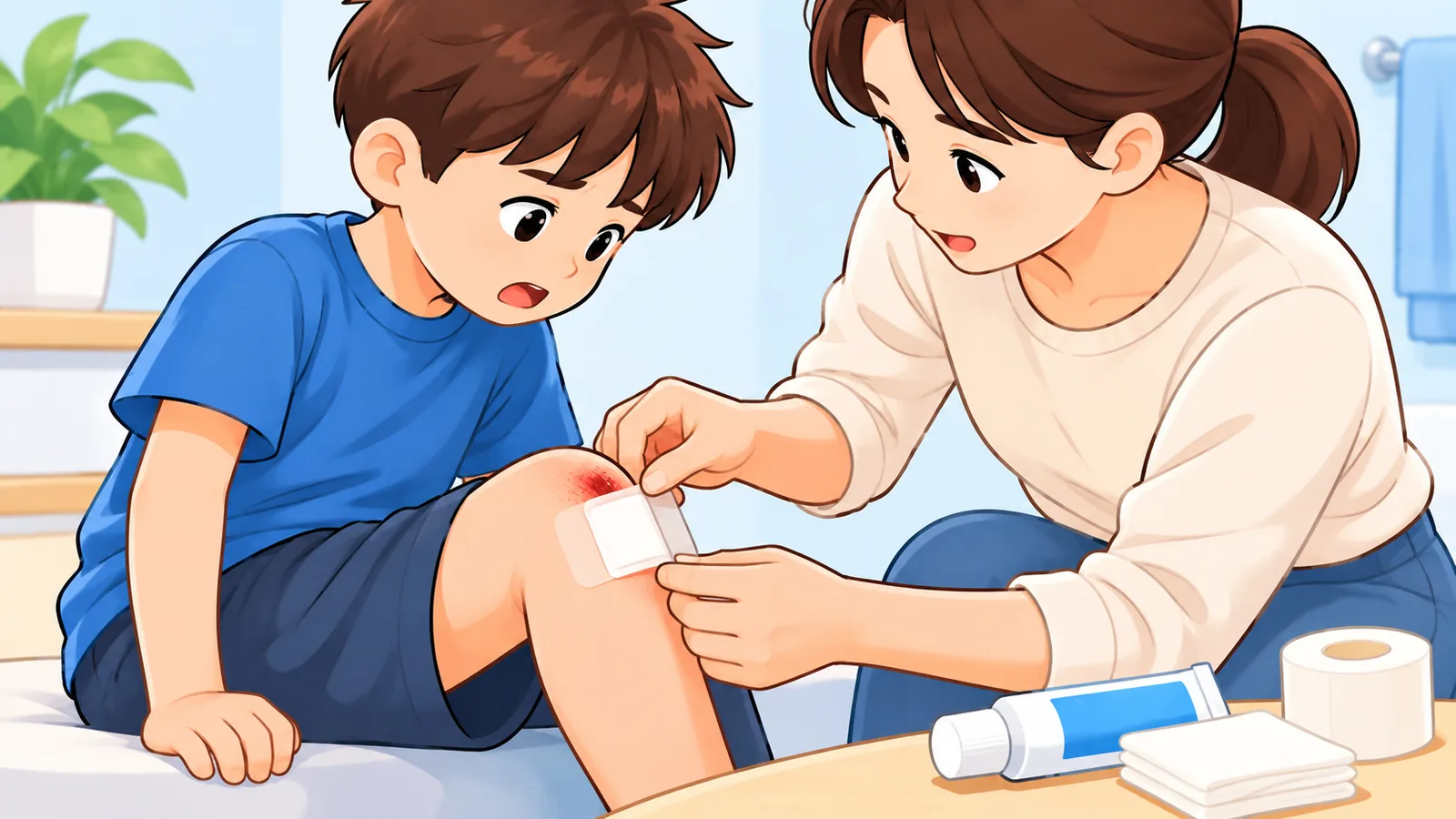
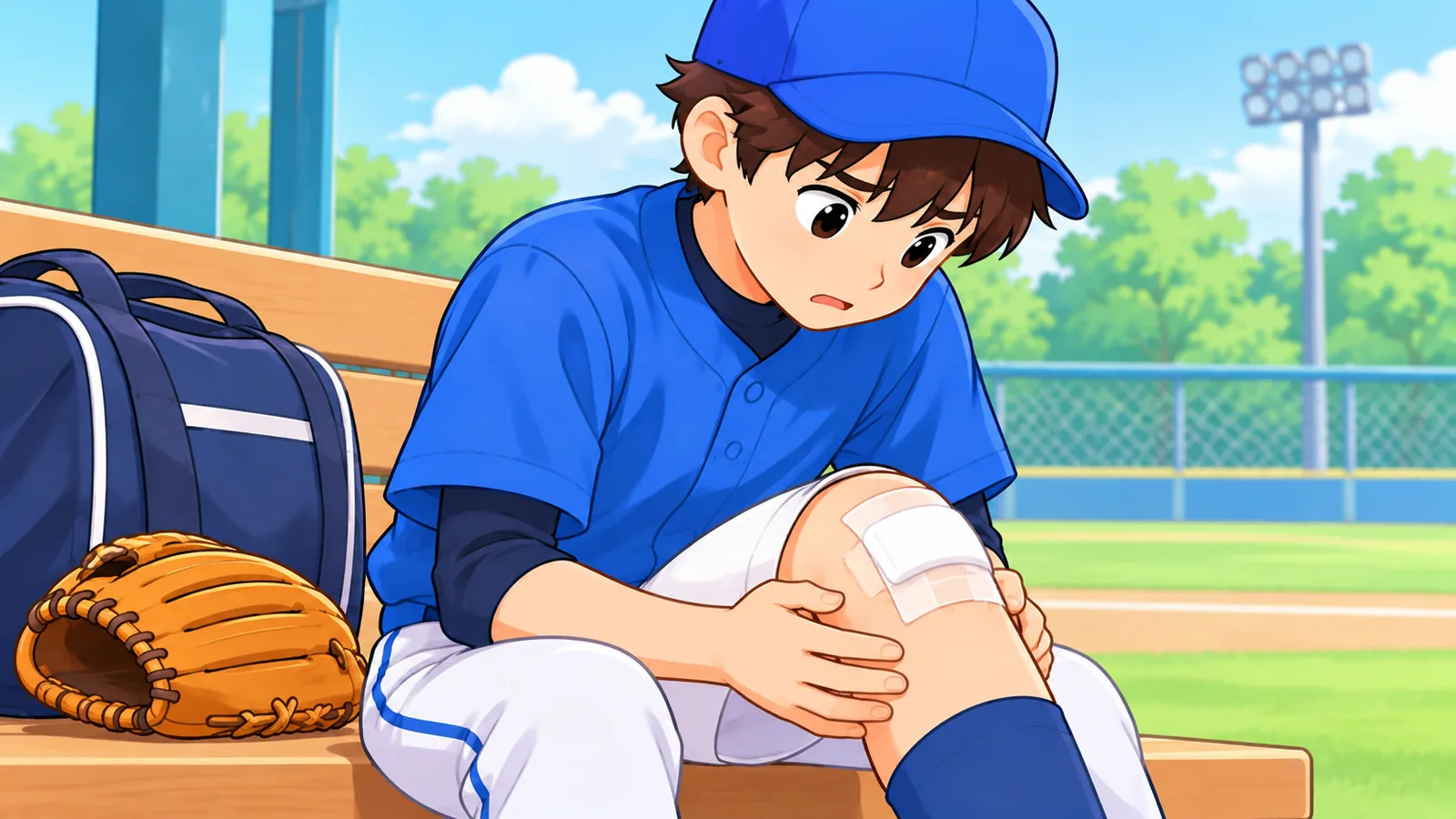
Yes, once it is clean, a shallow scrape can be covered. The AHA and Red Cross guidance notes that closed dressings can support healing.
The American Academy of Dermatology (AAD) recommends a nonstick sterile bandage for minor first-degree burns. A practical tip for hips and knees: pick a bandage and tape that stay put when you bend and run.
Do you need ointment?
Not necessarily. For minor first-degree burns, the AAD suggests petroleum jelly two to three times a day and advises against antibiotic ointment in that case. The AHA guidance says there is no evidence that antibiotic ointment improves healing for a clean, shallow wound.
Should you pop a blister?
No. The AAD says to leave blisters intact and cover them so they can settle on their own. Mayo Clinic also advises against popping them.
While you are at it, skip ice, butter, and toothpaste on the wound. Neither the AAD nor Mayo Clinic recommends them.
What Can You Do for the Pain?
[[IMAGE_4]]
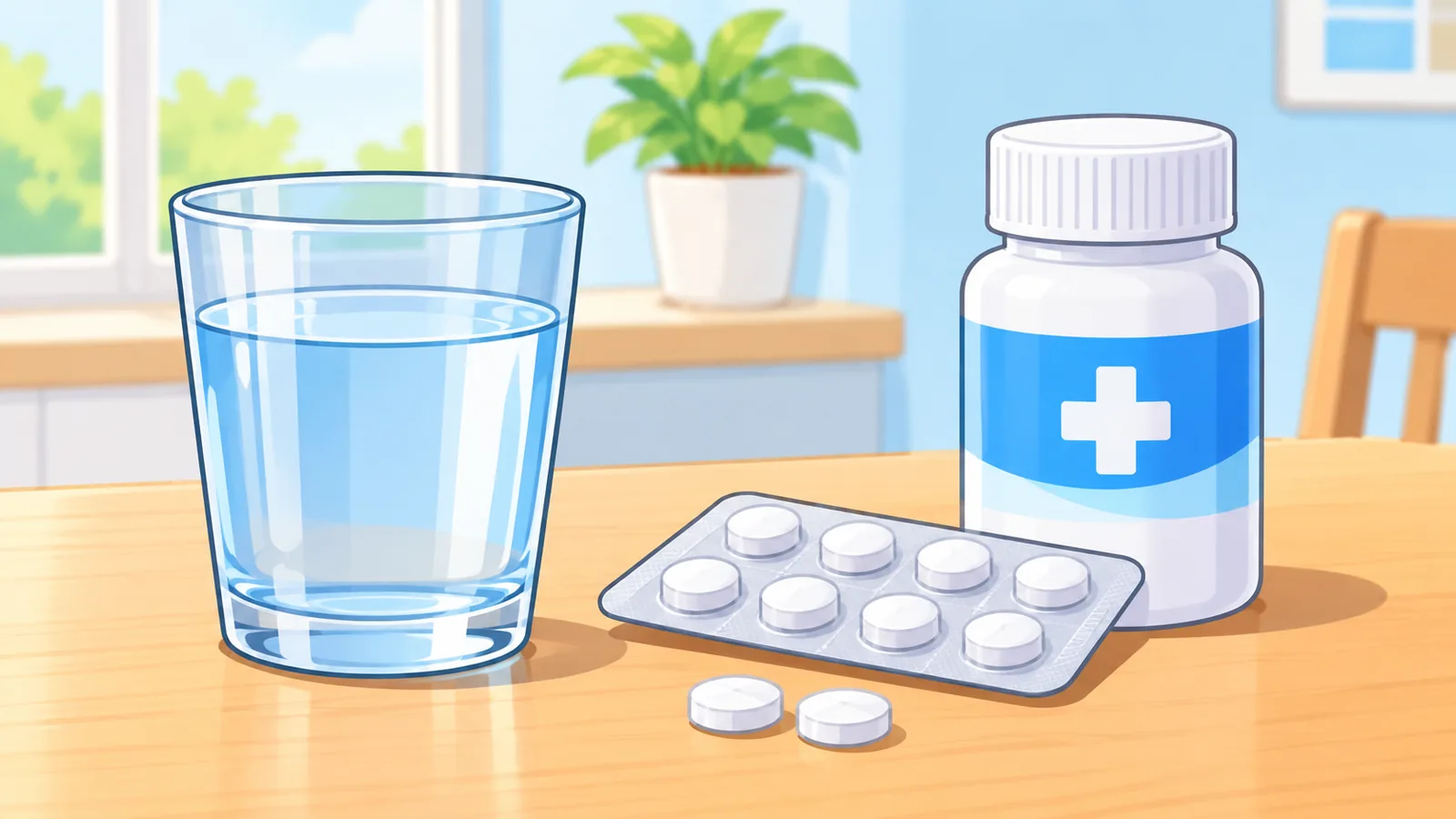
Over-the-counter acetaminophen or ibuprofen are options, according to the AAD and MedlinePlus. Follow the label and think about your own health situation before you take anything.
If the pain keeps getting worse instead of easing, treat that as a warning sign, not something to push through.
🛒 Recommended Product
How Do You Spot an Infected Slide Burn?
[[IMAGE_5]]
Watch for worsening pain, swelling, or redness, pus or foul-smelling drainage, and fever. Those signs appear in the AHA and Red Cross guidance and in Cleveland Clinic’s advice, and Baylor flags infection as a risk with turf burns too.
If you notice any of these, get evaluated by a clinician. Don’t wait to see if it settles.
When Should You See a Doctor?
[[IMAGE_6]]
See a clinician if any of the following applies:
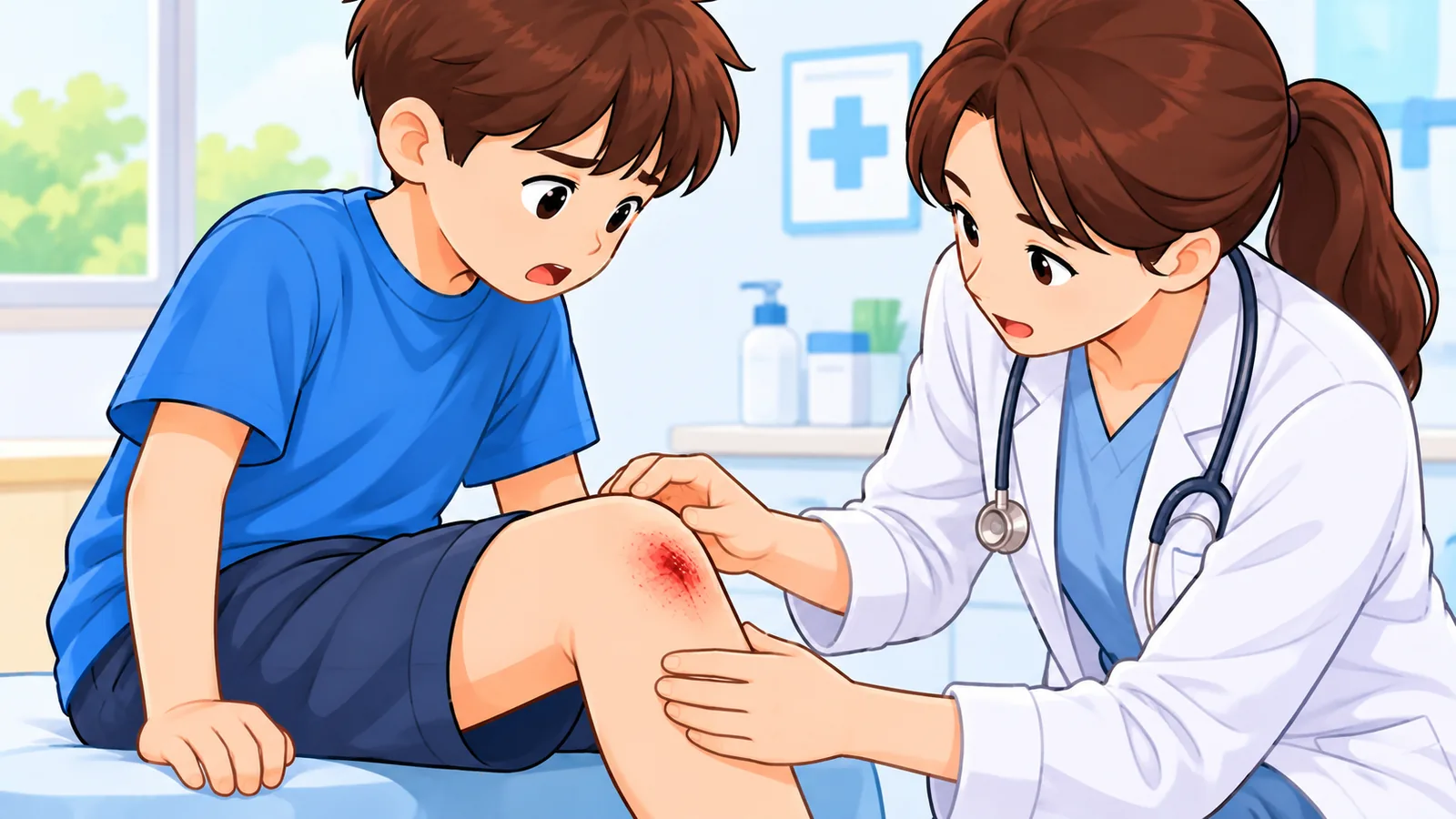
- The wound is larger than the palm of your hand, looks deep, or is on your face, hands, feet, or genitals (per the AHA and Red Cross guidance).
- It sits over a joint such as the knee, ankle, or hip. MedlinePlus lists joint burns as a reason for care, so don’t judge a knee slide by size alone.
- Dirt won’t come out, or large or multiple pieces are embedded.
- You see any sign of infection.
- Bleeding won’t stop, or you notice numbness or lost function. The American Orthopaedic Society for Sports Medicine (AOSSM) advises an evaluation for these.
On tetanus, MedlinePlus covers it in its aftercare guidance. If you are unsure about your vaccination status, ask a clinician.
Can You Go Back to the Next Game?
[[IMAGE_7]]
Only when the wound is securely covered, the pain is manageable, and nothing on the doctor list above applies. The AOSSM advises resting from sport until symptoms ease.
The sources give no fixed return-to-play timeline for slide burns, so there is no number of days to promise here. If you have pain, swelling, lost function, numbness, or bleeding that won’t stop, get a sports medicine evaluation first.
Slide Burn Care at a Glance
[[IMAGE_8]]
| Situation | Do | Skip |
|---|---|---|
| Fresh scrape with dirt | Rinse with running water or saline until visible dirt is gone | Digging at large or multiple pieces |
| Clean, shallow scrape | Cover with a nonstick sterile bandage | Ice, butter, toothpaste |
| Blister | Leave it intact and covered | Popping it |
| Pain | Acetaminophen or ibuprofen, per the label | Pushing through worsening pain |
| Red flags | Get a medical evaluation | Waiting it out or playing through |
How Can You Cut Down on Slide Burns?
[[IMAGE_9]]
The best-supported advice is about technique and equipment on the field. The AOSSM recommends learning slides without a base at first and using breakaway bases where possible.
The sources provided give no specific protective-gear guidance for slide burns, so this article makes no gear claims.
Quick FAQ
[[IMAGE_10]]
Is a slide burn really a burn?
It is a friction scrape that removes the top layer of skin, so treat it as an abrasion.
Should I use antibiotic ointment?
It is not a must-have. The AAD suggests petroleum jelly for minor first-degree burns, and the AHA guidance finds no evidence that antibiotic ointment helps clean, shallow wounds heal better.
Can I pop the blister?
No. Cover it and let it settle on its own.
Can I play tomorrow?
Only if the wound is securely covered, the pain is manageable, and no red flag applies. The sources give no set timeline.
When is a knee slide burn a doctor visit?
Sooner than you might think. Joint areas are a reason for care regardless of size, and so are infection signs, stuck dirt, and numbness.
Your Next Step Today
[[IMAGE_11]]
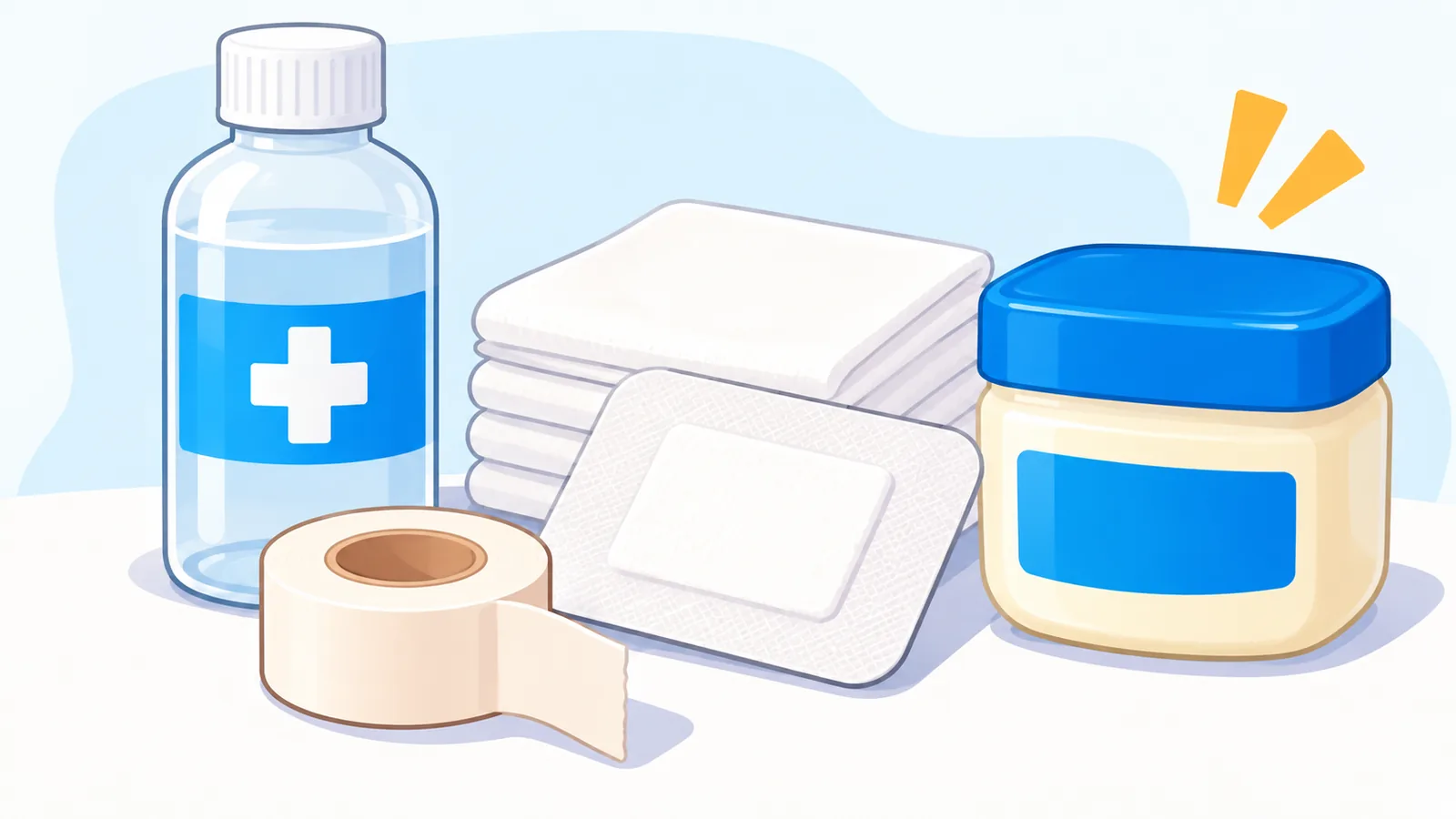
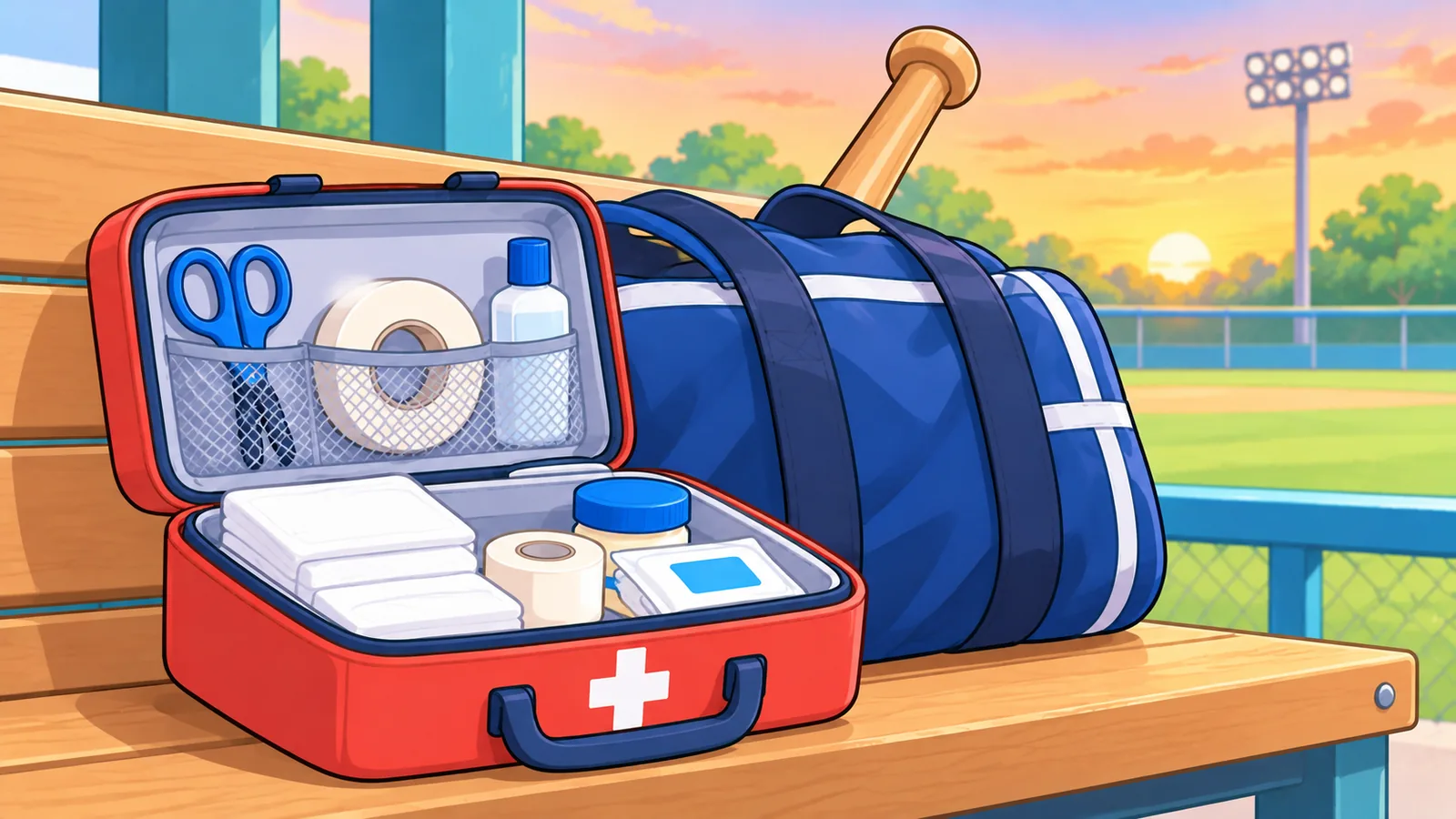
Put a small kit in your bat bag: sterile saline (or a plan for clean tap water), nonstick pads, medical tape, and petroleum jelly. That way the first five minutes after a slide go the right way.
References
- Cleveland Clinic, Abrasion (Scrape): How To Treat
- Baylor College of Medicine, Turf and grass burns
- American Heart Association and American Red Cross, 2024 First Aid Guidelines
- American Academy of Dermatology, How to treat a first-degree, minor burn
- MedlinePlus, Minor burns – aftercare
- American Orthopaedic Society for Sports Medicine, Baseball Injuries
- Mayo Clinic, Burns: First aid
Want more comparisons and buying guides?