⚠️ This page connects you to Atovia’s partners and affiliate markets. We may receive a commission from affiliate partners for activities made through these links. Discount offers may change at any time according to policy! Rest assured, there are no additional costs to you! We hope this saves you time in finding the right items!
Ever bought an apron that felt heavy, slipped off your neck, or still let oil splatter through? If cooking at home is part of your week, the right apron can make prep cleaner, faster, and less stressful—and it can actually feel comfortable.
🛒 Recommended Product
Why Choosing the Right Apron Matters
An apron is not just “something to wear.” It protects clothes from grease, sauces, flour, and hot splashes, and it keeps small tools close when you’re moving between the sink, stove, and cutting board. For beginners, this matters even more because spills happen often during early practice.
The best apron is the one you’ll actually wear every time. That usually means it fits your body, doesn’t pull on your neck, and has fabric that matches your cooking style—light for daily meals, tougher for grilling or heavy pan work.
Types of Aprons by Use Case
Different cooking situations need different apron designs. Choosing by “use case” is the fastest path to a good pick.

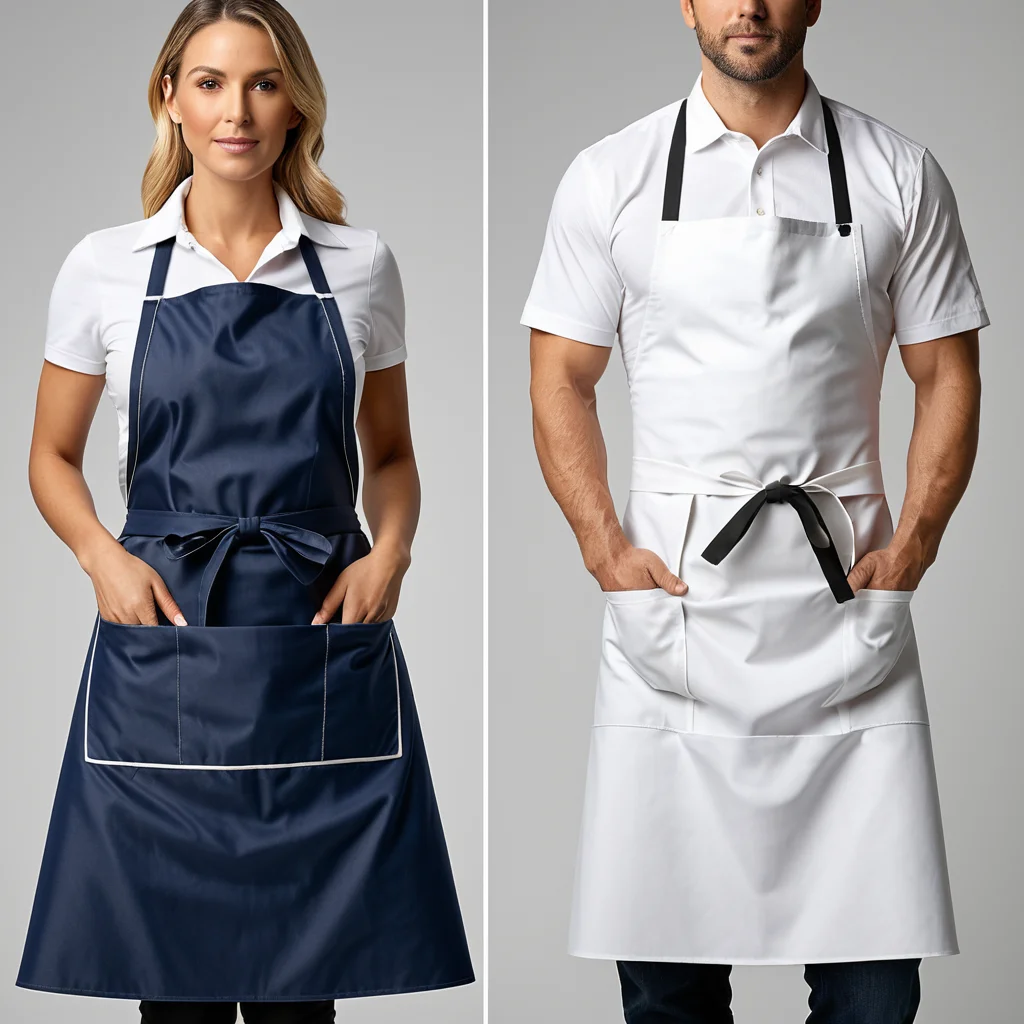
- Bib apron: Classic coverage from chest to knees. Great for everyday home cooking and baking.
- Waist apron: Covers from the waist down. Better for light prep, serving, or barista-style tasks.
- Cross-back apron: Straps cross behind the back, reducing neck pressure. Ideal for long cooking sessions.
- Grill/BBQ apron: Often thicker, sometimes with heat-resistant feel and stronger hardware.
- Water-resistant apron: Useful for dishwashing-heavy routines or messy marinating.
- Start with use case: daily cooking, baking, BBQ, or dish-heavy routines.
- Comfort beats looks: cross-back or adjustable straps win for longer wear.
- Fabric affects cleanup: cotton for breathability, blends for easy care, coated fabrics for splashes.
Key Factors to Consider Before Buying
Before comparing “best” lists, filter by these purchase factors. It saves money and helps you avoid buying a second apron too soon.

- Material: Cotton feels breathable and natural; poly-cotton blends dry faster and wrinkle less; coated fabrics resist stains but feel less airy.
- Strap style: If your neck gets tired, skip neck-loop designs and choose cross-back or wide straps.
- Adjustability: Look for adjustable neck straps, long waist ties, or multiple button positions.
- Coverage & length: Taller cooks may prefer longer aprons; shorter cooks may want less bulk around the knees.

- Pockets: One large pocket is practical; multiple pockets help separate your phone, timer, or tasting spoon.
- Washability: Machine-wash-friendly fabrics are best for frequent cooking. Dark colors hide stains; light colors show them quickly.
For kitchen hygiene, keeping cooking textiles clean matters. Choose a fabric you can wash often without hassle. Source: MFDS (Korea Ministry of Food and Drug Safety), 2023
Best Apron Picks Compared
Below is a practical comparison based on how most home cooks actually use an apron: comfort, cleaning, and daily durability. Use it to narrow your shortlist quickly.
🛒 Recommended Product
| Category | A: Cross-Back Cotton Blend | B: Classic Bib Cotton | C: Water-Resistant Coated | D: Heavy-Duty BBQ/Denim |
|---|---|---|---|---|
| Best for | Long cooking sessions | Daily home meals | Messy sauces + dish-heavy routines | Grilling + heavy prep |
| Comfort | High (no neck strain) | Medium (neck loop) | Medium (less breathable) | Medium–Low (heavier) |
| Stain resistance | Medium | Low–Medium | High | Medium |
| Easy washing | High | High | Medium (check care label) | Medium (slow to dry) |
| Pocket utility | High | Medium | Medium | High |
| Value for money | High | High | Medium | Medium |
If you cook 4–7 times a week, “A” is usually the safest buy because comfort drives consistent use. If you want the simplest, easy-to-wash option, “B” works well. For frequent sauce splatter or dishwashing, “C” reduces stress. For BBQ weekends, “D” handles rough use and heat-adjacent work better.
Best Budget & Value-for-Money Aprons
Value isn’t only about price. It’s about how often you’ll wear it and how easily you can keep it clean.
- For beginners: Choose a classic bib apron in a darker color, with an adjustable strap and at least one large pocket. It’s forgiving and easy to wash.
- For home cooks who stand longer: Prioritize cross-back straps and a mid-weight blend. Comfort prevents “apron fatigue.”
- For meal prep and sauce-heavy cooking: Consider water-resistant fabric, but make sure it’s flexible enough for free movement.
- For gift buyers: Neutral colors, universal-fit ties, and sturdy stitching look premium without sizing stress.
Quick fit test: tie it on, bend to reach a lower cabinet, and pretend to stir a pot. If it pulls at your neck or rides up, skip it. If it stays put, that’s a keeper.
Conclusion & Buying Tips
If you want one apron that rarely disappoints, choose a comfortable strap system (preferably cross-back) and a fabric you can wash often. For daily cooking, a classic cotton or cotton-blend bib apron covers most needs. If your routine involves lots of splatter or dishwashing, water-resistant fabric can make cleanup easier.
Practical tip: buy with your “most common cooking day” in mind. The apron you reach for on a busy weekday is the one that delivers the best value.
Need more comparisons or buying guides?