⚠️ This page connects you to Atovia’s partners and affiliate markets. We may receive a commission from affiliate partners for activities made through these links. Discount offers may change at any time according to policy! Rest assured, there are no additional costs to you! We hope this saves you time in finding the right items!
Accidents on the rug, a puppy who sniffs the pad and walks away, and no clear idea how long this will take. If that sounds familiar, you are in the right place. This guide walks through the full path of how to puppy pad train a dog, from setup to the first successes, the common mistakes, and the move outdoors if that is your goal.
- Is Puppy Pad Training Right for Your Dog?
- What You Need Before You Start
- Pick One Spot and Set Up the Potty Area
- Build a Potty Schedule
- Step-by-Step: Guiding Your Puppy to the Pad
- Reward Success the Right Way
- What to Do After an Accident
- Common Mistakes to Avoid
- How Long Does Pad Training Take?
- Moving From Pads to Outdoor Potty (Optional)
- When Accidents Mean a Vet Visit
- Frequently Asked Questions
- References
- Pick one fixed spot for the pad and avoid moving it during training.
- Offer frequent potty chances, especially after waking, eating, playing, and napping.
- Reward right away, while your puppy is still on the pad.
- Clean accidents thoroughly so lingering odor does not cue the same spot.
- Skip punishment. It does not teach what you want and can backfire.
- Timelines vary from dog to dog, from weeks to months.
Is Puppy Pad Training Right for Your Dog?
Many owners consider pads in situations such as living in a high-rise, having limited outdoor access, or needing a backup spot for a very young puppy. Pads are one option, not the best choice for every dog or household.
The main trade-off is worth knowing before you start. According to expert commentary shared by the American Kennel Club, pads add an indoor potty option, which can create confusion for owners whose real goal is to teach outdoor-only potty habits.
Decide Your End Goal Now
- Pads for the long term: you plan to keep an indoor potty spot permanently.
- Pads as a bridge: you plan to move to outdoor potty later (see the transition section below).
Choosing now helps you stay consistent, and consistency is the thread running through every good guide on this topic.
What You Need Before You Start
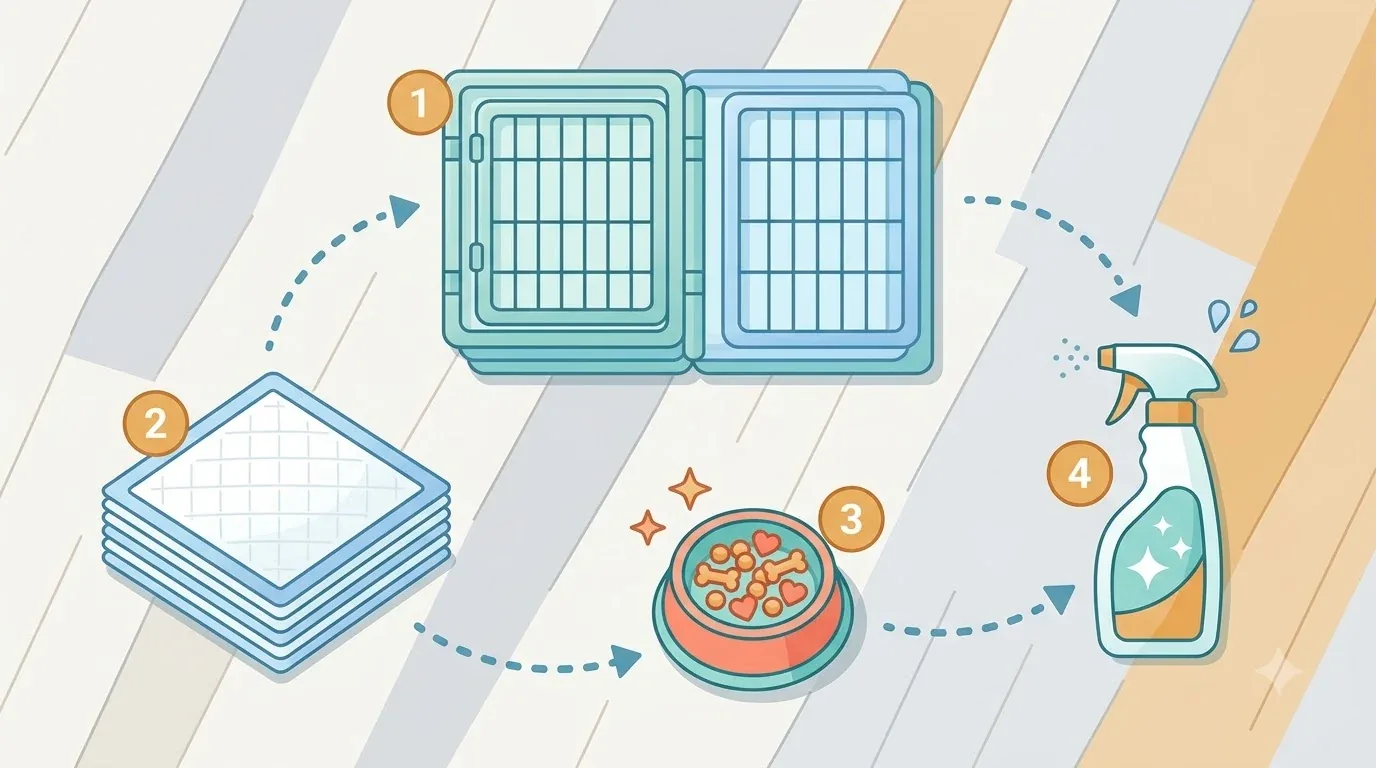
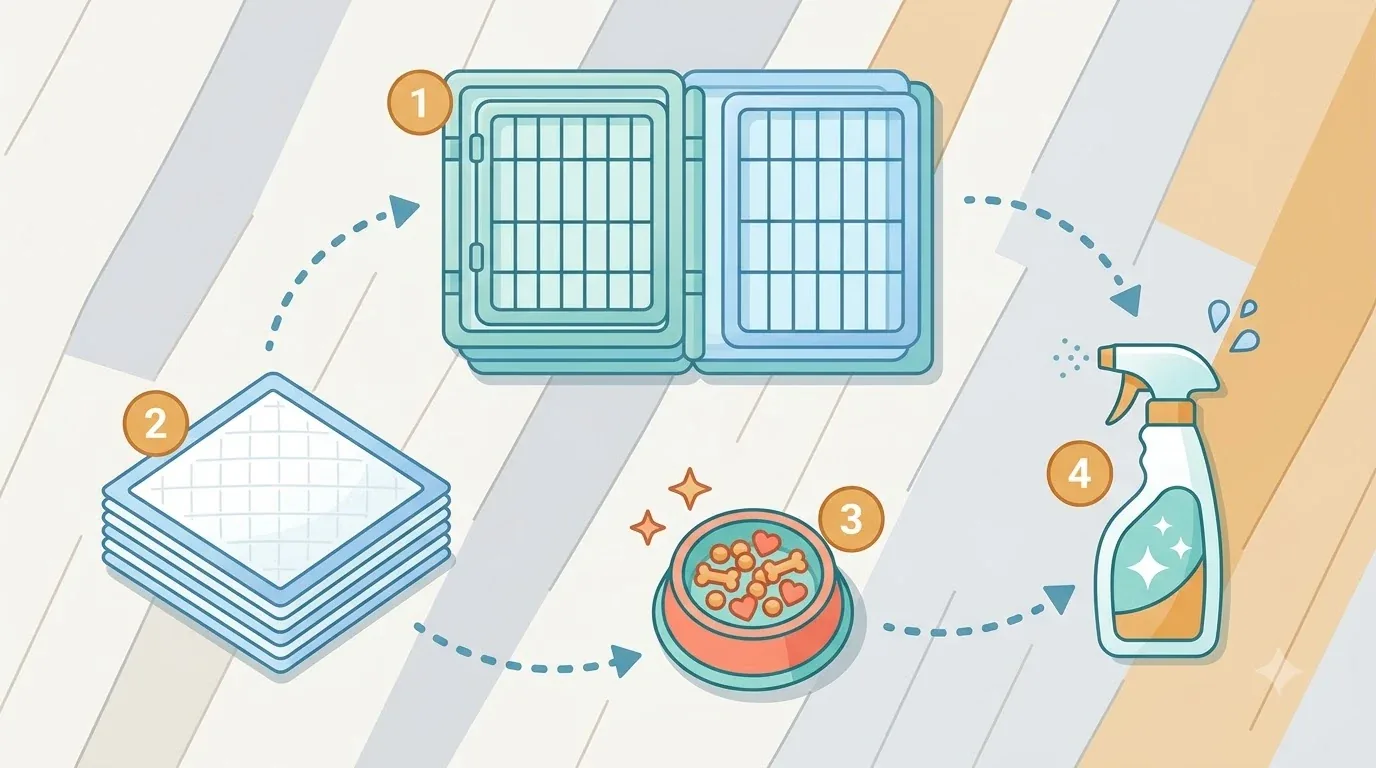
Keep the supply list short so you can start training today.
- Potty pads: sized for your dog, easy to clean up, and comfortable to stand on.
- Treats: small, soft rewards you can hand over in a second.
- An odor-removing pet cleaner: for accidents outside the pad.
- A gate or pen: to limit the space your puppy can roam when you are busy.
- A timer or phone alarm: to remind you of potty trips.
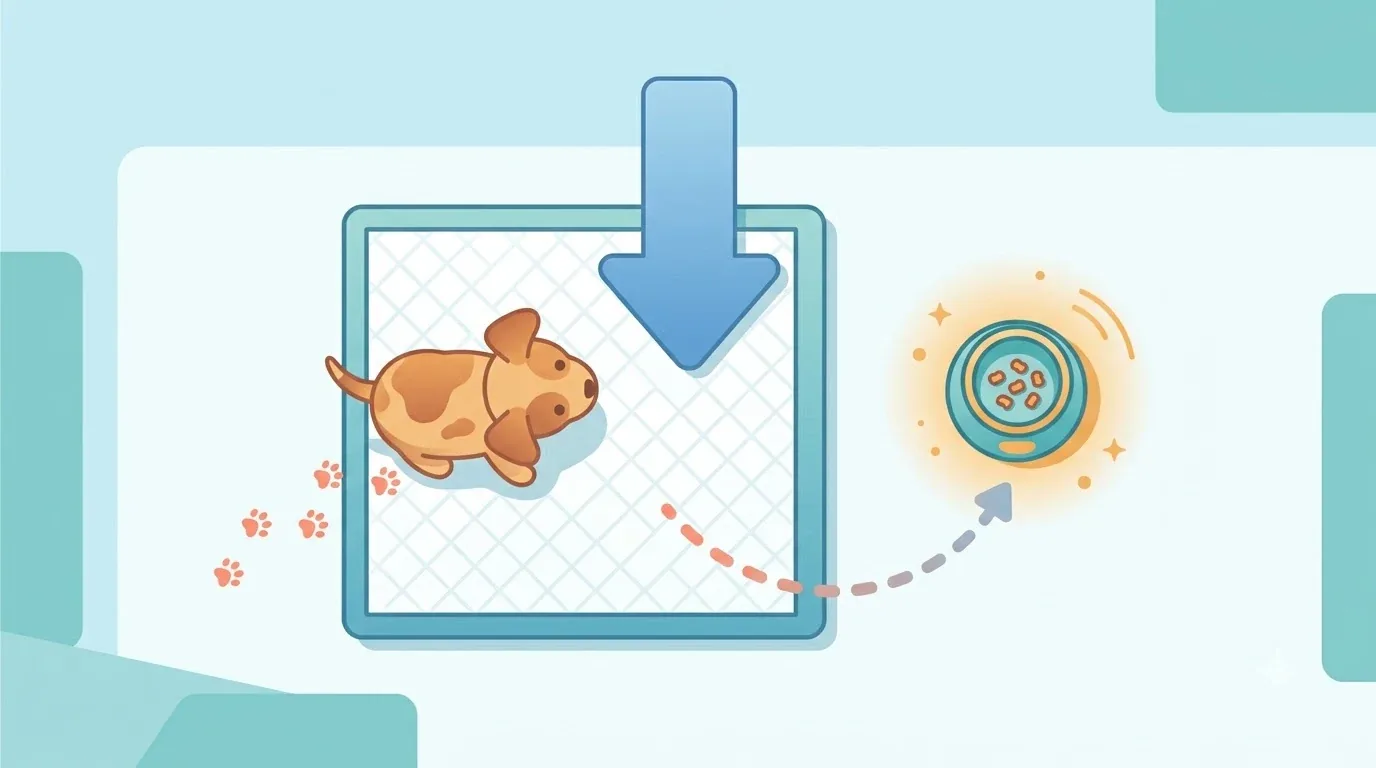
Keep a few treats right at the pad so you can reward the moment your puppy finishes.
Pick One Spot and Set Up the Potty Area
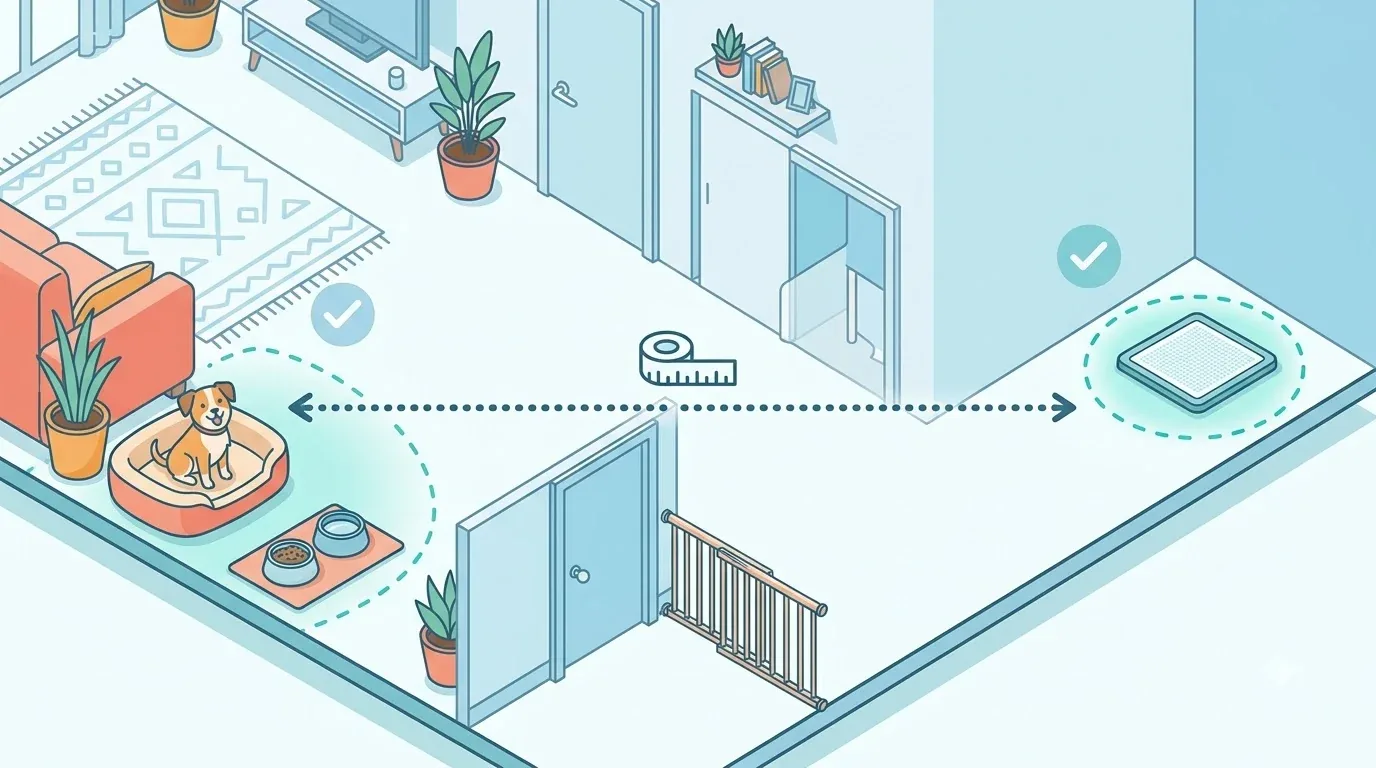
Training guides from TeleTails and the AKC both recommend choosing one location and keeping it consistent while your puppy learns.
- Choose an easy-to-reach, quiet spot. Your puppy should be able to get there quickly when the urge hits.
- Keep it fixed. Moving the pad around during training makes the target harder to learn.
- Keep it away from food and bedding. Most dogs prefer not to eliminate where they eat and sleep.
- Shrink the play area. A gate or pen makes the pad easier to find while your puppy is learning.
Build a Potty Schedule
Puppies need frequent chances to succeed. Sources agree on the key moments to take your puppy to the pad:
- After waking up
- After eating
- After playing
- After napping
How Often?
There is no single correct interval. The AKC notes that very young puppies may need to go as often as every 15 minutes, while VCA Animal Hospitals suggests offering a chance every 1 to 2 hours while your puppy is awake, with extra chances during play. Treat these as ranges and adjust to your own puppy.
A Simple Template (Adjust to Your Puppy)
| Moment | What to Do |
|---|---|
| First thing after waking | Go straight to the pad, wait, reward |
| After each meal | Take your puppy to the pad |
| After play sessions | Offer the pad before and after play |
| After naps | Go to the pad immediately |
| Through the day while awake | Offer regular chances based on the ranges above |
Keep a simple log of when your puppy goes. After a few days you will see a pattern you can plan around.
Step-by-Step: Guiding Your Puppy to the Pad
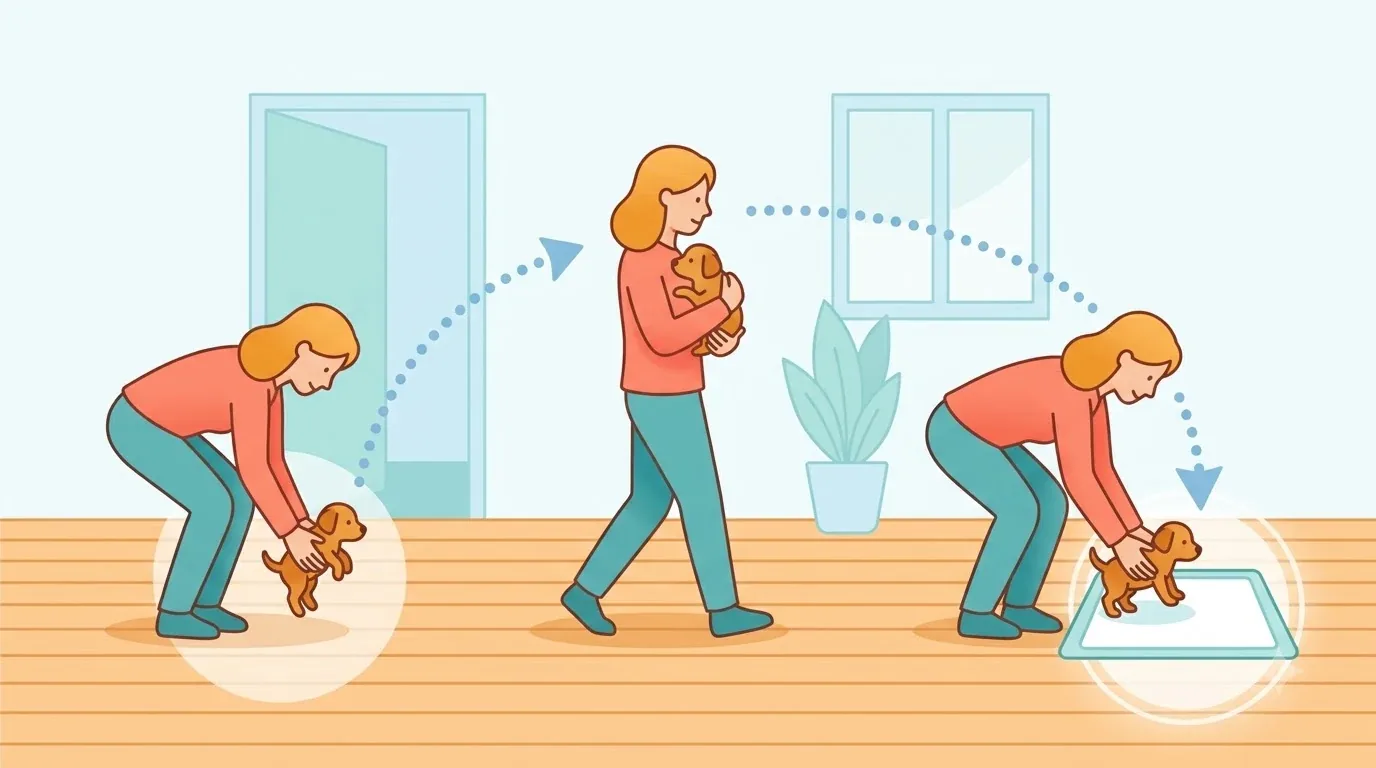
- Watch for signs. Many puppies show signs such as sniffing, circling, whining, or suddenly stopping play.
- Take your puppy to the pad calmly. Walk or carry them there without fuss.
- Use a consistent cue word. Say the same short phrase each time. It will be useful if you move outdoors later.
- Wait quietly. Let your puppy sniff and finish without distraction.
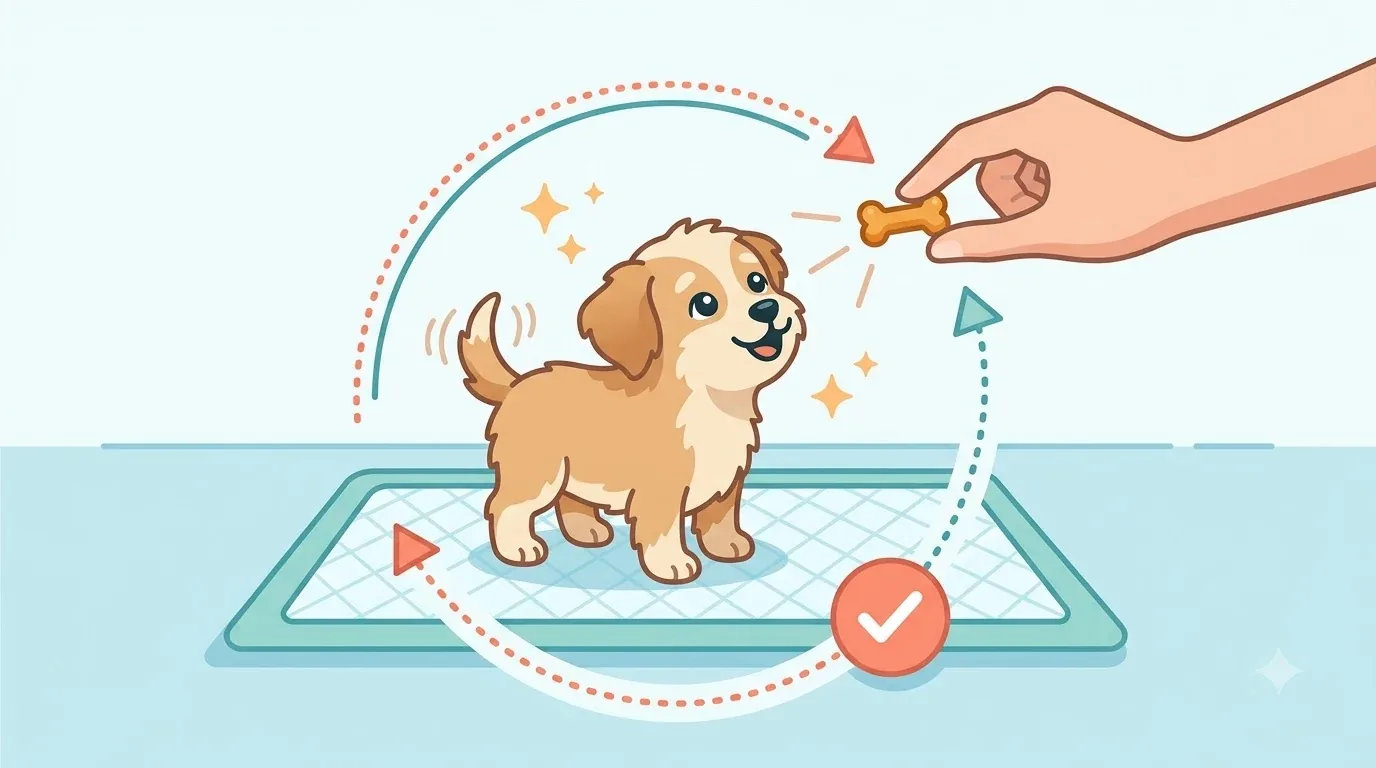
- Reward right away. Praise and a treat as soon as they finish on the pad.
When You Cannot Watch
Supervision is a core principle across top guides. When you cannot keep an eye on your puppy, use a crate or pen so accidents are less likely to happen unnoticed.
Reward Success the Right Way
The American Veterinary Society of Animal Behavior (AVSAB) recommends rewarding the behavior you want, and the timing matters. Give praise or a treat right away, while your puppy is still on the pad, so the connection is clear.
- Use a happy voice and a small treat every time at the start.
- Keep treats at the pad so you do not have to leave your puppy to fetch them.
- Stay consistent. Everyone in the household should use the same cue and reward routine.
🛒 Recommended Product
AVSAB’s position statement on humane dog training also supports reward-based methods and managing the environment to set your puppy up to succeed.
What to Do After an Accident
Accidents are a normal part of the process. How you respond matters.
- Stay calm. If you catch your puppy in the act, interrupt gently and take them to the pad. Reward if they finish there.
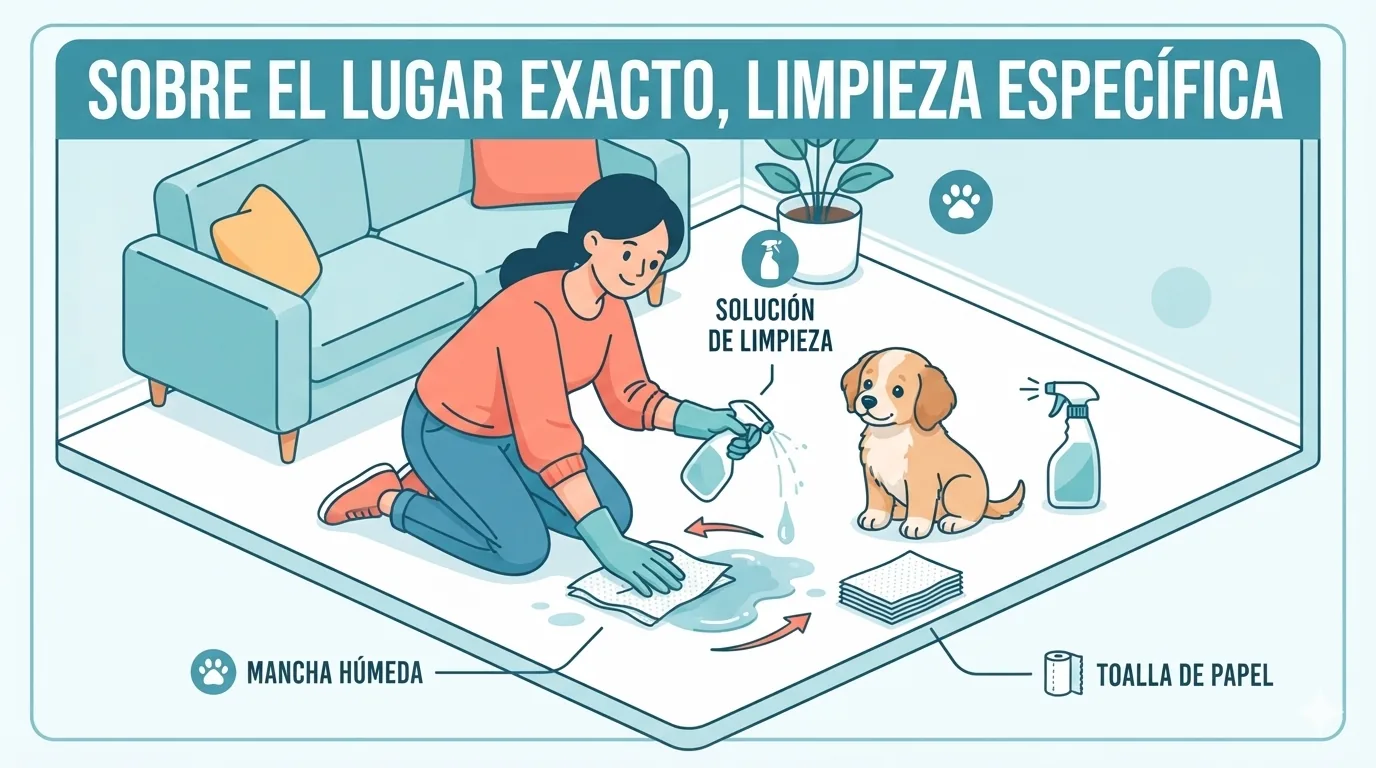
- Clean thoroughly. VCA explains that lingering urine and stool odor can cue a puppy to use the same spot again, so use a pet-safe odor remover.
- Do not punish. AVSAB advises against rubbing a puppy’s nose in it or scolding afterward. These methods are ineffective, and punishment can teach a puppy to avoid going in front of you.
- Review the schedule. An accident usually means a potty chance was missed, so shorten the gap next time.
Common Mistakes to Avoid
| Mistake | Quick Fix |
|---|---|
| Moving the pad too often | Pick one spot and keep it there during training |
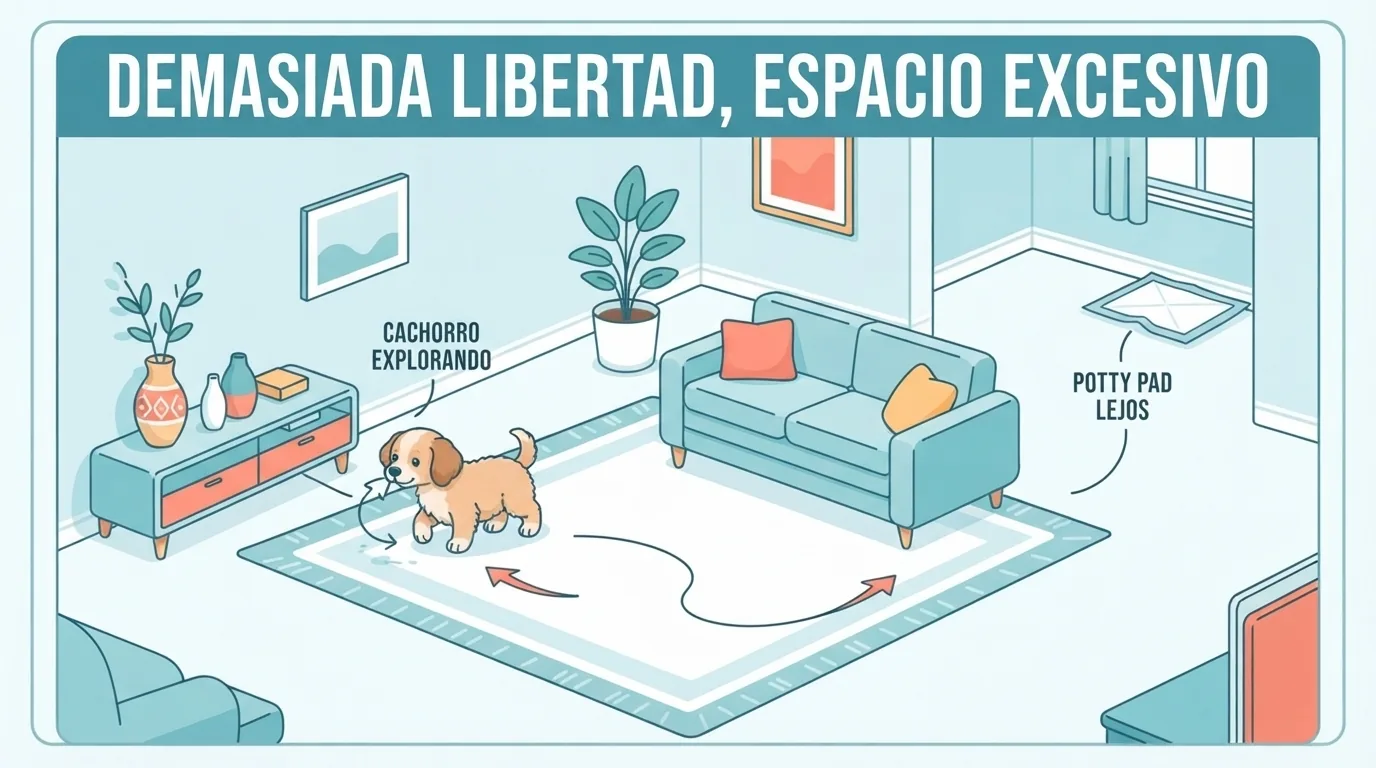
| Too much freedom too soon | Use a gate or pen and supervise closely |
| Rewarding late or inconsistently | Keep treats at the pad and reward right away |
| Scolding after the fact | Stay calm, clean up, and adjust the schedule |
| Skipping thorough cleaning | Use a pet-safe odor remover on every accident |
| Too few potty chances | Use the trigger moments and a log to plan more trips |
How Long Does Pad Training Take?
No source can promise a set timeline. The AKC explains that training time varies by dog and can range from weeks to months. One trainer-written guide from TeleTails gives a rough estimate of 2 to 4 weeks, but that is one source’s estimate, not a guarantee.
Signs of Progress
- Fewer accidents outside the pad
- Your puppy heads toward the pad on their own
- More predictable potty times in your log
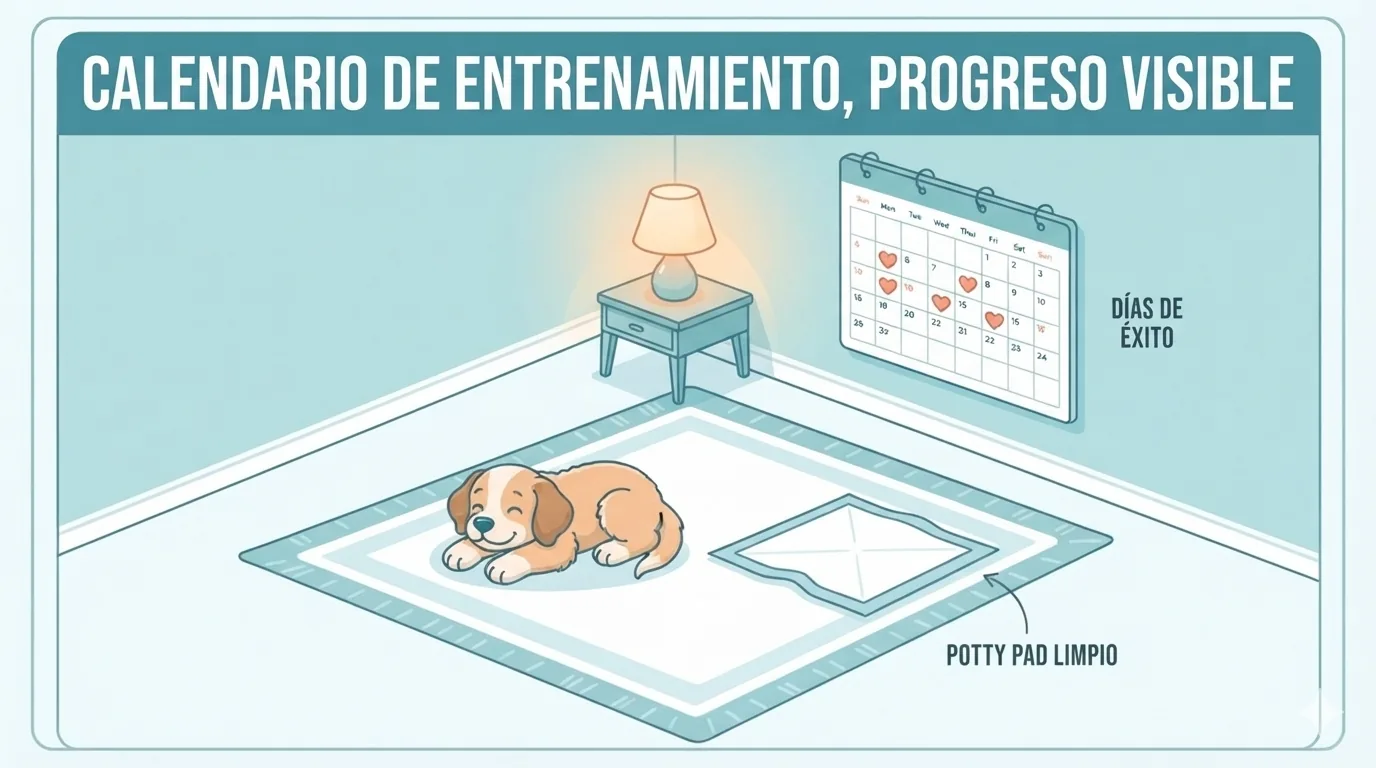
If progress feels slow, check your schedule, supervision, and cleaning first, and stay patient.
Moving From Pads to Outdoor Potty (Optional)
If your goal is outdoor potty, TeleTails suggests keeping the same cue word and reward rules, then shifting the pad gradually toward the door and then outside. Move in small steps so your puppy can follow along.
| Factor | Staying on Pads | Moving Outdoors |
|---|---|---|
| Convenience | Indoor option available any time | Requires trips outside on a schedule |
| Cleanup | Pads must be changed and disposed of | Less indoor cleanup once established |
| Consistency | One indoor spot to maintain | Needs a new routine and reward system |
| Fit | Suits households that want an indoor option | Suits owners aiming for outdoor-only potty |
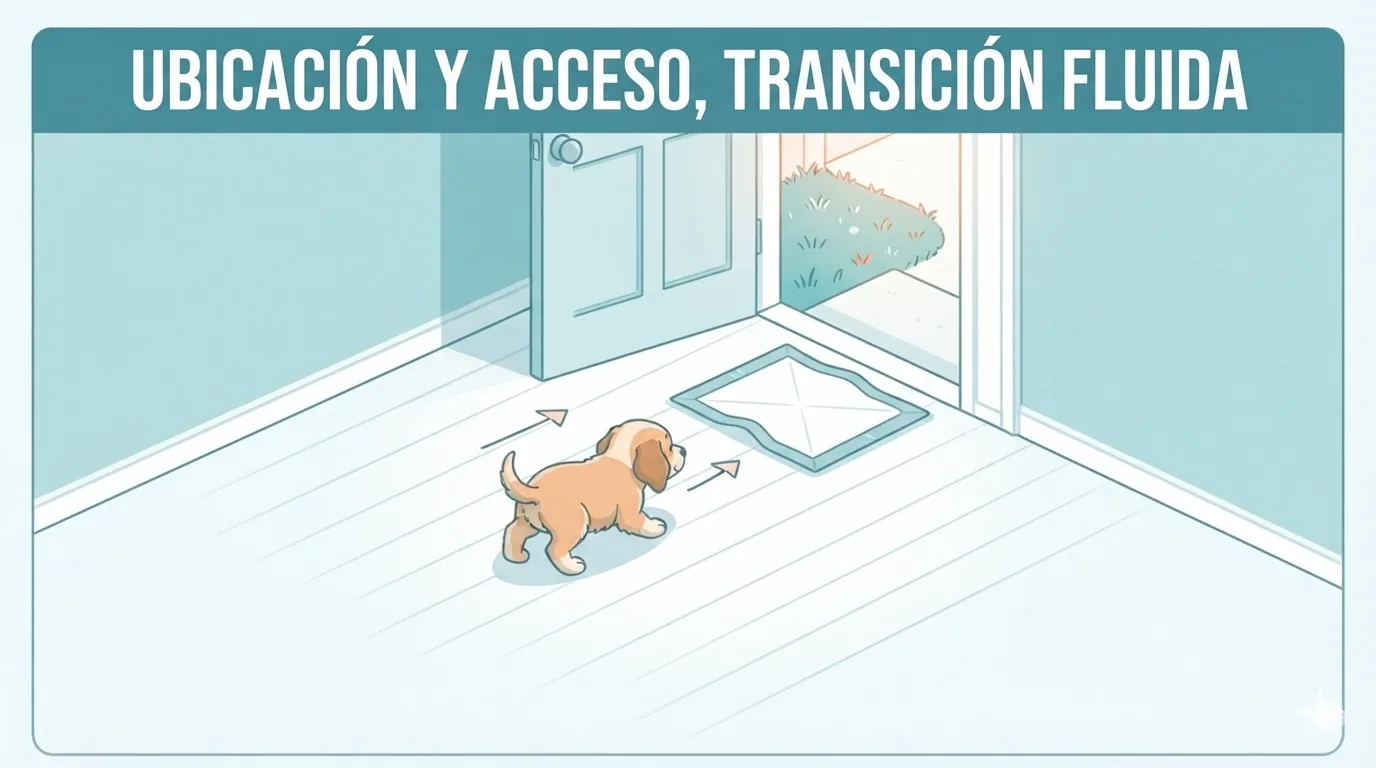
Neither path is automatically better. Choose the one that fits your home and your dog.
When Accidents Mean a Vet Visit
VCA Animal Hospitals notes that when a dog who was doing well suddenly starts going indoors, there may be a health or behavior issue behind it. Do not assume training has failed.
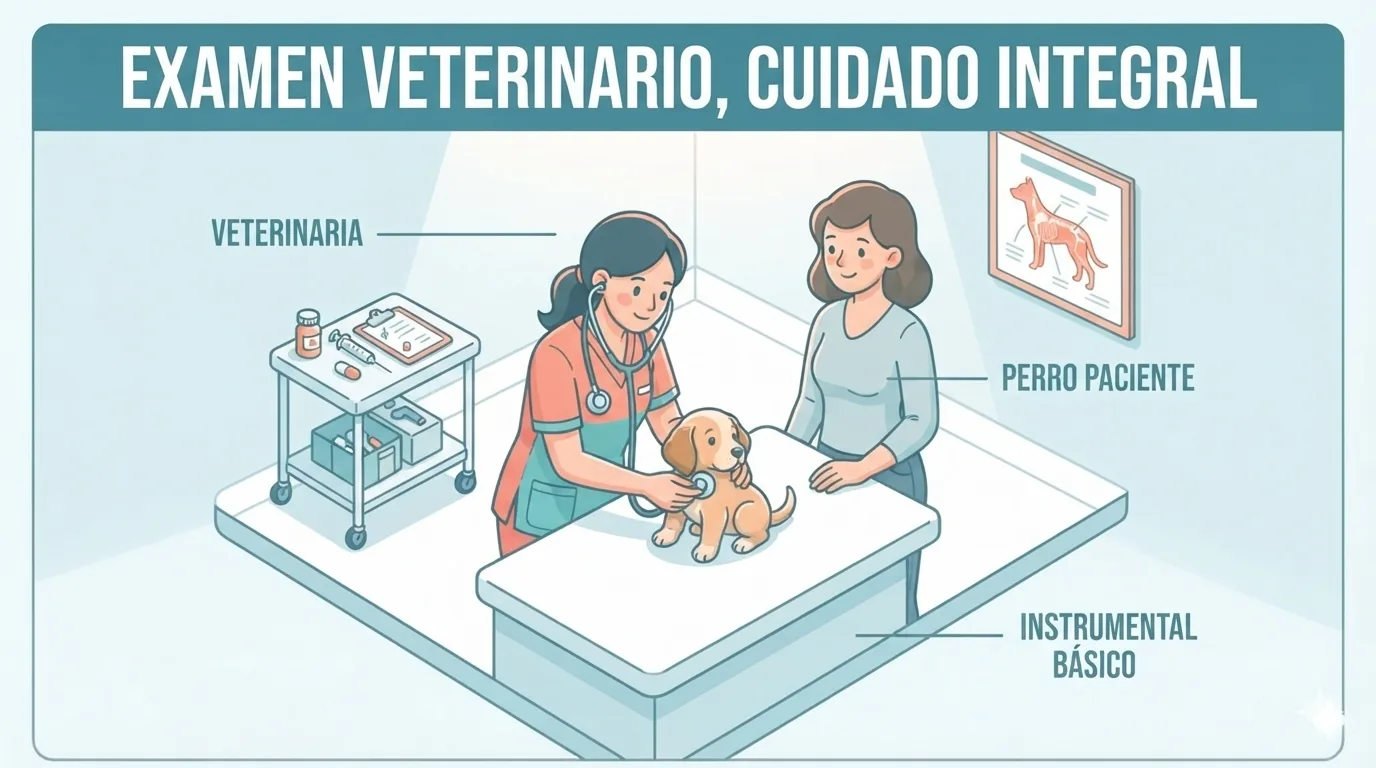
- Call your vet if accidents suddenly increase or your dog’s habits change.
- Mention any change in urination or bowel habits.
- Ask your vet before making major changes to the training plan.
Frequently Asked Questions
Where should the pad go?
Choose one quiet, easy-to-reach spot away from food and bedding, and keep it there during training.
Can I use pads and outdoor training together?
Some owners do. The AKC notes that pads add an indoor option, which can be confusing if you only want outdoor potty. Decide on your goal first and stay consistent.
Why does my puppy chew or play with the pad?
The research behind this guide does not explain the cause. Supervise closely, reward your puppy for using the pad correctly, and clean up promptly. If it continues, ask your vet or a trainer.
Why does my puppy go next to the pad?
The sources do not give a cause either. Take your puppy to the pad more often, reward success, and clean the missed spot thoroughly so odor does not draw them back.
When should I call a vet?
Call if a previously reliable dog suddenly starts going indoors, or if you notice any change in urination or bowel habits.
Ready to start? Grab one pad, a pocket of treats, and a notebook for your potty log. Today’s first success is closer than you think.
References
- TeleTails: How to Potty Train a Puppy on Pads: A Trainer’s Step-by-Step Guide
- American Kennel Club: The Ins and Outs of Potty Pad Training
- VCA Animal Hospitals: House Training for Puppies and Dogs
- AVSAB: Housetraining Tips
- AVSAB: Position Statement on Humane Dog Training
- American Kennel Club: How to Potty Train a Puppy: A Step-by-Step Guide for New Owners
Want more comparisons and buying guides?