⚠️ This page connects you to Atovia’s partners and affiliate markets. We may receive a commission from affiliate partners for activities made through these links. Discount offers may change at any time according to policy! Rest assured, there are no additional costs to you! We hope this saves you time in finding the right items!
Movie theaters typically do not buy the films they show. Instead, a theater contracts with a distributor for the right to show a film, and the film then reaches the theater as a digital package that needs the right key to play. This guide walks through each stage in order: the distributor, the booking, the terms, the delivery, and the moment the movie starts on screen.
- The Short Answer: Theaters License Showing Rights, They Don’t Buy Films
- Step 1: The Distributor Holds the Film
- Step 2: The Theater Books the Film
- Big Chains vs. Independent Theaters
- Step 3: How the Terms Get Set
- Step 4: The Film Arrives as a Digital Package
- How the Package Reaches the Theater
- Why a File Alone Isn’t Enough: The KDM
- Inside the Theater: From Storage to Showtime
- Frequently Asked Questions
- Key Takeaways and Sources
- A theater typically licenses the right to show a film from a distributor rather than buying the film itself.
- Specific terms, such as run length and how revenue is shared, vary by film and by contract.
- Films now travel as a digital package, and the delivery method is not the same for every theater.
- Encrypted films may need a key message with a permitted showing window before they can play.
- Large chains often have in-house film buyers, while independent theaters sometimes use outside booking services.
The Short Answer: Theaters License Showing Rights, They Don’t Buy Films
When you buy a ticket, it is easy to assume the theater owns the movie on screen. In practice, a theater typically makes an agreement with a distributor that gives it the right to show a particular film for a period of time. The theater gets permission to screen the movie. It does not usually take ownership of it.
The path from studio to screen can be summed up in four stages:
- The distributor holds the film and offers it to theaters.
- The booking happens when a theater chooses the film and requests it.
- The terms are agreed, covering things like how long the film plays and how revenue is divided.
- Delivery and playback follow, when the film arrives as a digital package and the theater prepares it for showtime.
One caution before we go further: the specific terms of these agreements vary by film and by contract. Anyone who quotes a single universal number for how theaters pay for movies is simplifying more than the public sources allow.
Step 1: The Distributor Holds the Film
A distributor is the link between the people who make a film, such as a studio or a filmmaker, and the theaters that show it. Theaters generally do not deal with every production company one by one. They work with distributors, who offer films and handle the agreements for showing them.
The distributor also supplies what the theater needs to run the movie. The Digital Cinema Initiatives (DCI) specification describes this as a digital distribution package: a bundle of files that travels from the distributor to the theater.
The two sides of this relationship also meet in person. CinemaCon is an industry event where theater owners and studio distributors come together. It is useful as a picture of how closely the two groups work, though it is only one meeting point and not a description of how any single film gets booked.
Step 2: The Theater Books the Film
Once a film is available, a theater decides whether it wants to show it. In general terms, the sequence is simple: the theater chooses a title it wants to play, requests it from the distributor, agrees on terms, and then places it on the schedule.
That raises a common question: can a theater simply pick any film it likes? Not quite. A theater can only show a film it has arranged to show with the distributor. The film has to be offered, the theater has to request it, and both sides have to agree on terms. Only then does the booking become a showing agreement, and the film earns a place on the schedule.
Day-to-day details, such as how far ahead requests are made or how negotiations go for a particular theater, are not publicly standardized. This article describes the general shape of the process rather than any one theater’s routine.
Big Chains vs. Independent Theaters
Not every theater approaches booking the same way. Public explanations commonly point to a difference between large chains and independent theaters, summarized below in general terms.
| Question | Large Chain | Independent Theater |
|---|---|---|
| Who handles film selection? | Typically an in-house film buyer or buying team | Often the owner or manager, and sometimes an outside booking service |
| How is booking handled? | Usually through the chain’s own internal process | May go through the theater directly or through a booking service acting on its behalf |
| How much negotiating attention does each film get? | Generally a dedicated buying function can focus on this work | Generally depends on the time and staff the theater has available |
| Practical trade-off | Dedicated staff for buying, but decisions may cover many locations | Closer to the local audience, but may rely on outside help for booking |
These are tendencies, not rules. Individual theaters and chains organize their booking in different ways, and no number here should be read as a universal standard.
Step 3: How the Terms Get Set
A showing agreement generally covers questions such as how long the film will play and how the money from ticket sales is divided between theater and distributor. The important point is that these details vary by film and by contract. There is no single percentage or run length that applies to every movie or every theater, and public sources do not support presenting one as a universal figure.
So instead of a number, here is a checklist of questions that help when you read about theater deals:
- How long is the film expected to play?
- How is revenue from ticket sales divided?
- Do any conditions apply to this particular title?
- Does the source describe one deal or claim to describe every deal?
- Is a figure presented as typical, and does the source explain where it comes from?
If an article gives one exact percentage as the answer for all movies, treat it with caution. The honest answer is that it depends on the film and the agreement.
🛒 Recommended Product
Step 4: The Film Arrives as a Digital Package
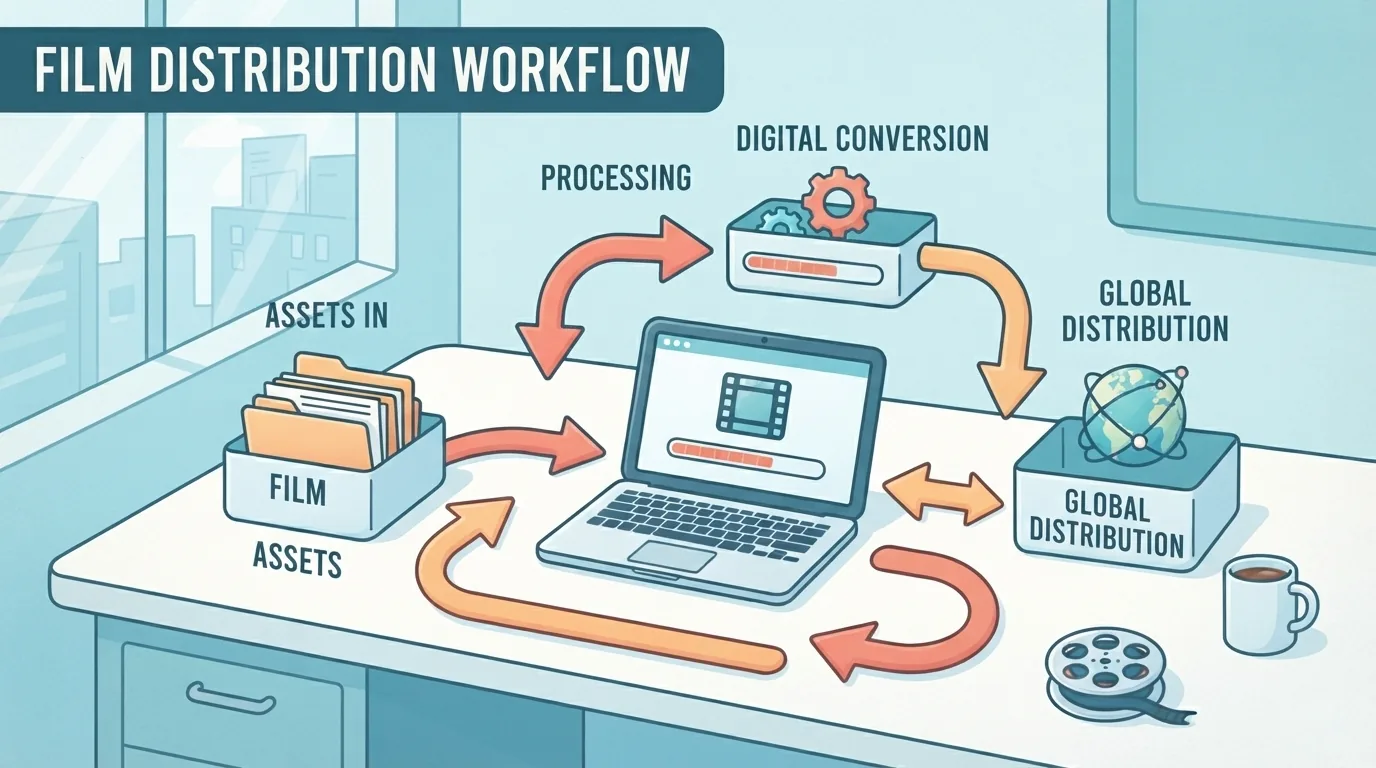
A Digital Cinema Package, or DCP, is the format used to deliver a film to a theater. It bundles together what is needed to show the movie, such as picture, sound, and subtitles, along with other showing content. The exact contents can differ from one film to the next.
In everyday delivery, the digital package takes the place of the older physical film reels. The DCI specification describes the digital package as a set of files going from distributor to theater, and that is the format the rest of this guide follows.
How the Package Reaches the Theater
The DCI specification lists several ways a package can be delivered:
- Physical media, where the files travel on a physical storage device.
- VPN, a secure network connection.
- Satellite, where files are sent through a satellite link.
Not every theater receives films the same way, so it would be wrong to say that all movies come over the internet or that all of them arrive on hard drives. The method can vary from one theater to another.
There is one more detail worth knowing. According to the DCI specification, the film itself and its security information can travel by separate routes. That is why receiving the film is only part of the story, as the next section explains.
Why a File Alone Isn’t Enough: The KDM
Encrypted films can require a KDM, short for key delivery message. Think of the film package as a locked box. The box can arrive at the theater well before showtime, but it stays locked until the matching key arrives.
The key also comes with a time window. The DCI specification directs the theater’s system to check when the key permits the film to be played. In the locked-box picture, it is a key that only works during certain hours.
This is why having the film does not always mean being able to show it. When a film is encrypted, the theater may need a valid key and a showing time that falls inside the permitted window. Details such as how long a key lasts or how it is requested are not covered by the sources used here, so they are left out.
Inside the Theater: From Storage to Showtime
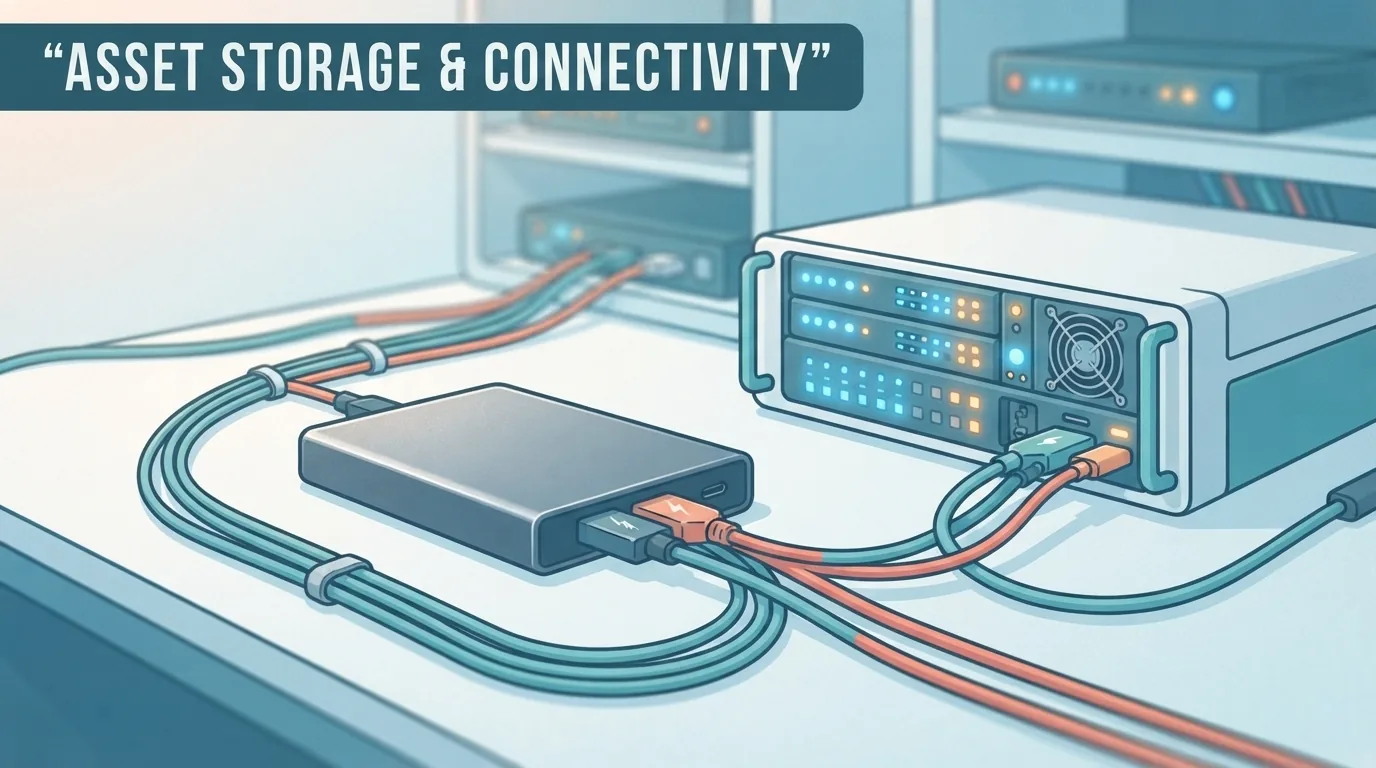
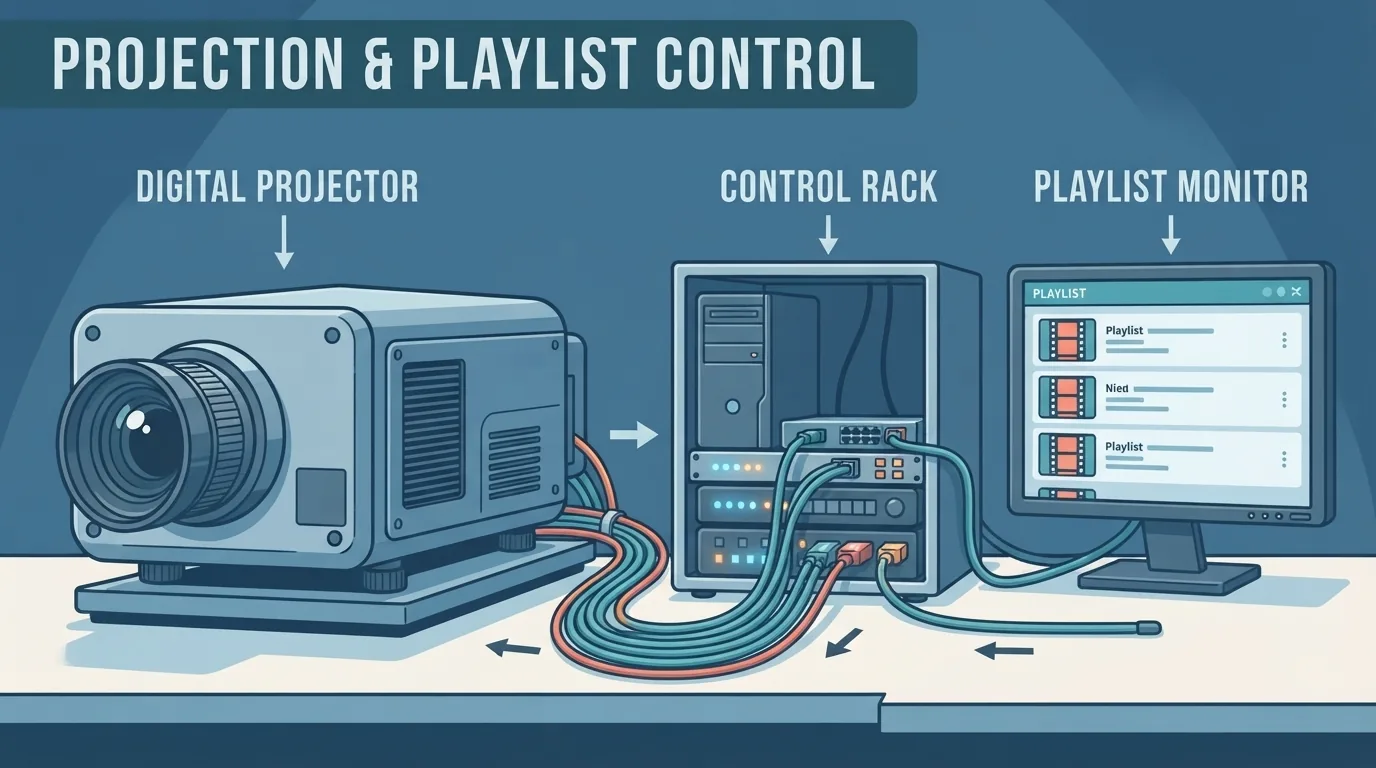
Once the package arrives, the theater’s system takes over. According to the DCI specification, a theater’s system can include components for receiving content, storing it, handling security, projection, sound, and managing showings.
The theater then builds a playlist for each showing. A playlist can include more than the feature film. It can also include trailers and ads.
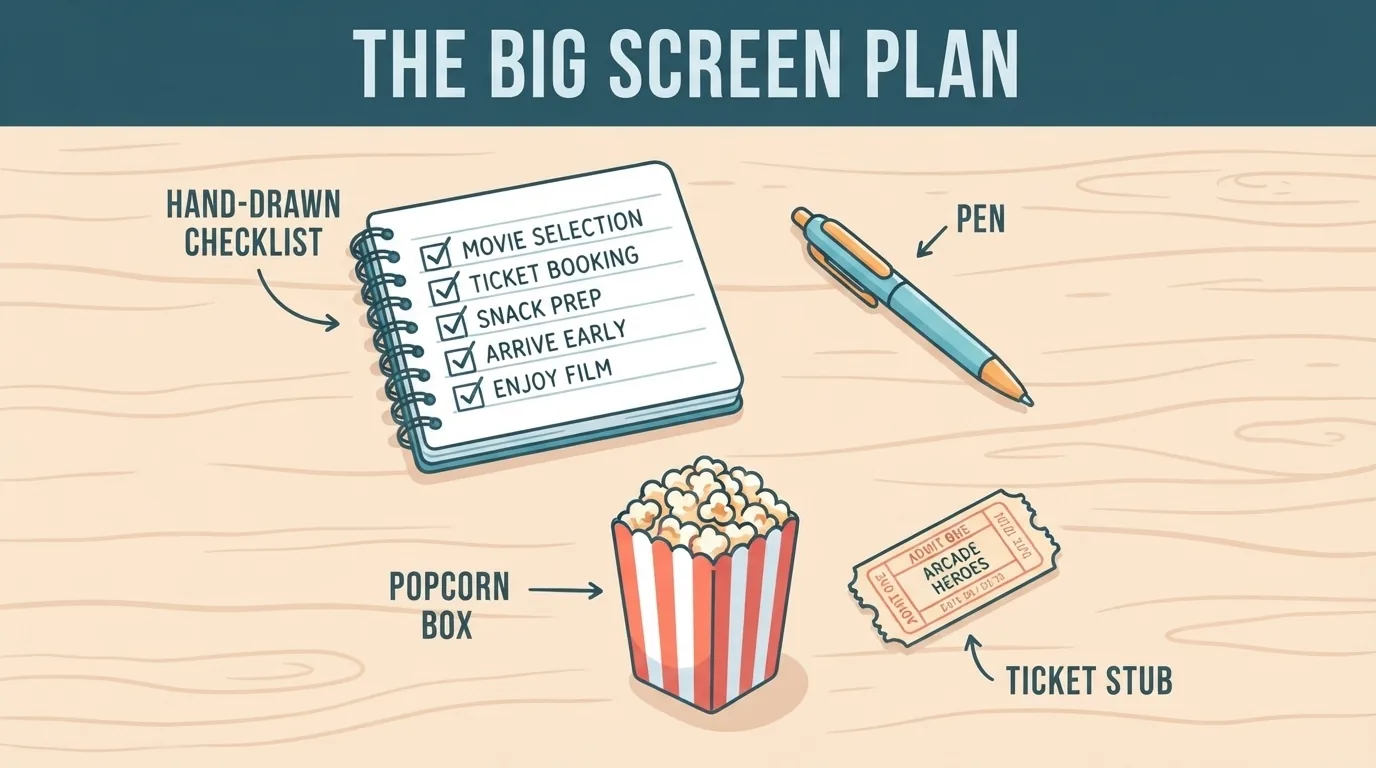
Before the doors open, a few things need to be in place:
- Booking confirmed: the theater has an agreement to show the film.
- Package received: the files have arrived and been stored in the theater’s system.
- Key valid: if the film is encrypted, the key message covers the showing time.
- Playlist built: the feature, along with any trailers or ads, is lined up for the showing.
Frequently Asked Questions
Can a theater show any movie it wants?
No. A theater can show a film once it has arranged to show it with the distributor. The film has to be offered, requested, and agreed on before it goes on the schedule.
Does a theater own the movies it plays?
Typically not. A theater usually licenses the right to show a film instead of acquiring ownership of it.
Do all movies come over the internet, or on hard drives?
Neither is true for every theater. The DCI specification lists physical media, VPN, and satellite as delivery options, and not every theater receives films the same way.
If the file has arrived, can the theater start showing it?
Not necessarily. If the film is encrypted, the theater may also need a valid KDM, and the showing has to fall within the key’s permitted time window.
Why do large chains and small theaters sometimes get films differently?
They are often organized differently. Large chains typically have in-house film buyers, while independent theaters sometimes use outside booking services.
Do all theaters pay the same terms?
No. Terms such as run length and revenue sharing vary by film and by contract, so there is no single set of terms for every theater.
Key Takeaways and Sources
Here is the whole path in one pass:
- The distributor holds the film and provides the digital package.
- The theater books the film and agrees on a showing arrangement.
- The terms are set per film and per contract.
- The film arrives as a digital package, by whichever delivery method the theater uses.
- For encrypted films, a key with a permitted time window may be needed.
- The theater builds a playlist and the film plays.
References
- FilmGrail: How Do Movie Theaters Get Movies? Step by Step
- Binge Distribution: How Film Distribution Works: How Do Movie Theaters Get Movies?
- Digital Cinema Initiatives: Digital Cinema System Specification Version 1.4.5
- Digital Cinema Initiatives: Digital Cinema System Specification (official page)
- CinemaCon: CinemaCon 2021 Moves to August 23-26
Want more comparisons and buying guides?