⚠️ This page connects you to Atovia’s partners and affiliate markets. We may receive a commission from affiliate partners for activities made through these links. Discount offers may change at any time according to policy! Rest assured, there are no additional costs to you! We hope this saves you time in finding the right items!
- The Short Answer: Let the Cat Choose
- How to Approach a Cat
- Signs a Cat Wants to Be Petted
- What If the Cat Doesn’t Come Over?
- Where to Pet a Cat First
- Go Ahead vs. Stop Now
- The Pause Trick: Check Before You Continue
- Why Does My Cat Show Its Belly?
- What to Do When Your Cat Walks Away
- FAQ and Next Step
Your hand is out, the cat is watching you, and you’re wondering whether it will stay or bolt. Here’s the quick answer: get low, offer a hand, and let the cat decide.
No method can promise a cat won’t walk away. What you can do is read its signals and make staying an easy choice.
The Short Answer: Let the Cat Choose
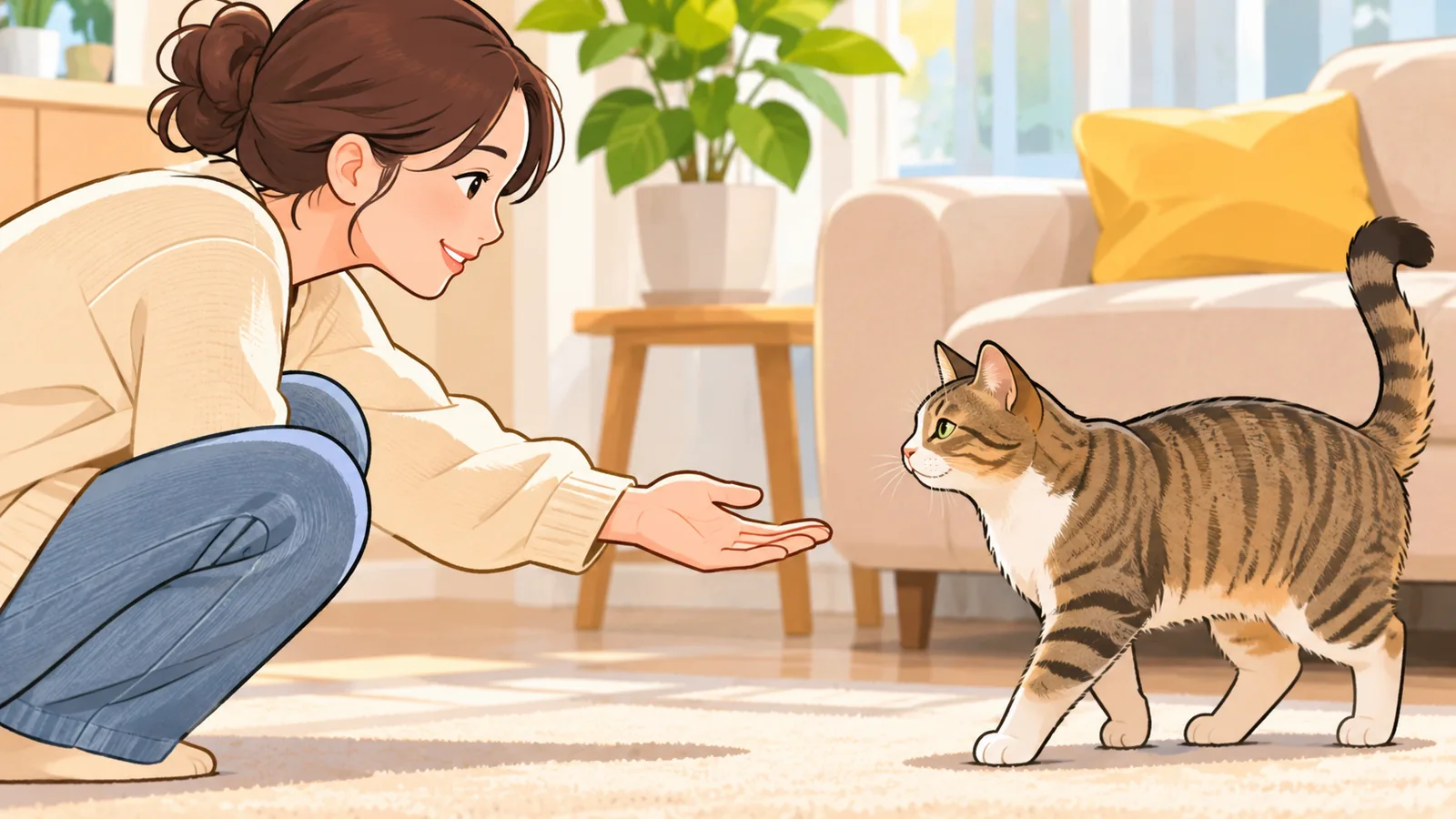
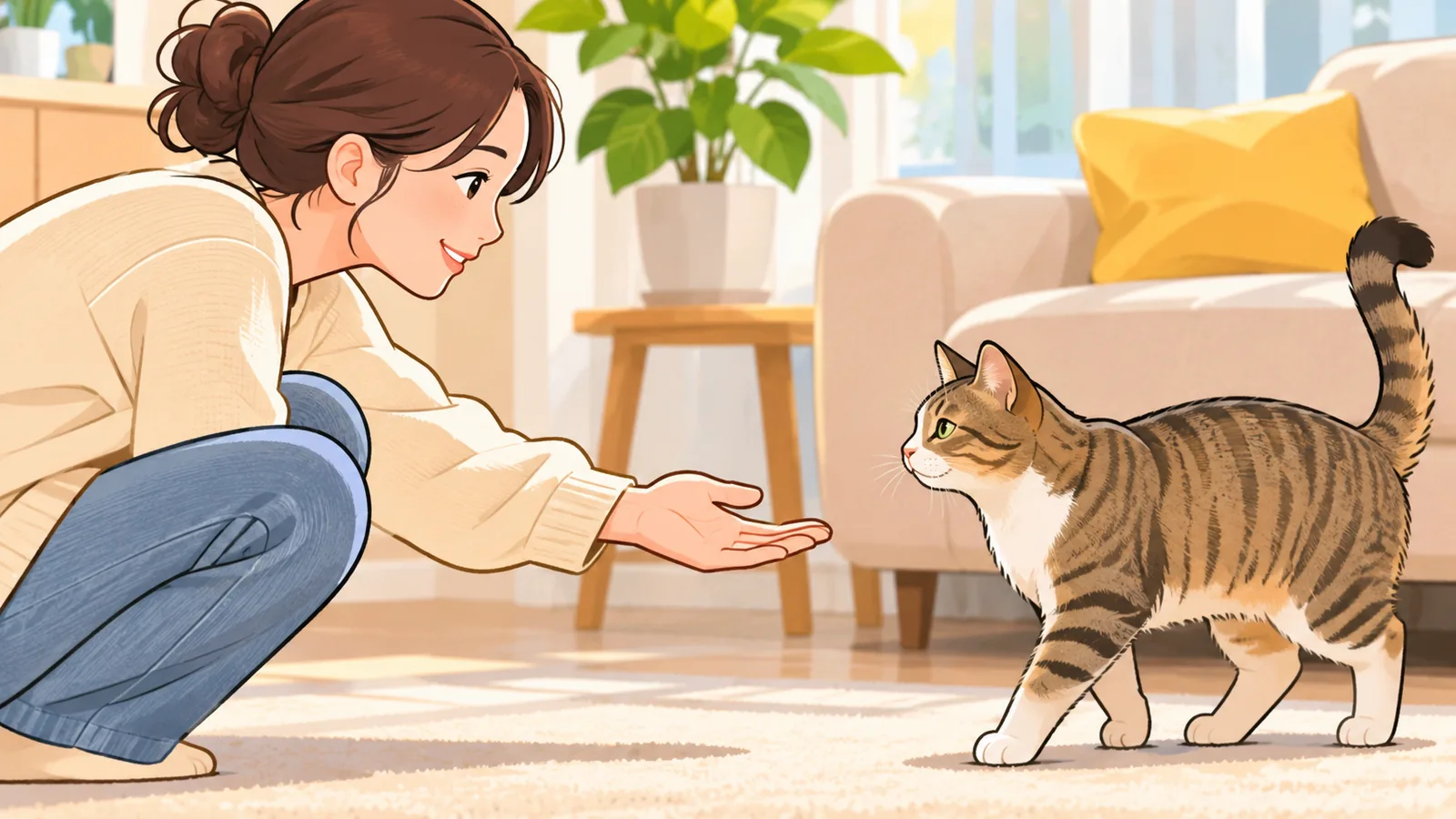
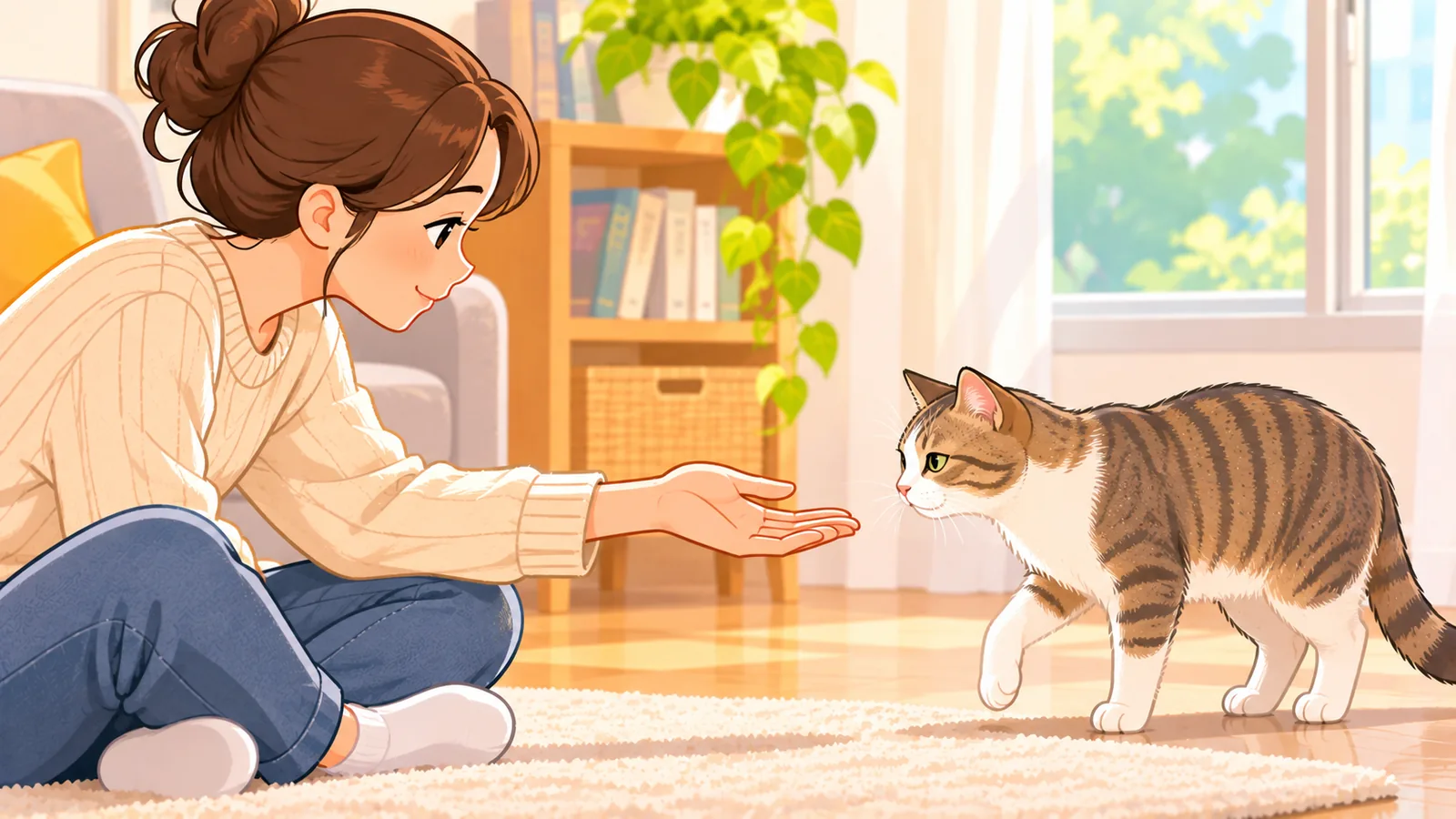
Crouch down, hold out a hand, and wait for the cat to come to you. The cat gets to start the contact, and that is the whole trick.
Not every cat enjoys being petted, and preferences differ from one cat to the next. Some tolerate it for a minute, and some would rather not be touched at all.
So, set your expectations. If the cat leaves, stop and don’t follow it.
How to Approach a Cat
The best approach is a quiet, low and slow one. Think of it as giving the cat time to decide you’re safe.
How low and how slowly should you move?
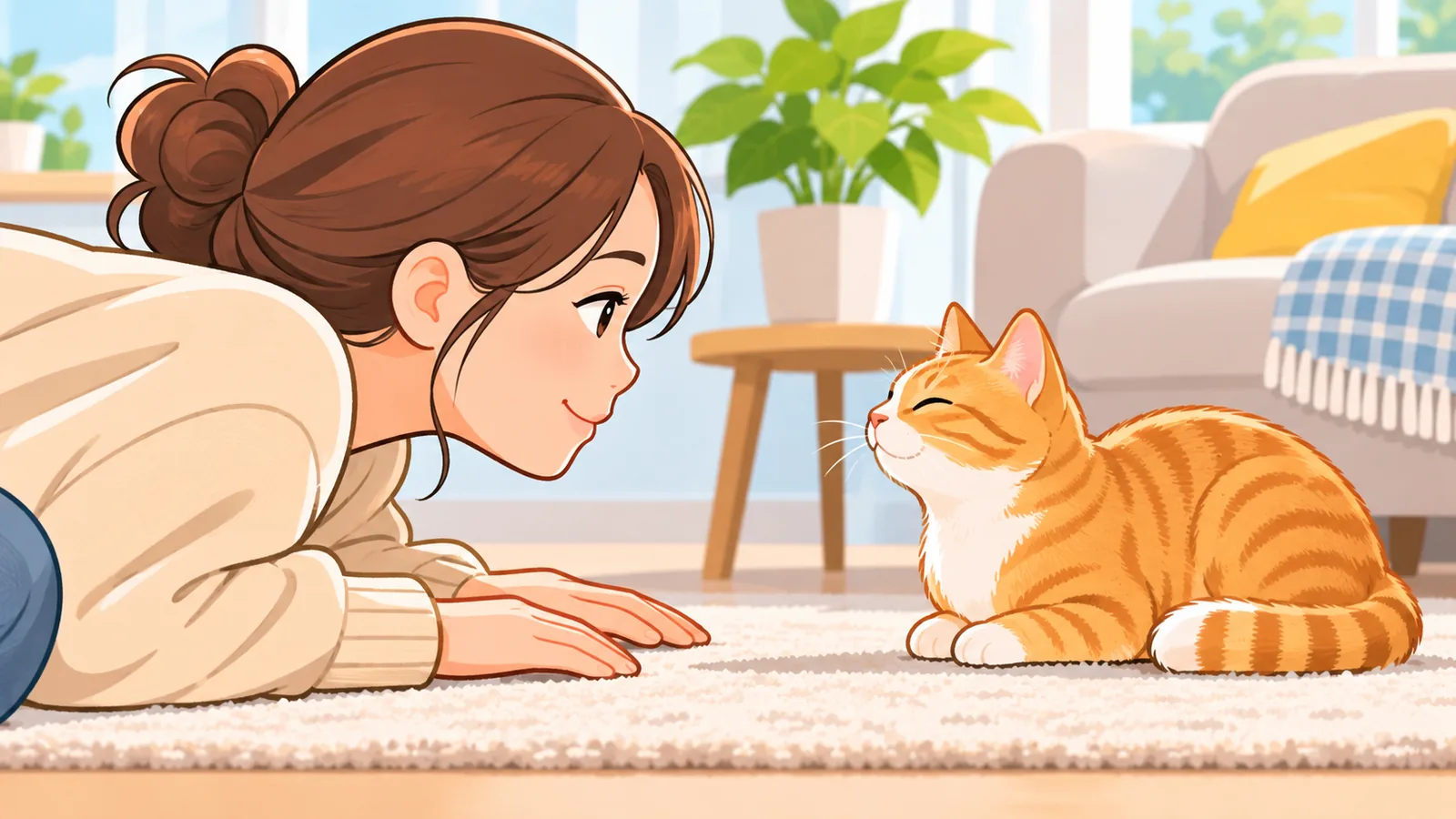
Lower your body to the cat’s eye level, stay quiet, and move slowly. Standing over a cat and reaching down can feel like a lot from its point of view.
Should you hold out your hand first?
Yes. Offer a hand and see whether the cat sniffs it or rubs against it.
If it does, that’s an invitation. If it doesn’t, that’s an answer too.
Key takeaways
- Let the cat start the contact, not you.
- Begin at the cheeks and chin.
- Pause after short touches to see if the cat wants more.
- Stop at the first sign of discomfort.
Signs a Cat Wants to Be Petted
A cat that wants contact usually walks up on its own. Its body looks relaxed, its ears point forward, and it rubs a cheek or chin against your hand.
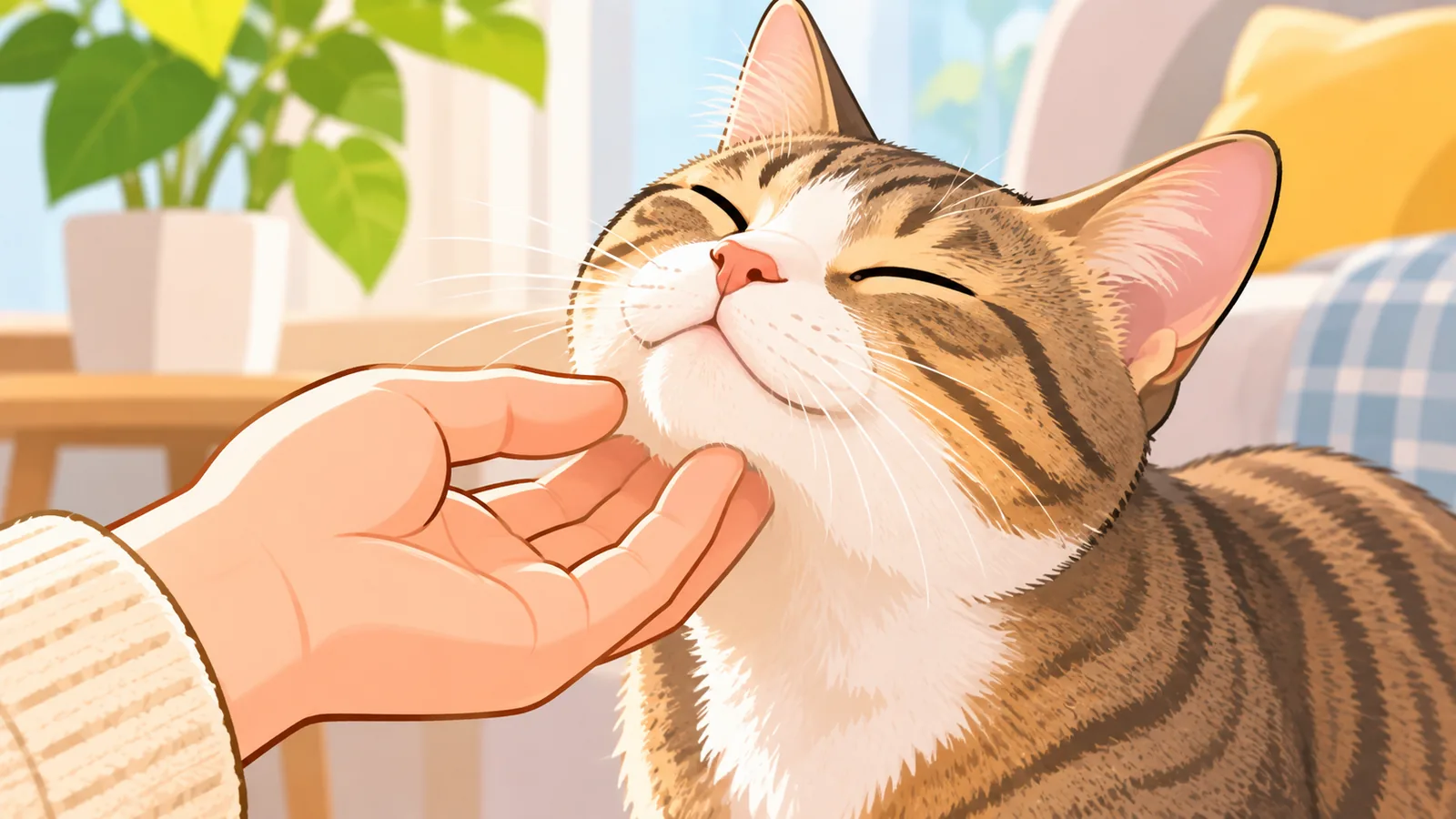
Purring alone isn’t proof the cat is enjoying itself. Look at the whole picture: is the body loose and the cat staying close, or is it tense and edging away?
What If the Cat Doesn’t Come Over?
If the cat doesn’t approach your hand, don’t touch it. Pushing past that moment is the fastest way to send a cat running.
The same goes for a cat that is asleep or hiding. Leave it alone.

Give it some space and try again later. A cat that said no now may say yes in an hour.
Where to Pet a Cat First
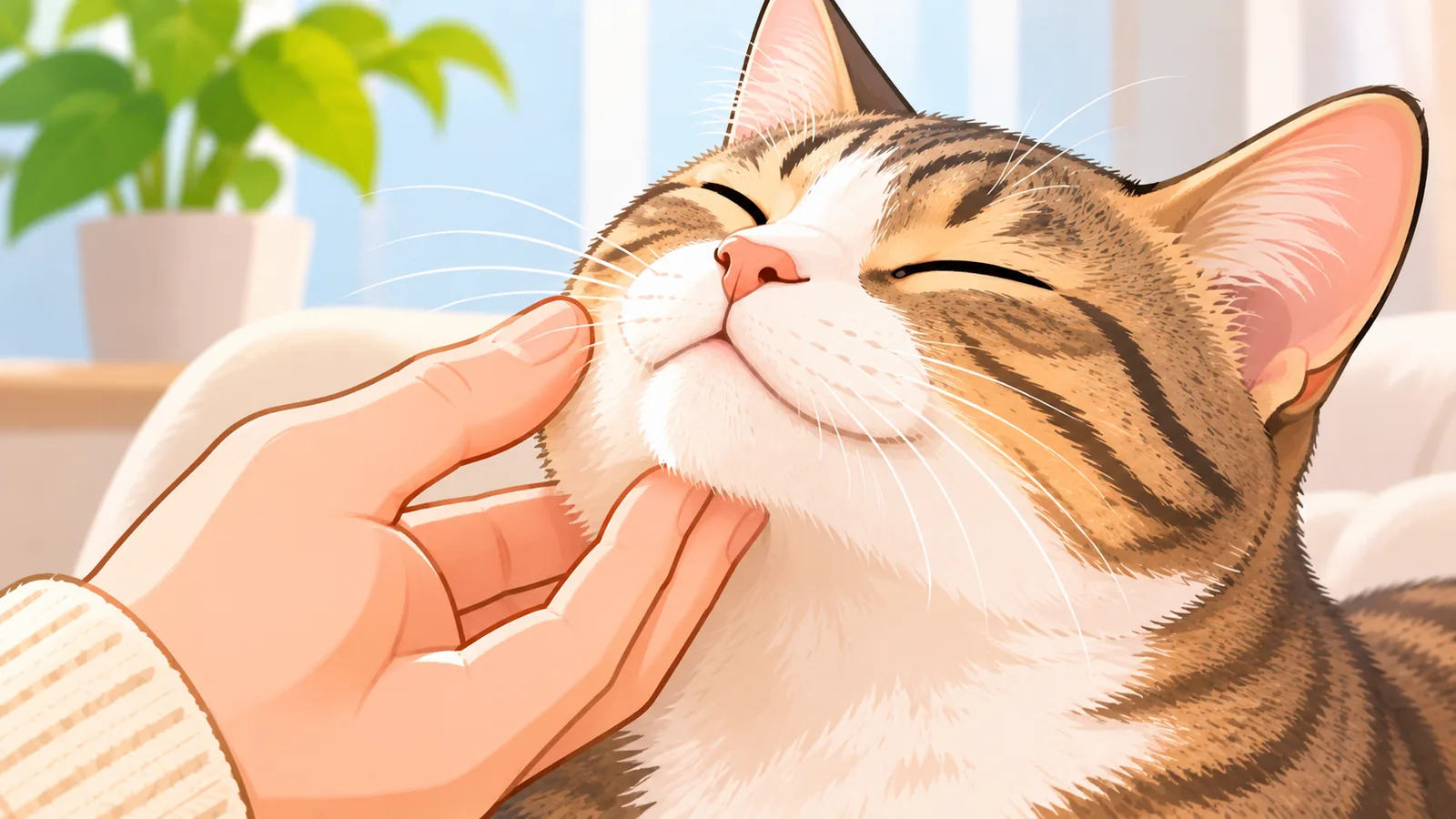
Start with the cheeks and chin. They’re the safest first stop for a cat you’re still getting to know.
What are the best starter spots?
Use gentle strokes on the cheeks and chin. If the cat seems comfortable, you can extend to the head and upper back, moving in the direction the fur grows.
🛒 Recommended Product
Which places do many cats dislike?
Many cats don’t like the belly, legs, paws or tail touched, though individual cats differ. When in doubt, skip those areas.
Go Ahead vs. Stop Now
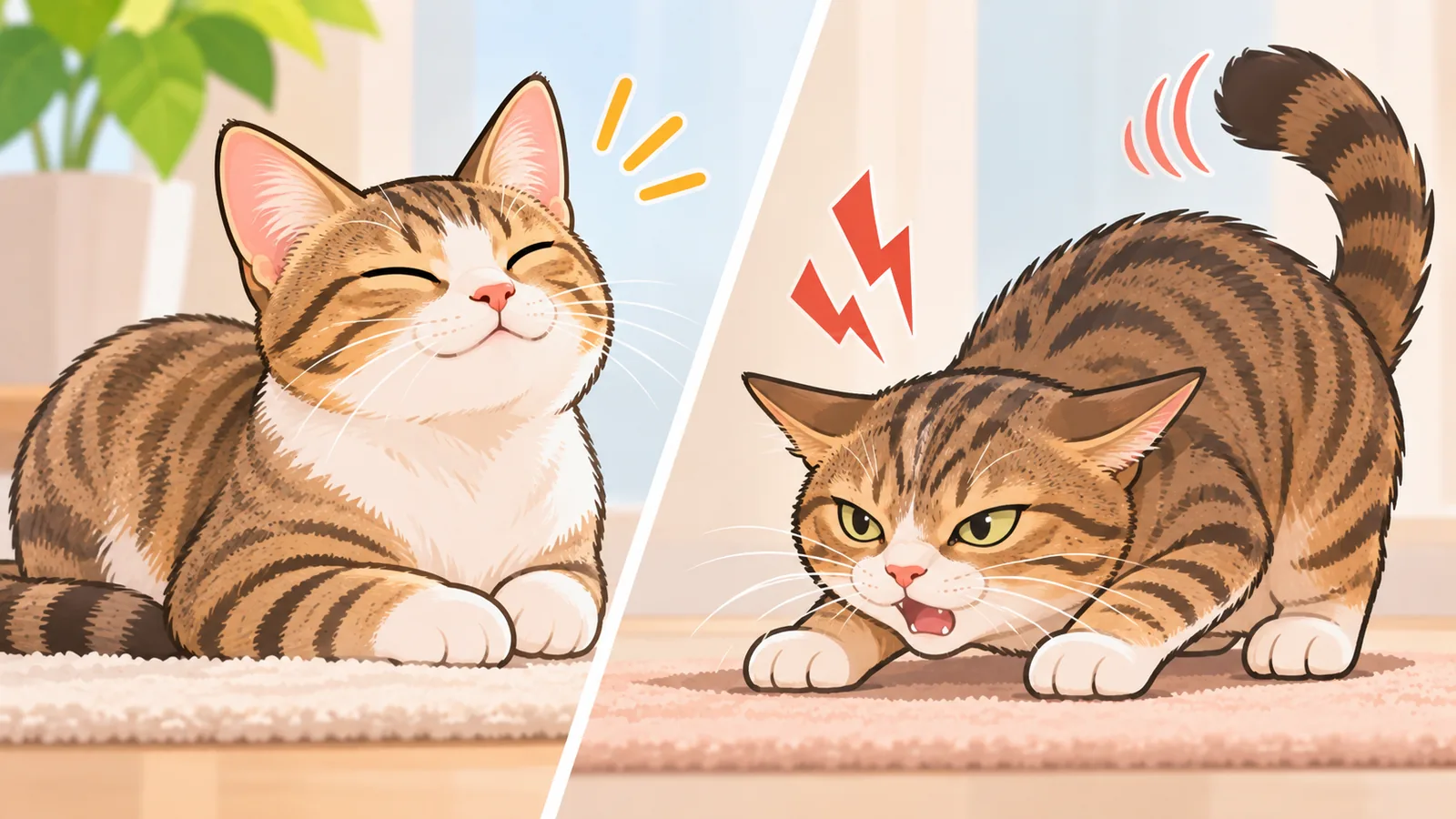
Body language tells you more than any rule of thumb. Here’s a quick side-by-side to check while you pet.
| Body part or behavior | Go-ahead signal | Stop-now signal |
|---|---|---|
| Ears | Facing forward | Flattened against the head |
| Tail | Relaxed | Lashing or flicking hard |
| Body | Loose and soft | Stiff, or skin twitching |
| Response to your hand | Rubbing into it | Turning to look at it suddenly, growling, or walking away |
The Pause Trick: Check Before You Continue
Pet briefly, then pause for a few seconds. If the cat rubs back or moves closer, it may welcome more.
If it stays still or looks away, take that as a no. Lifting your hand costs you nothing and gives the cat a way out.
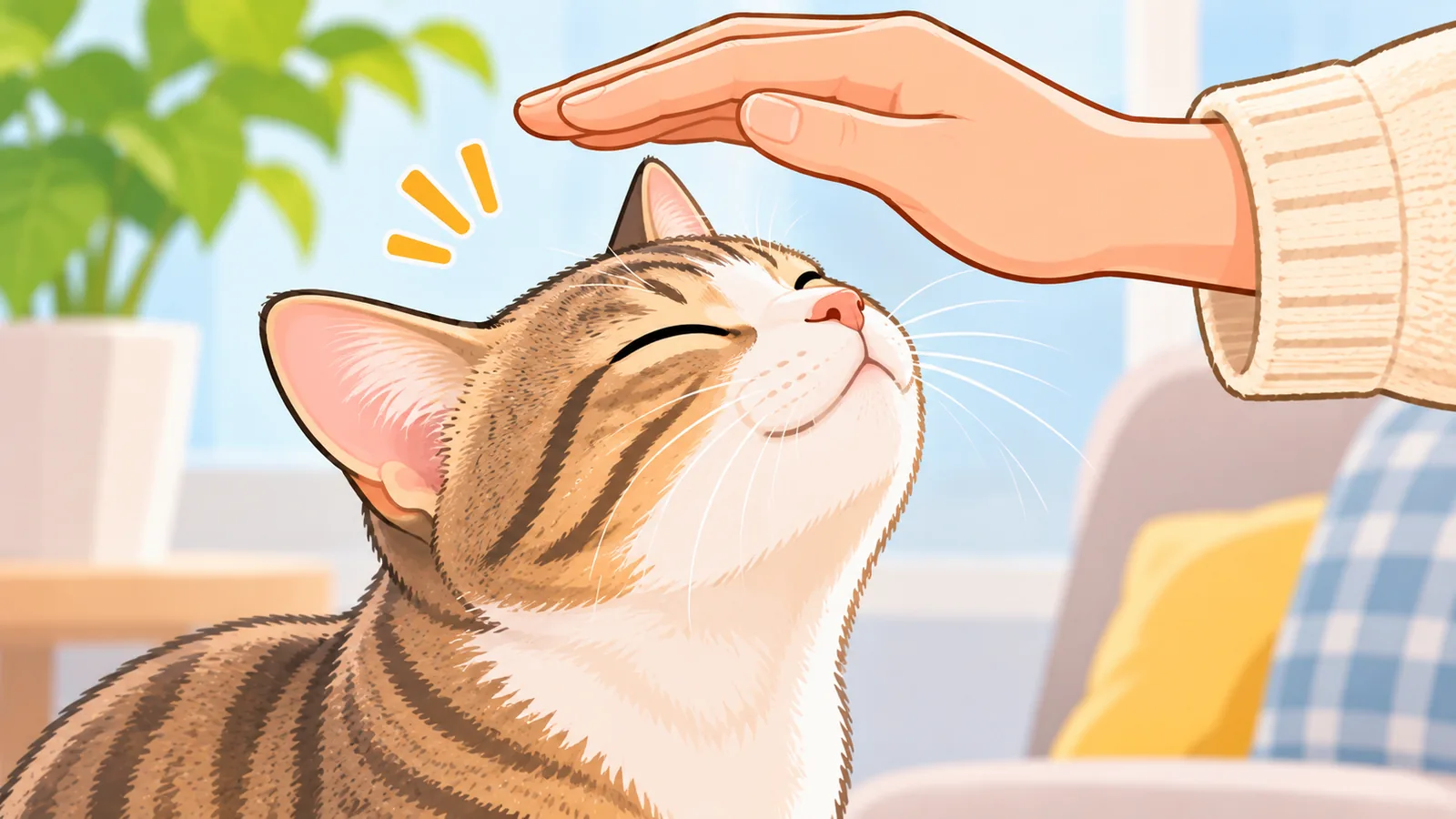
Keep sessions short, too. Over-petting can stress a cat and build biting habits.
Why Does My Cat Show Its Belly?
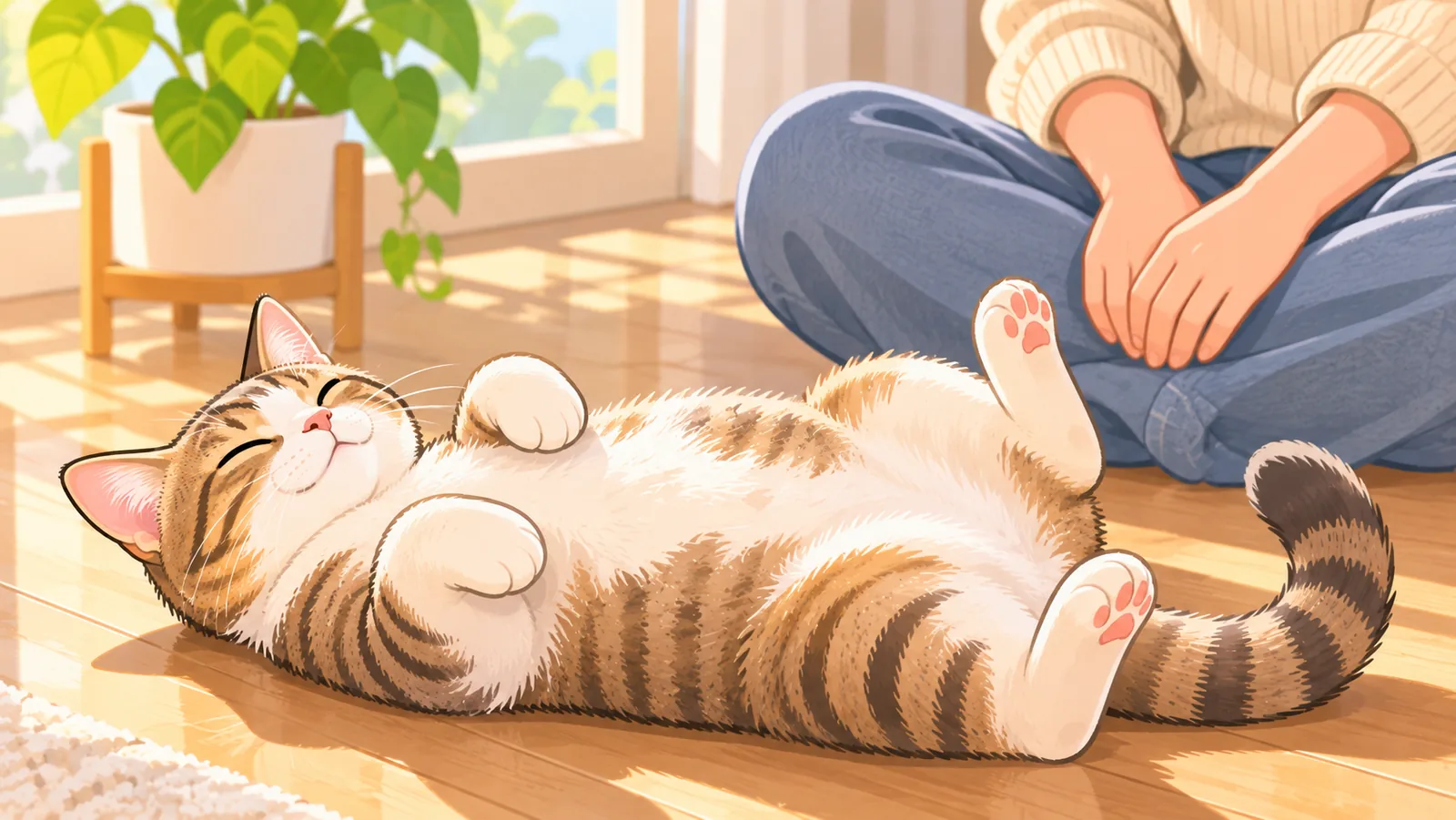
A belly display can mean the cat feels comfortable and trusts you, but it is not an invitation to touch the belly.
Take it as a compliment and keep your hands to the cheeks and chin. A hand on the belly is where many cats react badly.
What to Do When Your Cat Walks Away
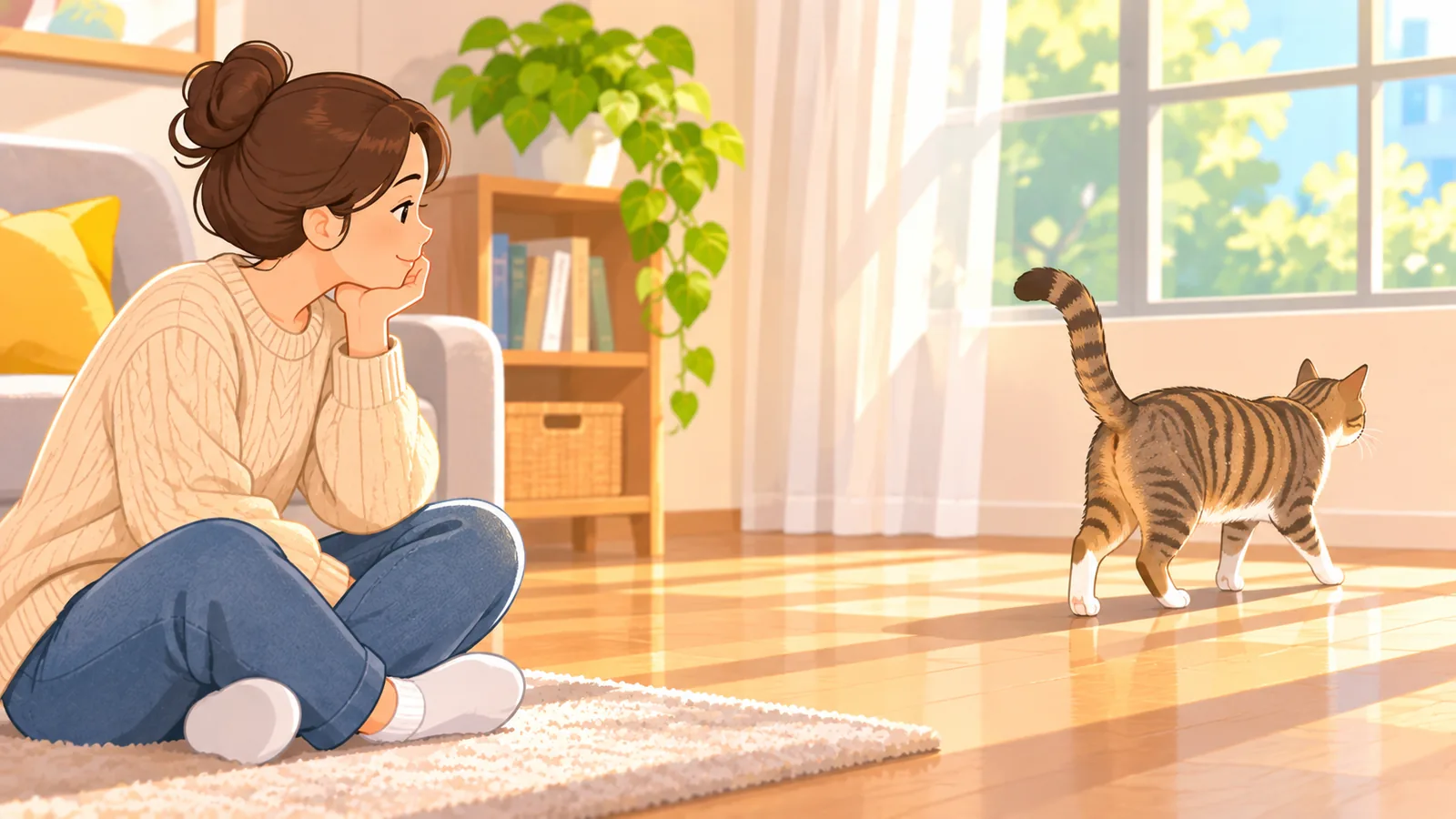
Stop right away, give it room, and don’t chase. Following a cat that has chosen to leave only makes you harder to trust.
Watch for the signals of overstimulation: a lashing tail, twitching skin, flattened ears, a stiff body, a sudden look at your hand, or growling.
If you suspect pain or fear, don’t touch the cat. If it reacts aggressively every time it’s touched, talk to a vet.
FAQ and Next Step
Do all cats like being petted?
No. Some cats enjoy it, some only in certain spots, and some not at all.
Is purring always a good sign?
Not on its own. Check the rest of the body for tension or signs of pulling away.
Where do cats like to be petted most?
Many cats prefer the cheeks and chin, and some also enjoy the head and upper back.
What is overstimulation?
It’s when petting becomes too much for the cat. Signs include a lashing tail, twitching skin, flattened ears and walking away.
Your next step today: crouch down, offer one hand, and see whether the cat comes to you. If it doesn’t, count that as a valid answer.
Try the hand-offer test with a cat today, then keep reading to get better at spotting what your cat is telling you.
References
Want more comparisons and buying guides?